Friday, May 1, 2020

Ghostwriting 101: How to Get Paid Big Bucks As a Ghostwriter

You want to make money as a writer, right?

You’ve told everyone on Facebook (including your weird aunt) that you’re available to write. You’ve been writing guest post after guest post to showcase your talent and get your name out there. Maybe you’ve even landed a few writing jobs already. (Good for you!)

But then a potential client emails you with the question, “Do you offer ghostwriting services?”

And you’re stumped.

Maybe you’ve heard of ghostwriting. Maybe you have some idea what a ghostwriter is. Or maybe you wonder if it involves ouija boards in some way.

You don’t want to look like an idiot by emailing back to say, “Err… what do you mean?”

That sounds like a good way to send your potential client running for the hills.

But don’t worry — I’m about to tell you everything you need to know about ghostwriting, starting with…

What IS Ghostwriting?

You might already have some hazy ideas about ghostwriting. When I first heard of ghostwriting, I thought it was just used for celebrity memoirs.

It turns out memoirs are just the tip of the iceberg. Ghostwriting is everywhere — from independent authors using Amazon’s Kindle book publishing to popular bloggers using WordPress.

So what is it?

When you ghostwrite, you let someone else put their name on your work. That is, you don’t get any credit — at all.

Typically, the person who commissions the work will own the copyright, which also means they can modify or republish the work in any way they see fit.

So why would someone hire a professional ghostwriter? Are they too lazy to write their own book or come up with original work or ideas?

Not necessarily. People hire ghostwriters for many different reasons, but the most common ones are:

  • Their business has grown so much that they no longer have time to write (all) their own material.
  • They have a wealth of expertise or an exciting story to tell, but they don’t enjoy writing or they’re not very good at it.

It’s nothing new, either: ghostwriting has been around, in one form or another, for centuries.

To give you a better idea what being a ghostwriter may involve, my own ghostwriting has included:

  • Taking a rough draft, editing it heavily, and expanding on it where necessary.
  • Taking a blogger’s rough notes and transcribing them.
  • Putting together short, functional blog posts (e.g., announcing a new writing podcast).
  • Taking an assigned topic and very brief outline, then writing a post in the client’s voice and writing style.
  • Writing a post based on a title and nothing more.
  • Coming up with ideas, getting them approved, then ghostwriting the posts (though this is rare!).

As you can see, ghostwriting has a spectrum from something akin to an editing relationship to writing a piece from scratch.

And it’s growing in popularity.

The demand for high-quality ghostwriters is so high it’s now taught in schools — California State University, Long Beach offers a Ghostwriting Professional Designation Program led by Claudia Suzanne.

Of course, I’ve only ghostwritten for blogs.

Authors like Roz Morris and others have written whole books (nonfiction books, New York Times’ bestsellers, etc.) as ghostwriters, which is a far more involved process that includes extensive interviews with the client.

But Why Would You Let Someone Else Take Credit for YOUR Writing?

Assuming you want to build up your own brand as a professional writer, why would you want to be a ghostwriter?

After all, you won’t get any of the credit. Your name won’t appear anywhere on the piece, and you probably can’t tell anyone you wrote it.

So why do so many writers ghostwrite, and why do so many love it?

Well, because there are major benefits:

Benefit #1: Being a Ghostwriter Pays Exceptionally Well


One huge reason to get into the ghostwriting business is money. Ghostwriting tends to pay better than regular freelancing.

After all, having your name attached to your words is valuable for you as a writer. When you have a byline, you can use that piece of work to showcase your talent, build your reputation, and potentially attract new clients.

So it’s appropriate (and standard practice) to increase your hourly rate to compensate for the loss of these advantages.

There’s no exact rule of thumb for how much extra you should charge for ghostwriting over regular freelancing. Personally, I tend to increase my fee by about 15%–20%.

On top of that, once you’ve established a ghostwriting relationship with someone, it often results in ongoing work for you. Most people want their writing to be consistent, so it makes sense to stick with the same writer.

In other words, you have consistent work at a higher rate than usual. That’s quite a plus, isn’t it?

Benefit #2: Ghostwriting Lets You Develop Closer Relationships with Big Names in Your Field


As a ghostwriter, you’ll normally work quite closely with your client. You may be privy to their rough notes or mind maps, or you might interview them on the phone or in person.

Chances are, you’re also focusing your ghostwriting on a particular area of expertise (especially if you’re writing for a blog).

This means you’ve got a brilliant opportunity to get to know and be affiliated with someone well-established in your field.

You’ll find that you get valuable insights into the “behind the scenes” of a top blog, or you get a clearer idea of how a big-name author works and thinks.

This may be eye-opening! It could give you some ideas for how best to move forward with your own business when you start your own blog.

And as you build up closer relationships, or even friendships, with your client, they might share your other work on social media, bringing you a lot of extra traffic. (Several of the people I ghostwrite for have supported me in that way.)

If you ever need a favor or need some advice, there’s a good chance they’ll be very happy to help.

So much of blogging success depends on getting a helping hand from other bloggers — particularly those with a large audience and a great reputation in their field.

Ghostwriting brings you into close contact with exactly those people.

The Counterpoint: Why You Might NOT Want to Be a Ghostwriter

There are a couple of big concerns that writers have about ghostwriting:

“But surely that’s not ethical?”

“But why should they benefit from my hard work?”

“But what about building my platform?”

These are real, valid concerns. And for you, they may be deal-breakers.

So let’s dig into them.

Objection #1: “When You’re a Ghostwriter, You’re Helping Someone Fool Their Readers — That’s Unethical”


When you’re a ghostwriter for someone, they pass your words off as their own.

Which begs the question…

Is ghostwriting ethical?

The authors who hire ghostwriters certainly think it is! But not all writers or readers agree. Many feel that some types of ghostwriting are more ethical than others.

For instance, think about these two scenarios, which are on opposite ends of the ghostwriting spectrum:

  1. A big-name blogger hires a ghostwriter to write an e-book on their behalf. The blogger talks to the ghostwriter for an hour and provides a detailed outline. Once the e-book is complete, the big-name blogger reads it, edits it, and puts his or her name on it.
  2. A big-name blogger hires a ghostwriter to write an e-book on their behalf. They give the ghostwriter free rein to come up with the topic and outline, and they don’t supply any help. When it’s done, the blogger puts his or her name on it without giving it a second look.

Personally, as a reader, I’d feel comfortable with situation #1. The thoughts in the e-book belong to the blogger, but the ghostwriter has helped shape them.

Situation #2, however, seems a lot thornier. As a reader, I’d feel cheated by that.

I’m buying the e-book because I want the blogger’s expertise — not that of a ghostwriter I don’t know.

If you’re thinking of ghostwriting, you have to make up your own mind about what is — and isn’t — ethical. Where would you personally draw the line as a ghostwriter, if at all?

For more thoughts on the rights and wrongs of ghostwriting, check out Patty Podnar’s post Is Ghostwriting Ethical?

Also, Amanda Montell’s Your Favorite Influencers Aren’t Writing Their Own Content—These Women Are is quite eye-opening about some of the less ethical practices in the ghostwriting world.

Objection #2: “It’s Too Painful Watching Someone Else Get Praised for YOUR Work”


It may sound silly, but not getting recognition for your writing can be quite painful — unbearable to some.

I have to admit that, as a writer, it can sometimes sting a little to see a blogger receive lots of lovely praise for a post that I wrote every word of. And I’m not alone; many writers find themselves missing the attention and craving the recognition.

It’s no fun watching someone bask in glory that should be yours.

But think of it this way: All that praise is a sign you did a great job. You can be proud of that, and you can feel confident you’ll get hired again!

Also, as ghostwriter Roz Morris points out in an interview with whitefox, it’s not just ghostwriters who go unnoticed by readers:

There are many unsung heroes in the creative industries, and ghostwriters are only one of them. Editors can also make a huge difference to [book writing] and are rarely credited.

So, if you can’t stand watching someone else take the praise, that’s okay. Many writers feel that way. But maybe we should also keep things in perspective.

Objection #3: “Ghostwriting Keeps You from Building Your Platform”


Even if you’re okay with someone else getting the praise, you may still oppose the idea of letting them take credit.

Some writers feel that, to become a successful freelance writer, you need to take credit for every powerful word you write and create an impressive body of work with your name on it. They believe that ghostwriting is essentially a waste of time.

After all, when you’ve got a bio (or at least your name) on every blog post you write, each of those posts helps raise your profile. You’ll be bringing in new readers and potentially new clients through your work — without any additional marketing.

This is essentially the argument that Demian Farnworth puts forward in The Brutally Honest Truth About Ghostwriting:

The first thing every writer should ask is this: What do you want to accomplish as a writer? Is building a personal and visible platform important to you? Will it help you in the long run? If you have to ghostwrite to make ends meet, fine. But beat a hasty path out of the business as soon as possible. It’s your turn to run the show.

I certainly think it’s worth putting some serious thought into how best to make ghostwriting work for you. It might be that you want to solely focus on your own platform (heck, you might even hire ghostwriters of your own, some day down the line!).

But there’s no shame in taking ghostwriting jobs to generate a steady income while you build your platform. It doesn’t have to be one or the other. You can do both at the same time.

Ghostwriting takes some focus away, but that doesn’t mean it’s not worth doing.

By the way: We’ve created a handy visual summarizing this post that you can share and embed on your own site. Check out the image below (click to see a larger view):
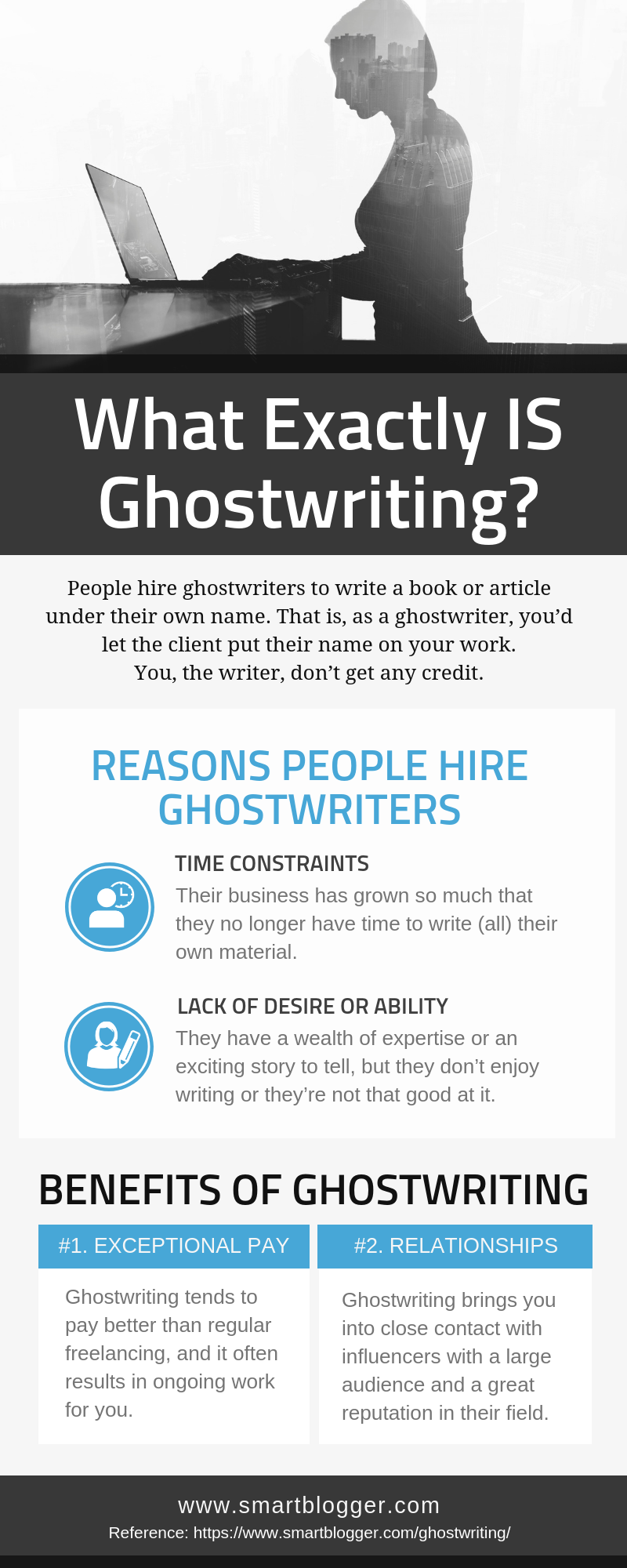
Ghostwriting 101: The Must-Read Ghostwriter Primer for 2019

Embed This Infographic On Your Site


How to Become a Ghostwriter

If you’ve been nodding your head while reading this post, you’re probably wondering…

“Okay, but how do I become a ghostwriter?”

Answer:

The same way you become a freelance writer.

Here are the keys:

#1. Build Your Content Creation Skills


If you want to be a ghostwriter, you have to learn how to create quality content. What’s this mean? It means:

  • Mastering content frameworks
  • Learning how to write solid headlines
  • Knowing how to support your points with examples
  • Keeping your readers emotionally engaged

…and more.

Nothing will impact your ability to earn real, tangible income as a ghostwriter more than your ability to create amazing content.

So, if you don’t know how, learn.

Further Reading: Check out our resource How to Write a Blog Post – The Ultimate Guide. Once you’ve mastered the basics, read Evergreen Content 2.0: Timeless Posts People Will Actually Remember.

#2. Learn the Ins and Outs of SEO


If you can create content that will rank on Google, clients will pay you.

Happily.

Heck, they’ll throw money at you.

So how can you help your content rank on Google? By learning all you can about Search Engine Optimization (SEO) and applying what you learn to the content you create.

Further Reading: Don’t know SEO? Brian Dean has a great guide that will help you learn the basics of SEO fast.

#3. Build an Awesome Portfolio of Sample Content


Ideally, you’ll have three levels of portfolios:

  1. A portfolio that shows you know how to write,
  2. a portfolio that shows you’re a subject matter expert of a given topic,
  3. and a portfolio that shows documented success for clients.

But when you’re just starting out, you need to focus on the first level:

A writing portfolio that proves you know how to create a decent piece of content.

If you don’t already have your own blog or website, create an account on a free blogging platform like Medium.

Two or three sample posts are enough, and you can get started right away.

#4. Find Your First Paying Client


In the early days, finding those first few clients will be difficult.

Even with solid content creation and writing skills, SEO know-how, and a great portfolio proving you know how to write, finding paying clients without word of mouth and referrals won’t be easy.

Here’s what you’ll need to do:

  1. Keep checking job agency postings.
  2. Pitch to software company blogs like HubSpot, Sumo, and Ahrefs.
  3. Do as much self-promotion as you can, including mentioning your ghostwriting service in the byline of your blog or Medium posts.

It’ll be a slow process at first, but once you get those first few clients you’ll be set. Do a great job, make your clients happy, and referrals will happen.

Further Reading: Bookmark this giant list of content marketing agencies. It’ll come in handy.

Ghostwriting 101: A Quick Recap

We’ve covered a lot, so let’s review:

What Is Ghostwriting?
Ghostwriting is when a writer (“ghostwriter”) is hired to create a piece of content for a company or individual, who will then publish the work as their own.
Do Ghostwriters Get Credit for Their Work?
Ghostwriters are paid to let someone else put their name on their work — they do not receive any credit, and they usually cannot tell anyone they wrote it.
Why Do People Hire Ghostwriters?
There are numerous reasons why someone would want to hire a ghostwriter, but two big reasons are time restraints and a lack of desire (or ability).

Regardless of their reason, parties who choose to hire ghostwriters do so because it’s advantageous. (They’re getting something out of it, in other words!)

What Are the Benefits of Being a Ghostwriter?

There are two huge benefits to ghostwriting:

  1. Exceptional pay, and
  2. business relationships.

Because they miss out on auxiliary perks like bylines and having their name attached to the content, ghostwriters are usually well compensated.

Also, ghostwriting brings ghostwriters into close contact with bloggers, authors, and influencers with large audiences. These connections can sometimes be worth more than the commission itself.

How Much Do Ghostwriters Make?
It varies from writer to writer, but an increased fee of 15% or more from their standard freelancer rate is reasonable when ghostwriting.
What Are the Typical Objections to Ghostwriting?
Those who throw shade at ghostwriting typically do so for one of three reasons:
  1. Ethical concerns,
  2. not wanting to see someone else get credit for their work, and
  3. the worry ghostwriting will keep the writer from building up his or her own platform.

We’ve covered each of these objections in detail. Whether any of them are deal-breakers is up to you.

How to Become a Ghostwriter
The process is very similar to the one for becoming a regular freelance writer:
  1. Build Your Content Creation Skills
  2. Learn the Ins and Outs of SEO
  3. Build an Awesome Portfolio of Sample Content
  4. Find Your First Paying Client

In short:

  1. Learn how to create awesome content,
  2. learn the ins and outs of SEO so the content you produce can rank on Google,
  3. create a portfolio of 2 or 3 posts that prove you’re a good writer, and
  4. pound the pavement so you can secure those first few paying clients.

This post is part of Smart Blogger's

Freelance Writing Hub

From elevating your writing skills to getting paid to write, learn everything you need to know about freelancing.

Will You Give Ghostwriting a Try?

Ultimately, ghostwriting can be a little divisive.

Some writers feel — passionately — that readers deserve to know exactly who wrote the words they’re reading. Others feel building your platform is too important to let someone else take credit.

But ghostwriting is a good way to make money as a writer — whether you’re working full-time on various ghostwriting projects, or part-time with the occasional ghostwriting client.

And it doesn’t mean your platform is off the table. You can be a ghostwriter and have a writing career under your own name. Many writers, including me, simply use ghostwriting as a way to supplement or support their writing passions.

Personally, I think it’s worth it.

Only you can decide whether it’s right for you.

The post Ghostwriting 101: How to Get Paid Big Bucks As a Ghostwriter appeared first on Smart Blogger.


from
https://smartblogger.com/ghostwriting/

How the Humble Analogy Can Give Your Writing More Punch

Analogies are an underused literary device capable of making your words more powerful, popular, and persuasive. In this post, you’ll learn all about them.

Give yourself credit.

You’re a solid writer with good ideas.

But… you feel like you’ve reached a plateau.

People like your writing, but they don’t love it.

They find your content useful, but not essential.

Even your best ideas never seem to catch fire.

And you can’t help wondering why.

Maybe you just have to be patient and wait for your audience to come around.

But then again, maybe it’s not that. Maybe your writing is missing something.

Because when you read the work of your favorite writers, their ideas are so clear, so vivid, so damn easy-to-understand that they light up your brain.

And while you hope your readers feel the same about your writing, you secretly suspect they don’t.

Here’s the difficult truth — you’re probably right. Your writing is missing something.

And it could well be this…

Analogies: The Writing “Power Tool” You’re Too Afraid to Use

Successful writers — whether they’re students acing papers or freelance writers getting paid big bucks to write for clients — have a myriad of tools in their toolbox.

Some of these are like hand tools, like a chisel. Others are like power tools, like an electric drill.

And here’s the thing about power tools. At first, they can be a little scary to use. (You may even have one or two in your garage you’re too afraid to unbox!)

You’re not sure how to hold them properly. You don’t understand what all the attachments do. Sometimes you don’t even know how to switch them on.

But in the right hands, boy, do they get results.

And one of the least used and least understood power tools for writers is the analogy.

Here’s the dictionary definition of analogy:

Coming from the Greek word ‘analogia’, an analogy is a figure of speech comparing one thing to another, typically for the purpose of explanation or clarification.

Or, more informally:

When talking about Thing X, you also mention (seemingly unconnected) Thing Y because it has useful similarities.

Editor’s Note: Wondering what the difference is between an analogy and a metaphor? Though both are figures of speech, they’re not the same. As explained here:
While a metaphor uses words or phrases to represent an idea, an analogy uses narrative or comparisons to explain the idea.

Forrest Gump’s “life is like a box of chocolates” is an analogy. “Parting is such sweet sorrow” from William Shakespeare’s Romeo and Juliet is a metaphor.

We use analogies a ton on Smart Blogger. Here are just a few analogy examples:

If you’re a regular reader, you probably remember many of these examples of analogies. That’s because striking images like these tend to stick in your mind.

But despite the power of a well-chosen analogy, many writers ignore them.

It’s almost as if they’re too intimidated to take this tool out of its box.

Which is a shame, because they really should.

Why Analogies Do Twice The Work in Half The Time

Analogies are powerful because they use established ideas to do the heavy lifting of introducing new ideas.

Consider the following two descriptions:

  1. A four-legged mammal standing about four feet tall at the shoulder, having an elongated head, large ears and distinctive black and white markings.
  2. A stripey horse.

We’re talking about a zebra here, right? But can you see how the second description is much more concise? It reuses everything we already know about horses to describe a zebra.

(For the record, a horse is not strictly an analogy for a zebra. However, the process of describing a zebra in relation to a horse is like using an analogy.)

Let’s look at three reasons analogies are so powerful for writers:

1. Analogies Boost Comprehension

Analogies help you explain subtle or complex ideas by reference to concepts the reader already understands.

They allow you to establish such ideas without much of the intellectual scaffolding required to build them from scratch.

To give an example, in physics class, the flow of current through an electrical wire is often explained as being like water flowing through a pipe. A thinner wire can take less current, just like a narrower pipe can take less water. Higher voltage is like higher water pressure.

Are water and electrical current the same? Of course not. (In fact, if you mix the two, you could literally get a nasty shock.)

But in this context, they’re similar enough to be useful.

2. Analogies Make the Unrelatable Relatable

Some concepts are easy for the reader to comprehend, but for one reason or another, they can’t easily relate to them.

As a result, your words have a difficult time sticking in their minds.

Solution? Use analogies.

By helping your reader discover unexpected connections and comparisons, you activate their imagination.

As a result, they’re better able to relate to the story you’re telling.

For example, look at George Orwell’s A Hanging. A short story about an execution, Orwell’s tale is one readers may find to be morbidly interesting, but unless they’ve witnessed an execution themselves, it’s a story they’re unlikely to find relatable.

Enter the analogy:

They crowded very close about him, with their hands always on him in a careful, caressing grip, as though all the while feeling him to make sure he was there. It was like men handling a fish which is still alive and may jump back into the water.
From 'A Hanging' by George Orwell

In short:

The well-executed use of analogies can make unrelatable topics relatable to your readers.

3. Analogies Shift Perspective

Years ago, our CEO, Jon Morrow, wrote the following:

In the beginning, your blog is like an empty classroom. Standing in front and giving a lecture is silly, because sure, it might make you feel important, but there’s nobody listening. You’re all alone, and you can come up with the smartest, most entertaining lecture in the history of mankind, but it won’t matter, because no one else heard it.

Here’s the situation Jon was referring to:

Many beginning bloggers bust their guts to create content for their blogs before they have even a small audience. They just assume it’s an inevitable part of getting started and hope that a few readers will eventually drift along. As a result, every week they get up on the podium, pour their heart and soul into their message, and are greeted by crickets and tumbleweeds.

It’s a powerful image, right? A teacher standing in front of a class delivering a lesson to absolutely nobody. How deluded would you need to be to do that?

And yet thousands of bloggers did (and still do) the equivalent every day.

Jon’s analogy invites them to see their behavior in the light of a similar situation, where they can more easily see that their behavior is completely silly.

So if you can get your reader to buy into your analogy, it can be hugely persuasive. Because they’re practically forced to apply everything they know to be true about one situation to the other.

And that can create a major shift in perspective.

How to Find the Perfect Analogy for Any Situation

Finding good analogies can be tricky.

Often the most interesting and effective analogies are the least obvious, and thus the hardest to find.

Inspiration will sometimes save you, but no writer should rely on their muse too often.

Fortunately, a simple process can make finding the right analogy significantly easier.

1. List the Notable Features of Thing X

What simple statements can you make about the thing you’re trying to describe?

To take an example, let’s imagine you started a blog about finding a career and you’re writing a blog post about that awkward period where you have a job but you’re actively looking for another.

So you’re working on your resume during your lunch break, disappearing to take phone calls from recruiters, and generally struggling to maintain normal appearances in your current job while trying to land the next.

What are the notable features of that situation?

Here are some ideas:

  • Secrecy — usually you don’t want your colleagues (and certainly your bosses) to know you’re looking for a new job.
  • Clandestine meetings — leaving work early to attend interviews and inventing bogus reasons for your absence.
  • Feelings of guilt — you feel bad about not being entirely honest with people but don’t see another option.

2. Do a Mental Search for Other Things Sharing Those Same Features

For each of the features of Thing X, try to think of other things that also have those features by asking simple questions.

In this case:

  • What other situations require secrecy?
  • When else might you need to lie about where you were and what you were doing?
  • In what other situations might you feel guilty about your behavior?

The following ideas spring to mind:

  • Being a government spy — you certainly have a need for secrecy; you may need to lie to friends and family about where you were and what you were doing at certain times; feelings of guilt could arise from living a double life.
  • Arranging a surprise birthday party — you don’t want the birthday boy or girl to find out; you may have to arrange meetings behind their back with other friends, a restaurant, etc.; you may feel temporarily guilty about your dishonesty (even though you know it’s for a good cause.)
  • Having an extramarital affair — you don’t want your spouse to find out; you’ll probably lie about where you were to cover up your liaisons; the guilt normally associated with being unfaithful.

3. Test the Analogy by Looking for Other Similarities and Differences

Once you have some possible analogies for your situation, play Devil’s Advocate. Find ways in which the two things are not alike and decide if the differences detract from the analogy.

Taking the first of the three ideas above, one difference is that being a government spy is not a short-term situation, like looking for a new job. With a job search, you either find a new job and move on, or decide to stay.

Is that a distracting enough discrepancy to rule it out as an analogy? Maybe.

But also the fact that being a spy is a job of sorts is an unhelpful similarity. In this case though your bosses do know your secret — that you’re a spy — so that’s potentially confusing for the reader.

What about the second idea — arranging a surprise birthday party? Similar to looking for a new job, arranging a party is a short-term situation, so that could work. But unlike a job search, party planning is not about finding a replacement for an existing thing.

Finally, what about the extramarital affair? You could argue that an affair is more like moonlighting rather than changing jobs — i.e. trying to get some “extra” work on the side instead of quitting your main job. But some affairs do result in a new long-term relationship so maybe they’re not so different.

Also other interesting similarities exist. For instance, consider the consequences of getting caught sneaking around. In the career scenario you could potentially lose your job. If you’re discovered having an affair you could lose your marriage.

So this seems like the most promising analogy of the three. It’s not perfect but it’s pretty good.

But how do you know when you need to keep looking?

3 Simple Clues That You Haven’t Found the Right Analogy Yet

Choosing from several possible analogies is as much art as science, but here are some clues that you haven’t landed on the right idea just yet:

  • The two things are different in more ways than they are similar.
  • The two things are similar in most ways, but the most prominent feature doesn’t match.
  • The thing you’re drawing an analogy with takes too long to explain or is not widely understood.

The acid test is to ask this question:

Is the writing clearer, more persuasive, or more interesting with the analogy than without it?

3 Ways to Turn Your Analogy Power Tool to MAX

As you become more confident using analogies, consider using one of these methods to get even more power:

1. Bring an Abstract Concept to Life

Some ideas are tough to grasp because they’re naturally abstract.

In fact the whole concept of spreading ideas is quite abstract — there’s usually little to see (or hear, or feel) when an idea transfers from one person to another.

And that’s why my post on writing clearly used the analogy of assembling a flat-pack table.

Building a table piece by piece is a much more tangible process, but it has a number of features in common with “building” an idea in someone’s head.

2. Borrow Powerful Emotions From Another Context

Sometimes the benefit of using an analogy isn’t just the knowledge that comes bundled with that other thing, it’s the emotion.

So, for example, if you write for freelancers and you want to talk about the deep frustration of having first-class skills but no clients, don’t simply describe the feelings – use power words to compare the situation to being a superhero who’s forbidden to use their special powers.

Find the right analogy and you’ll conjure emotions more quickly and intensely than a simple description could ever achieve.

3. Lighten the Tone with Humor

Have you ever heard the term “seagull manager” — first coined in Ken Blanchard’s book Leadership and the One Minute Manager (affiliate link)?

Seagull managers fly in, make a lot of noise, dump on everyone, then fly out.

Pretty funny, right?

Sometimes a carefully constructed analogy can bring much-needed humor to a dry topic.

Clever analogies like the seagull manager (and its close cousin the mushroom manager) are tricky to construct, which is why this is an advanced technique for power users only.

But if you find you have a gift for them, people could be quoting you for years to come.

This post is part of Smart Blogger's

Freelance Writing Hub

From elevating your writing skills to getting paid to write, learn everything you need to know about freelancing.

The Humble Analogy: Plug In, Power Up, and Take Off

Analogies are one of the most powerful tools in the writer’s toolbox.

Yes, they need careful handling, but if you follow the process above, finding the right analogy should be as simple as using a screwdriver or a saw.

Do it right and you’ll communicate — and educate — more elegantly and persuasively than ever before.

Your popularity will pick up, and that annoying plateau will soon become a distant memory.

So go ahead. Don’t be afraid. Open your toolbox.

The post How the Humble Analogy Can Give Your Writing More Punch appeared first on Smart Blogger.


from
https://smartblogger.com/analogy/

Thursday, April 30, 2020

How to Create a Swipe File (Everything You Need to Know)

Brian Kurtz once wrote, “you can’t beat a swipe file for deep insight and inspiration.”

It’s little wonder then why writers, bloggers, copywriters, students, and creatives from all fields use swipe files to fine-tune their writing skills and brainstorm new ideas.

But what is a swipe file anyway?

How can it improve your writing?

And how the heck do you create one?

Let’s dive in and find out…

The idea of the swipe file originated in the copywriting world.

Back in the day, good copywriters collected clippings with marketing strategies like sales letters, headlines, and print ads that had worked well in the past and placed them inside physical folders. When these writers needed to create a new piece of content, swipe files gave them something to lean on.

But a swipe file isn’t just for copywriters anymore.

It’s a wonderful tool every writer — from students who are writing papers for school to freelancers who are writing assignments for clients — should have in their toolbelt.

What a Swipe File is NOT

We’re not talking about copying. You never take somebody else’s words and put them into your writing. That’s plagiarism.

What we’re talking about is analyzing good writing and discovering the underlying principle — the hidden technique behind it. It saves you time, and the output is almost always better.

Sure, you can create something truly original and hope it will click. But, as Charlie Munger said:

I believe in the discipline of mastering the best that other people have ever figured out. I don’t believe in just sitting down and trying to dream it all up yourself. Nobody’s that smart.

Cultivating a swipe file is like taking private lessons from your writing heroes. And you don’t have to pay for it.

Just devote some time and be diligent.

How Can Swipe Files Improve Your Writing?

The web is filled with great quotes, tips, and tricks for improving your writing skills. But it’s the simplest piece of advice that’s often ignored by writers:

Practice.

Deliberate practice speeds up your learning and makes your progress visible.

And that’s where swipe files shine.

When your best examples are collected in a swipe file, you can easily access and study them (more on that in a moment).

The result?

  • You learn how to cultivate your brand, voice, and unique style.
  • Writer’s block becomes a thing of the past.
  • You complement the theoretical with hands-on training. Books on writing can help you comprehend writing techniques, but studying successful content “in the wild” allows you to see how others have put those techniques into practice.
  • You shorten your writing process, which allows you to write faster and be more productive.

The list goes on and on.

What are Some Swipe File Examples?

In a moment, we’re going to look at a few different examples of swipe files. But before we do, a quick note:

When smart writers collect examples for their swipe file, they study and analyze them before filing them away. They try to work out what methods and techniques were used to write the piece of content they’re swiping.

This is what we will do in each of the following swipe file examples. We’re going to ask: “Why does this work? Why is it a good example?”

By answering these types of questions, we’ll be better able to apply their techniques in our own writing later.

Headline Swipe File Examples

Ready-made headline formulas can be a wonderful help when you need to write headlines. But analyzing and understanding how awesome headlines are created can be an eye-opening experience, empowering you with the skill to create your own headlines.

When analyzing a headline, try to understand what it’s doing to grab your attention. What’s in it that makes you curious?

Let’s look at three examples:

Swipe-Worthy Headline #1

6 SEO Mistakes That’ll Make Google Hate You Forever

This headline from Jon Morrow is an example of a “threat” headline, which is a type of headline that implies you’ll avoid some kind of pain by reading it.

Why does it work?

  • It awakens anxiety. You could write something like “6 Proven SEO Tactics”, but the dose of uneasiness the headline causes gives it a better chance of being clicked.
  • Power words. The use of power words like “mistakes”, “hate”, and “forever” make the headline stand out.
  • Number psychology. Numbers in headlines make humans more prone to click. It’s scientifically proven.

For reference, here are some more “threat” headline examples:

Swipe-Worthy Headline #2

How to Create a Writing Portfolio That’ll Wow Potential Clients 

On the opposite end of the spectrum, there are “gain headlines,” which lure readers in with the promise of a benefit.

In this example, Smart Blogger’s editor created a headline promising readers the ins and outs of crafting a portfolio that wins clients.

Why does this headline work?

  • Its benefit is clear. Want to know how to create a writing portfolio that works like magic? Click the headline and find out.
  • Proven formula. “How-to” headlines are tried and true. Readers know exactly what to expect: a step-by-step blueprint for creating a writing portfolio.
  • As in the earlier example, this headline captivates the reader by using power words.

Here are a few more “gain headline” examples:

Swipe-Worthy Headline #3

Why It’s Good to Be in a Crowded Niche (Seriously)

The last type of headline we’ll discuss is one that takes a contrarian view on a topic. In the example above, Jon’s headline tackles the notion that it’s best to choose a niche with little-to-no competition.

Why does it work?

  • It’s controversial. A common belief held by many is you should avoid saturated niches. Both supporters and opponents of this view are likely to click.
  • There’s a hidden benefit. The headline implies you’ll learn how to choose a good niche for yourself.
  • It uses CTR (click through rate) boosters. The parentheses make the headline even more clickable.

Here are a few other headlines that challenge conventional wisdom:

Editor’s Note: To learn more types of headlines you can write yourself or add to your swipe file, check out 10 Ways to Exploit Human Nature and Write Amazingly Appealing Headlines.

Email Swipe File Examples

Now let’s look at a few email swipe file examples (and why they’re swipable).

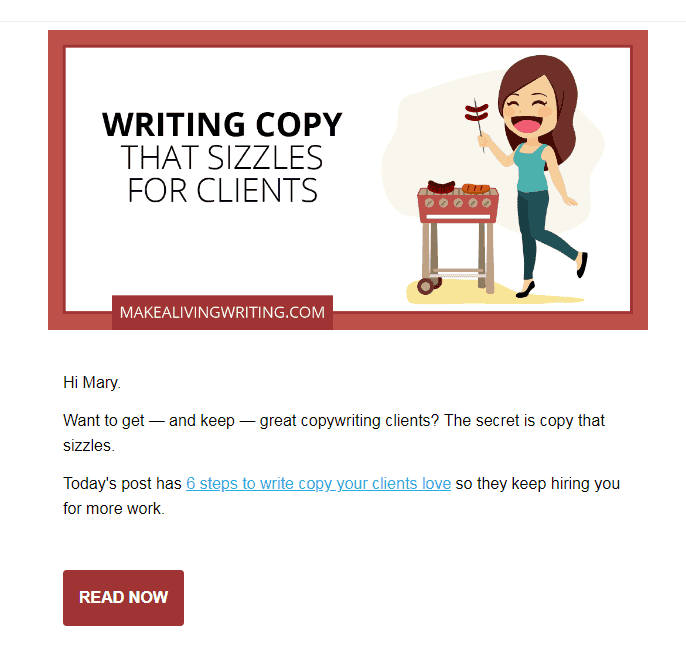
Up first is an email from Carol Tice:

Swipe-Worthy Email #1

swipe file email example 1

Why is this a good email?

  • It has a clear goal. The reader knows the purpose of this email is to encourage them to read a blog post.
  • Shows why the reader should care. There’s a promise the reader will learn how to improve their copywriting skills.
  • Addresses the reader’s hesitation. The reader might be afraid that going through the post will take too much time. But the email states that there are only 6 steps. Seems easy, right?
  • Short and to the point. There’s no fluff. The content of the email is bare bones. The author, Carol, shows she appreciates the reader’s time and gives only the most important information.

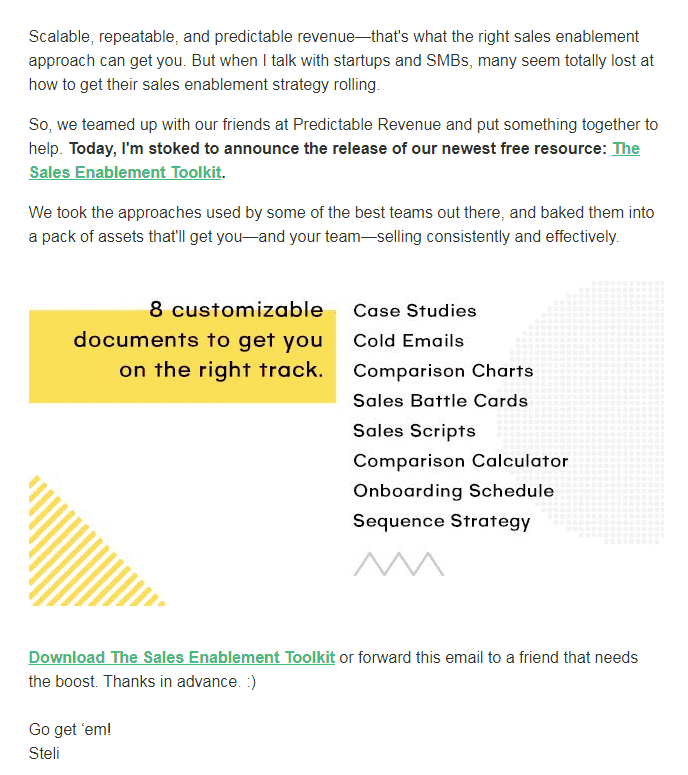
Next is an email from Steli Efti of Close CRM:

Swipe-Worthy Email #2

swipe file email example 2

Why is this a swipe-worthy email?

  • The goal of the email is clear. Steli is encouraging the reader to download a free toolkit.
  • Gives a reason to care. The email briefly, but clearly, explains the benefits of the resource.
  • Promises to save the reader time. By compiling several approaches from several different teams, the email implies the hard work has already been done for the reader.

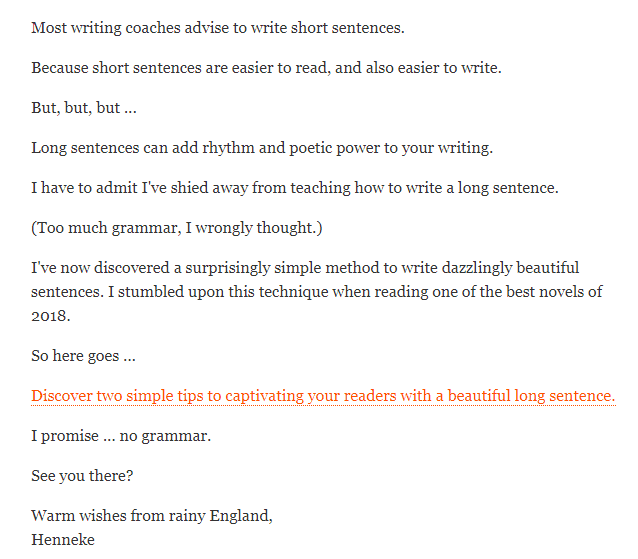
Our final example comes from Henneke of Enchanting Marketing:

Swipe-Worthy Email #3

swipe file email example 3

Why is this a good email?

  • Clear goal. The reader recognizes quickly that it’s an invitation to read a blog post.
  • Stirs a little controversy. By saying there’s a problem with a piece of common advice, Henneke makes the reader even more curious about the post.
  • Easy-to-understand benefit. What writer doesn’t want to learn how to captivate their audience?
  • Promises simplicity. The promise that the tips are “surprisingly simple” (and there’s no talking about grammar) sweeps the reader’s hesitation away.

Save good email examples like these in your swipe file. Whenever one finds its way into your inbox, file it away.

Okay, so we’ve answered the basic questions about swipe files. We’ve even given you several great examples of headlines and emails (and explained why they were worth swiping).

Now for the big question…

How Do You Create a Swipe File?

Obviously, having a physical swipe file like copywriters from decades ago isn’t practical.

You need something in a digital form — and preferably something you can access from all your devices, not just on your laptop or desktop.

Here are 5 tools you can use to create your swipe file:

1. Pinterest

You may think Pinterest is only suitable for gathering images, infographics, and quotes, but it’s also great for articles and blog posts. If it has a URL, you can “pin” it.

You can create several boards, and you can add several sections to each board. It’s perfect for swipe files. Plus, it’s free to use.

2. Trello

Mainly known for its task management and Agile/Scrum/Kanban friendly features, Trello is very flexible.

Think of it like a virtual corkboard where you can pin different lists. Each list can consist of various cards with screenshots, photos, and attachments from multiple sources.

Trello is free, but it also has business plans for advanced users.

3. Evernote

Possibly the most well-known tool for swipe files, Evernote allows you to create notebooks or even collections of notebooks called “stacks.”

Each notebook works as a ring binder; in it, you can collect notes in the form of clipped web pages, articles, and images.

Evernote’s basic plan is free. Their premium plan is $7.99/month.

4. Pocket

Pocket allows you to save images, videos, articles, blog posts and more. Using tags, you can organize content of your Pocket into different categories.

Its free account will cover most every writer’s needs, but if you need to “go premium” it’s $4.99/month.

5. Gmail

Yep, Gmail. You can create a separate Gmail account (it’s free) and use it to save interesting newsletters, sales copy, email marketing emails, etc. As an added bonus, having a separate Gmail account will help you avoid messing up your daily, personal inbox.

Any of these tools can work, but depending on your preferences and needs, you might prefer some tools over others.

To walk you through an example, we’ll create a swipe file using Pocket.

How to Create a Swipe File Using Pocket

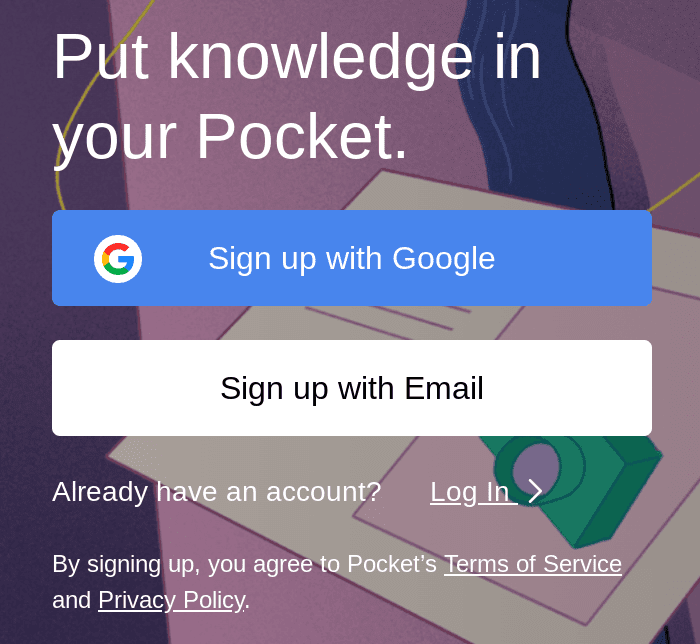
To create your Pocket account, go to getpocket.com and sign up:

sign up for pocket

Next, download the Pocket extension for your preferred browser. Pocket offers extensions for Google Chrome, Safari, Opera, and Microsoft Edge. If you use Firefox, Pocket is built right in.

(You can also download Pocket’s mobile app for Apple, Android, and Amazon, so you can add to your swipe file while on the go.)

Then, whenever you come across a swipe worthy piece of content, click on the Pocket button to save it to your list.

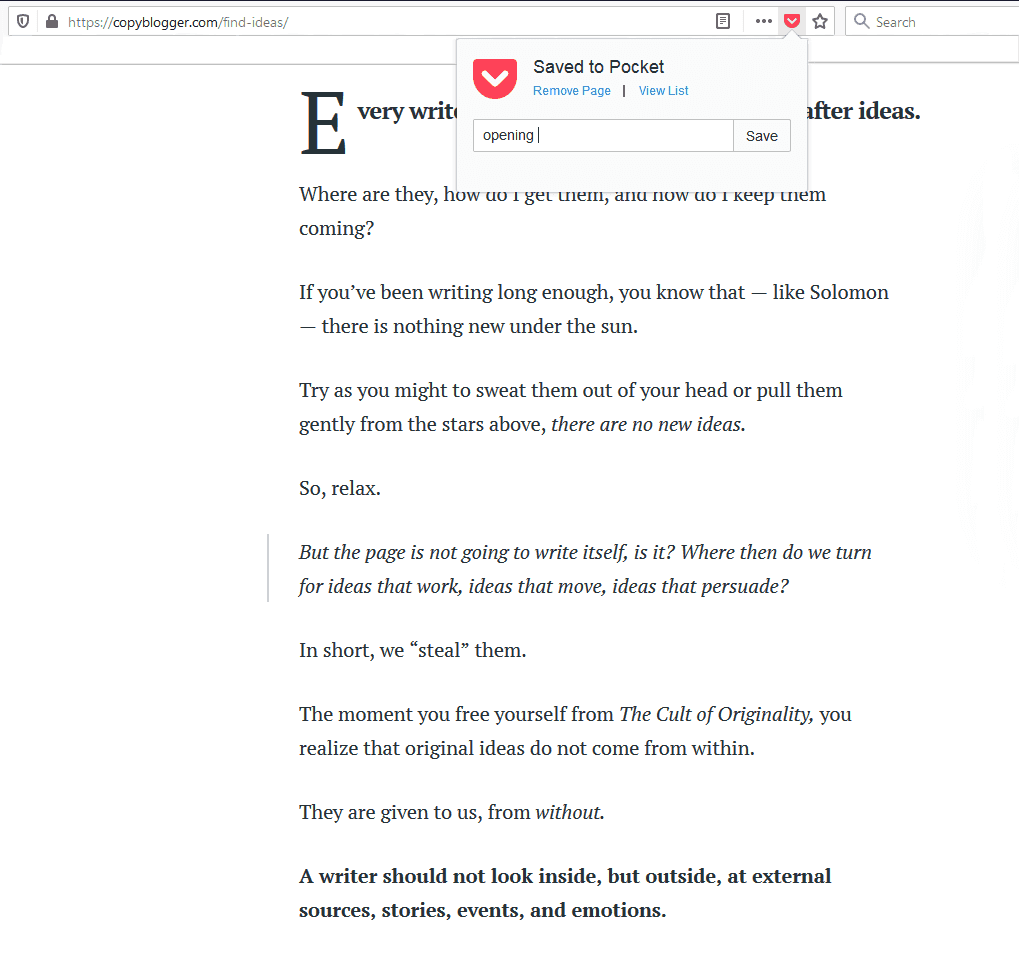
A little window will pop up, allowing you to add a tag (Example: “opening”) to the content:

save to pocket

Now, let’s say you’re writing a new article.

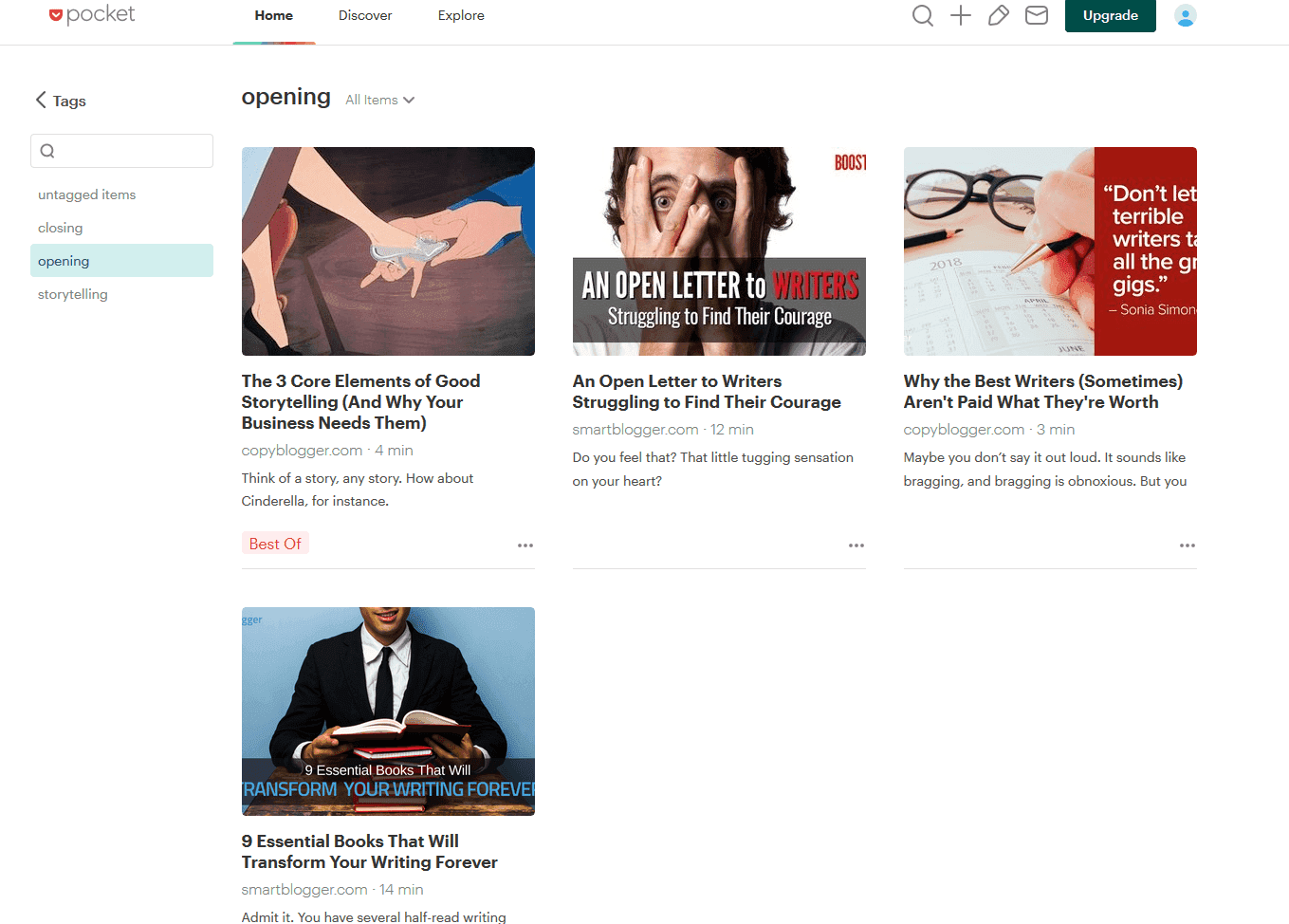
You feel stuck and don’t know how to write the opening. All you have to do is go to your Pocket and choose “opening” from your list of tags. All the articles you labeled “opening” will show up.

Read them, analyze, and find inspiration.

pocket tags

With Pocket, you can highlight parts of the article that are most relevant for your swipe file. You can also share items with a friend.

Pocket integrates with over 500 apps including Twitter, Buffer, Facebook, and Flipboard. So when you find something that’s worth swiping on social media, you can effortlessly save it to Pocket.

All your content will be saved for offline use, so you can access saved items while you travel.

And the best thing? As mentioned earlier, it’s completely free. Pocket does have a premium version, but for the purpose of creating a swipe file, the free account will be more than enough.

The only potential problem with using Pocket for your swipe file is its lack of email support. You can send a link via “email to Pocket” and it will be saved to your list, but you cannot save the content of an email to Pocket.

So, if saving the contents of an email is a deal-breaker for you, try Evernote. Email forwarding is included as one of its premium features ($7.99/month).

What Else Can I Swipe?

Honestly? Anything:

  • Parts of a blog post (openings, closings, subheads);
  • Pieces of content demonstrating canny use of power words, sensory words, transitional phrases, or bullet points;
  • Graphics or photos;
  • Quotes;
  • Statistics and research;
  • Tweets;
  • Great copy you see in pop-ups, Facebook ads, sales pages, landing pages, and homepages;
  • Pieces of content using copywriting formulas like AIDA, FAB, or PAS;
  • Excerpts demonstrating great storytelling skills.

In other words:

If it inspires your writing, add it to your swipe file.

Let Your Swipe File be Your Gold Mine

Creativity is often mistaken for being haunted by a mythical muse. People believe the lucky (and most creative) ones are just being visited more often.

But in reality, creativity has much more to do with establishing good habits like writing every day, practicing your editing skills, and collecting and studying examples of good writing.

So, choose one of the tools we mentioned. Start saving things that inspire you.

And the next time you hit a creative barrier, don’t panic. Just open your swipe file.

It’ll help you smoothly cut right through it.

The post How to Create a Swipe File (Everything You Need to Know) appeared first on Smart Blogger.


from
https://smartblogger.com/swipe-file/

Friday, April 24, 2020

5 Favorite Messages from the Podcast So Far [PODCAST]

It’s officially been 5 months since I launched the “Break Through The Noise” podcast, so I’m going to switch things up a bit.

In this episode, we’re recapping 5 of my favorite messages from the podcast so far.

Enjoy!

Listen

Where to Subscribe

How You Can Support the Podcast

Leave us a Review

The more reviews we receive on Apple Podcasts and iTunes, the more listeners we’ll get to reach (thanks to Apple’s fancy algorithm).

If you don’t know how, click here for detailed, step-by-step instructions that’ll show you how to leave us a review on Apple Podcasts and iTunes.

Tell Your Friends & Family

Have friends or followers you believe would enjoy the podcast? Here are a couple quick and easy ways to share it with them:

Tweet This Episode:

In this 'Break Through the Noise' episode, Jon Morrow recaps his 5 favorite messages from the podcast so far.Click To Tweet

Share the Episode on Facebook:

Coming soon!

The post 5 Favorite Messages from the Podcast So Far [PODCAST] appeared first on Smart Blogger.


from
https://smartblogger.com/podcast-5-favorite-messages-from-the-podcast-so-far/

Thursday, April 23, 2020

Four Google Alerts Alternatives That You Will Actually Want to Use

You need to know what's being said online about you, your brand, your competition, your industry, and other topics you're interested in. At first, Google Alerts might seem the most obvious choice, but it's notoriously unreliable.You have options, though, including these 4 alternatives. Read the full article at MarketingProfs

from
https://www.marketingprofs.com/articles/2020/42787/four-google-alerts-alternatives-that-you-will-actually-want-to-use

Friday, April 17, 2020

Should You Be Advertising on Facebook in 2020? [PODCAST]

Should you be advertising on Facebook right now?

It’s a tricky question even under normal circumstances, so you might feel torn. Most of the experts on advertising are running ads agencies, so they’re biased. Of course they’re going to say “yes!”

In this episode of the “Break Through the Noise” podcast, I’ll give you my unbiased opinion on when you should advertise and when you shouldn’t.

Listen

Where to Subscribe

How You Can Support the Podcast

Leave us a Review

The more reviews we receive on Apple Podcasts and iTunes, the more listeners we’ll get to reach (thanks to Apple’s fancy algorithm).

If you don’t know how, click here for detailed, step-by-step instructions that’ll show you how to leave us a review on Apple Podcasts and iTunes.

Tell Your Friends & Family

Have friends or followers you believe would enjoy the podcast? Here are a couple quick and easy ways to share it with them:

Tweet This Episode:

Should you be advertising on Facebook right now? In this 'Break Through the Noise' podcast episode, Jon Morrow gives you his unbiased opinion.Click To Tweet

Share the Episode on Facebook:

Coming soon!

The post Should You Be Advertising on Facebook in 2020? [PODCAST] appeared first on Smart Blogger.


from
https://smartblogger.com/podcast-should-you-be-advertising-on-facebook-in-2020/