Thursday, June 11, 2020

The 21 Best Content Marketing Tools in 2020 (Best of the Best)

There’s a ton of content marketing tools and services out there, vying for your attention (and your wallet).

But which are the best?

Which content marketing tools offer the most bang for your buck and can help you get the job done efficiently and effectively?

In this handy guide, we’ll help you answer these questions. You’ll find tools to help you at every stage of the content marketing process, from content creation to content management and beyond.

Let’s get started.

1. Google Docs

Offering exceptional flexibility and versatility for creating, editing, and (with Google Drive) storing your content, Google Docs is a tool widely used by content marketers big and small.
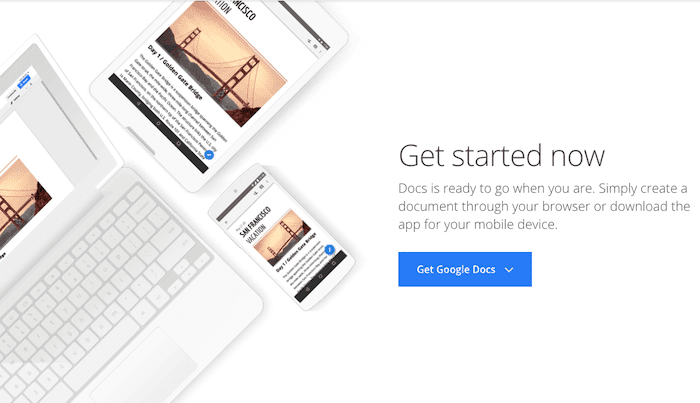
content marketing tools google docs

How Much Does Google Docs Cost?

It’s free for personal users.

Google Docs is included in Google’s Business G Suite (affiliate link), which is available in three pricing tiers (per user):

  • Basic: $6/mo
  • Business: $12/mo
  • Enterprise: $25/mo

Discounts are available for annual payment.

Standout Features of Google Docs

A web-based word processor, Google Docs lets you create and edit your content seamlessly across devices.

You can simply and quickly format and style text, add links and images, and work together remotely on documents with friends, colleagues, and clients in real-time. All your changes are automatically saved as you type, with access to previous versions through revision history.

Quick Takeaway

This easy-to-use word processor offers “work anywhere” flexibility for creating great content (even offline using the Google Chrome browser), as well as integrated cloud storage in Google Drive and real-time collaboration on documents. Best of all, it’s free.

2. BuzzSumo

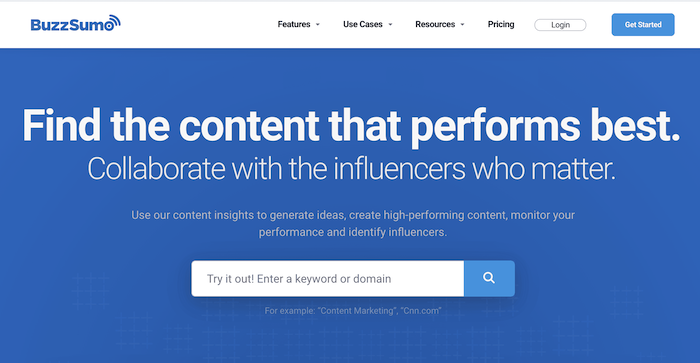
BuzzSumo’s powerful research tools allow you to see what readers in your niche are looking for and engaging with, and provide the data on which to develop a winning content marketing strategy.
content marketing tools buzzsumo

How Much Does BuzzSumo Cost?

BuzzSumo is available in four pricing tiers, all offered with 7-day free trial:

  • Pro: $99/mo
  • Plus: $179/mo
  • Large: $299/mo
  • Enterprise: $499+/mo

Discounts are available for annual payment.

Standout Features of BuzzSumo

Search for terms or phrases and quickly identify content that’s performing well. Identify the influencers in any topic or industry. Track comments and trends so you can respond rapidly and capture opportunities.

Quick Takeaway

This powerful tool supports every stage of content strategy, from initial research of niche and tribe; getting content ideas and headline inspiration for your posts; and keeping track of the trends and activity of the key players in any niche.

3. HubSpot Blog Ideas Generator

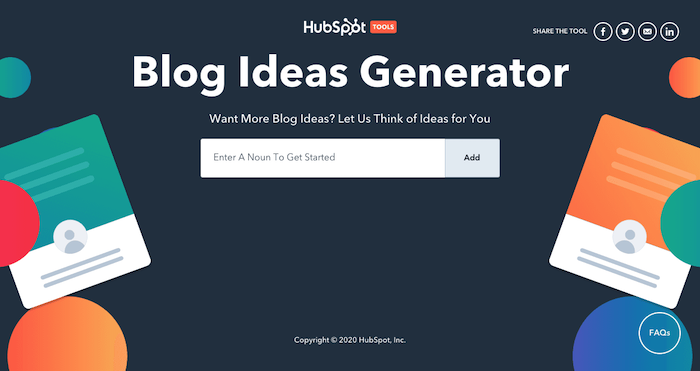
If you ever find yourself running short on new content ideas for your editorial calendar, the blog ideas generator from HubSpot has you covered.
content marketing tools hubspot blog ideas gen

How Much Does It Cost?

HubSpot’s Blog Ideas Generator is a free tool. You can get 5 blog ideas without an account, but to get more (up to 250) you’ll need to sign up.

Standout Features of HubSpot Blog Ideas Generator

You can go broad, entering just one keyword, or get increasingly specific by entering up to 5 nouns in the Generator search field. Ideas are delivered in seconds.

Quick Takeaway

The HubSpot Blog Ideas Generator lets you quickly find new topics for your content calendar. Also worth exploring is AnswerThePublic (free or pro), which provides a slightly different (and more visual) approach to content idea generation, focusing on a question and answer format.

4. Ahrefs

Ahrefs delivers 3 powerful SEO research tools in one interface, helping you understand how your competitors are gaining high rankings — and what you need to do to outrank them.

content marketing tools ahrefs

How Much Does Ahrefs Cost?

You can get a 7-day trial for $7. Thereafter, Ahrefs is available in four pricing tiers:

  • Lite: $99/mo
  • Standard: $179/mo
  • Advanced: $399/mo
  • Agency: $999/mo

You get a discount of 2 months free for annual payment.

Standout Features of Ahrefs

With its various SEO and keyword research tools, Ahrefs allows you to gain a complete SEO profile of your and your competitors’ websites. This includes which featured snippets they own, as well as the keywords they rank for (and you don’t).

You can see which pages bring the most search engine traffic, which have the most backlinks and social shares, and which websites link to the target site.

Quick Takeaway

See the exact keywords for which your competitors rank in organic search. Analyze the extent and quality of their backlinks. Then use the information to do better.

5. Evernote

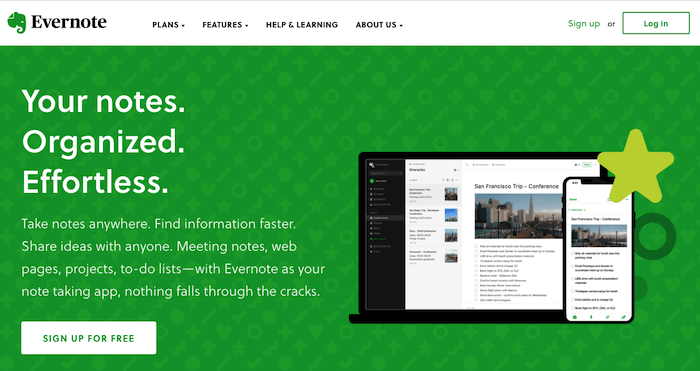
This feature-rich, multi-device, note-taking app provides a single, searchable container for all your notes, ideas, lists and reminders.
content marketing tools evernote

How Much Does Evernote Cost?

  • Basic plan: Free
  • Premium plan: $7.99/mo
  • Business plan: $14.99/mo

Note: Paid plans offer additional features and functionality.

Standout Features of Evernote

With Evernote you can create notes with rich text formatting and to-do lists with checkboxes; clip from the web; add voice memos; and attach PDFs, receipts, files, and documents. You can sort and organize information by date, title, or tag, and the app’s powerful search feature even recognizes text in pictures and handwritten notes.

Quick Takeaway

More than simply a note-taking app, Evernote enables you to gather everything you need in one place and know that all your notes, lists, and clips are backed up, organized and accessible.

6. Trello

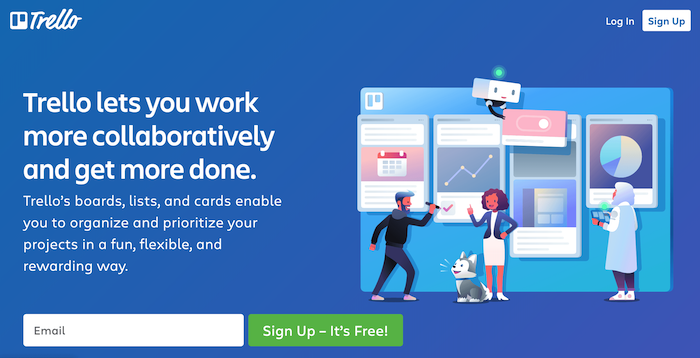
Trello uses boards, lists, and cards to offer a simple but highly visual and flexible project management tool for individuals and teams.
content marketing tools trello

How Much Does Trello Cost?

  • Personal: Free
  • Business Class: $12.50/mo (or $9.99 if paid annually)
  • Enterprise: $20.83/mo for up to 300 users

Note: Paid plans offer additional features and functionality.

Standout Features of Trello

Trello combines drag-and-drop simplicity with exceptional flexibility and at-a-glance clarity on project status.

Create as many tasks and lists as you want, and organize the project in any way that meets your needs.

Quick Takeaway

Trello helps you organize projects of any size. Checklists, due dates and calendar view (or iCal integration) help to ensure deadlines are met. Extra functionality, such as third party integrations and collaboration tools for larger teams, is available with the paid plans.

7. Grammarly

Grammarly (affiliate link) is a powerful and feature-rich grammar checker that helps you keep your writing free of spelling, grammar, and punctuation mistakes.

content marketing tools grammarly

How Much Does Grammarly Cost?

  • Basic checker: Free
  • Premium (advanced writing feedback): $11.99/mo billed annually
  • Business (for teams): $12.50/mo/member billed annually

Standout Features of Grammarly

Clear, easy to use, and customizable to your writing goals (academic, conversational, etc.), Grammarly is an extremely versatile checker. It operates almost wherever you write — in your browser (for example, Google Chrome, social media posts), as a desktop app, and in MS Office.

The free version picks up typos and basic grammatical errors. Grammarly Premium scans for good sentence structure, writing tone, plagiarism, and more.

Quick Takeaway

As a content marketer, the last thing you want is spelling, grammar, and punctuation mistakes in your writing. This customizable and versatile grammar checker helps you eliminate them.

8. CoSchedule Headline Analyzer

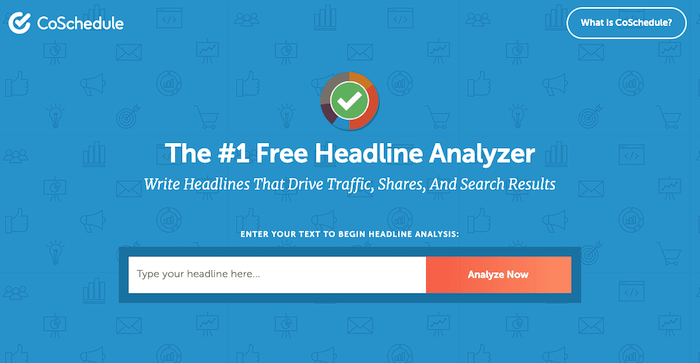
Quick and easy to use, the free headline analyzer from CoSchedule helps you write effective headlines for your post.
content marketing tools coschedule headline analyzer

How Much Does it Cost?

Free to use, in exchange for contact details.

Standout Features of CoSchedule Headline Analyzer

Gives your headline a percentage score based on analysis of the overall structure, grammar, and readability. In addition, it provides suggestions, as well as length analysis.

Quick Takeaway

Craft headlines that’ll receive more clicks with this in-depth headline analyzer. You’ll also see a preview of how your headline will look in Google search results and email subject lines.

9. Pexels

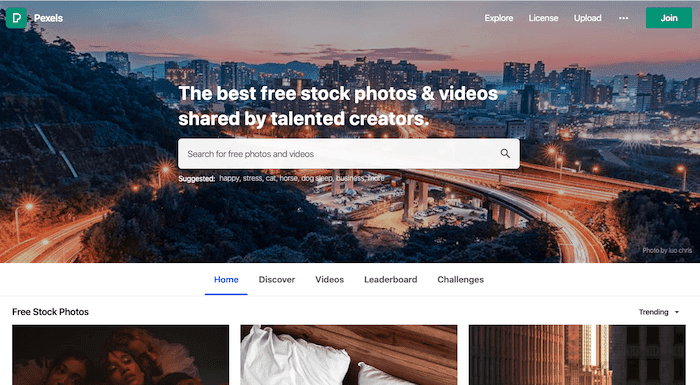
Make your post stand out with images from Pexels’ huge resource of hi-res photos and videos that you can use anywhere, for free.
content marketing tools pixels

How Much Does it Cost?

Free for personal and commercial use.

Standout Features of Pexels

Download images directly without creating an account. If you have a (free) account, you can “like” photos, follow photographers, and curate collections of images. Search any term to find the image you need quickly and simply, and with the “Discover” feature you can search existing collections and recommendations.

Quick Takeaway

Find the perfect image (or video) for any piece of content with Pexels. Or, if you need something more on the artsy side, try Unsplash. Both sites offer thousands of hi-res stock photos that free for commercial or personal use.

10. Piktochart

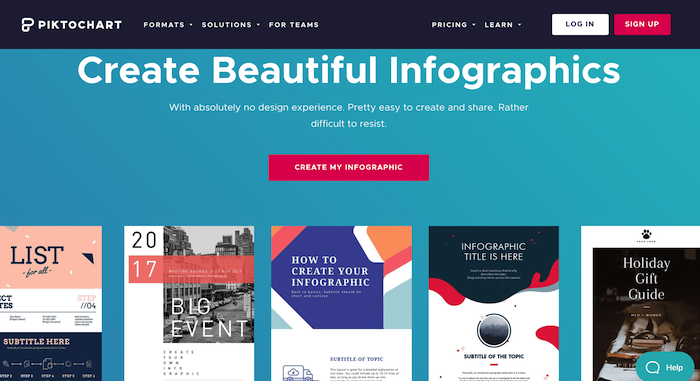
No design experience? No problem. Create eye-catching infographics, social media graphics, flyers, posters, and more with Piktochart.
content marketing tools piktochart

How Much Does Piktochart Cost?

There are 3 plans available:

  • Free (limited functionality)
  • Pro: $24.17/mo (billed annually)
  • Pro Team: $82.50/mo (billed annually) for 5 users

Standout Features of Piktochart

There are hundreds of professionally designed templates to help you get started. Use the simple drag-and-drop editor to edit fonts and colors, and add your own text. In addition, fully customizable and interactive charts and maps, and thousands of free icons and images, help you tell your story clearly and powerfully.

Quick Takeaway

Piktochart helps you maximize engagement with striking visual content, even if you have no design experience. And Piktochart infographics are fully searchable for enhanced SEO to help your content get discovered.

11. Canva

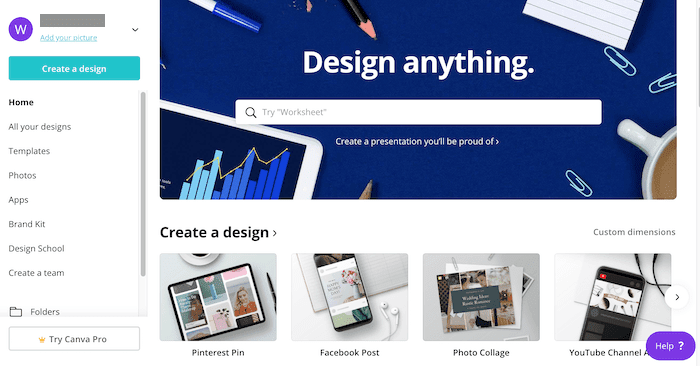
Create brilliant “image with text” headers for your blog and social media posts with Canva’s versatile and easy-to-use graphic design platform.
content marketing tools canva

How Much Does Canva Cost?

  • Canva is free
  • Canva Pro is $9.95/mo paid annually, or $12.95 paid monthly

Standout Features of Canva

Drag-and-drop editing simplicity and thousands of image templates provide exceptional design flexibility and productivity to create high-quality visuals for your marketing campaigns. You can also share content directly to many social platforms.

Quick Takeaway

Canva offers a multi-faceted online design tool, with no watermarking and thousands of templates and images to achieve the look and format you want — with no Photoshop skills needed.

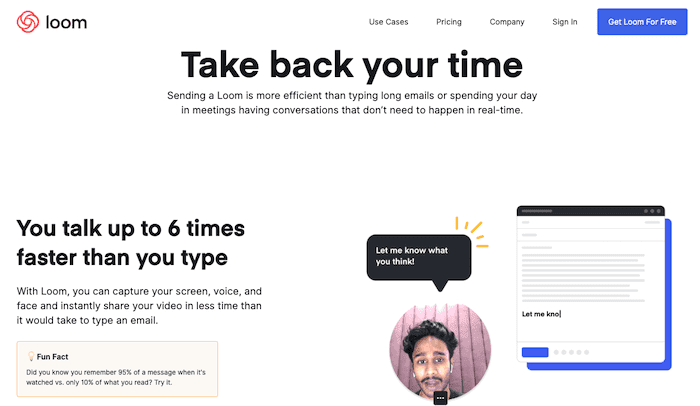
12. Loom

Combining face and screen video recording with audio, Loom makes it easy to create quick, personal videos ready for sharing via email, social media, YouTube, or as an embedded video on your website.
content marketing tools loom

How Much Does Loom Cost?

  • Basic: Free (access to 25 videos)
  • Pro: $8/mo if billed annually, $10/mo if billed monthly

Standout Features of Loom

Versatile and easy to use, Loom is available on Windows, Mac, iOS, and as a Chrome extension.

Pro gives you access to unlimited videos, as well as drawing-tool and mouse emphasis; HD (on Mac); ability to add buttons, links and files to videos; and analytics.

Quick Takeaway

With no watermarks or restrictions on how long you record for or how many videos you make, Loom’s ease of use and low cost puts the engaging power of personalized, conversational video within the reach of all content marketers.

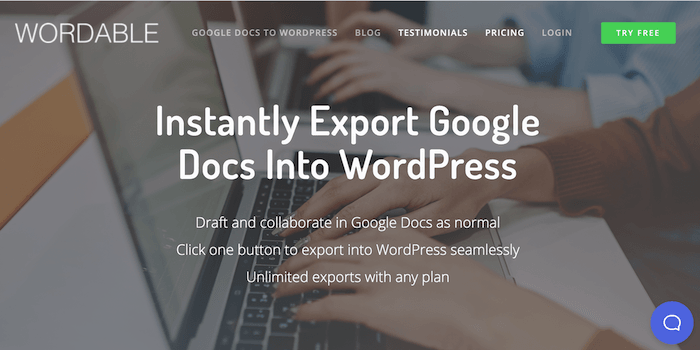
13. Wordable

With Wordable, you can write your posts in Google Docs and then transfer them to WordPress with a single click — no more copy/pasting or re-formatting in the WordPress editor.
content marketing tools wordable

How Much Does Wordable Cost?

  • Solo (1 user, 1 WordPress site): $19/mo, $190/yr
  • Pro (5 users, 5 WordPress sites): $49/mo, $490/yr
  • Pro Plus (25 users, 25 WordPress sites): $99/mo, $990/yr

There’s a free trial period and unlimited exports with all plans.

Standout Features of Wordable

Exports your Google Docs formatting intact to WordPress, including header tags, images, and even tables. Integrates seamlessly with a collaborative workflow: write as you normally do and work together with your team inside Google Docs.

Quick Takeaway

Wordable saves an enormous amount of time — no more copying, pasting, and then re-formatting your posts in WordPress.

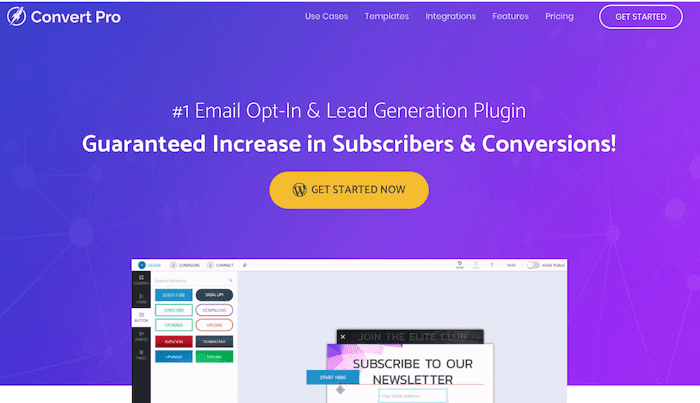
14. Convert Pro

Easy-to-use, fast, reliable and mobile-friendly, Convert Pro (affiliate link) is a  powerful plugin for WordPress that helps you convert your website traffic into email leads.
content marketing tools convertpro

How Much Does Convert Pro Cost?

  • Convert Pro only: $99/yr or $399/lifetime
  • Agency Bundle (Convert Pro plus an additional suite of tools, including Astra Pro and Schema Pro): $249/yr or $699/lifetime

In both cases, the license is for use on an unlimited number of sites.

Standout Features of Convert Pro

Convert Pro’s drag & drop editor makes it easy to position text, images, and other components. Numerous font, color, style and shape options allow you to personalize all aspects of the design. Advanced A/B testing helps you optimize content.

Quick Takeaway

Convert Pro offers a unique and feature-rich set of lead generation tools, including multi-step calls to action, on-click and exit-intent popups, page-level targeting, and more (such as geo-location targeting) to help you build your list.

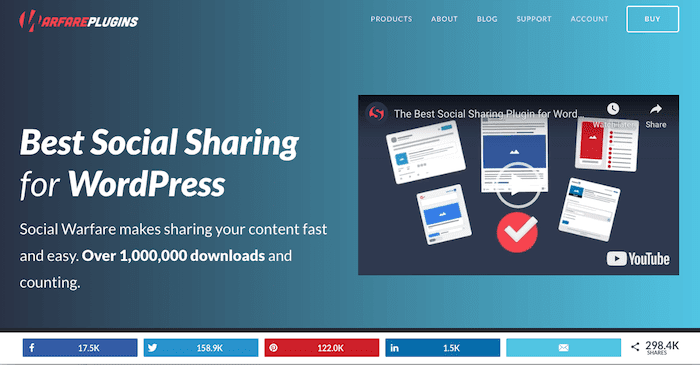
15. Social Warfare

Social Warfare (affiliate link) is a powerful WordPress plugin that allows you to fully customize your share buttons for social media so you maximize social sharing and engagement.
content marketing tools social warfare

How Much Does it Cost?

  • Social Warfare: Free
  • Social Warfare Pro:
    • Single Site: $29
    • Up to 5 Sites: $89
    • Up to 10 Sites: $139
    • Unlimited: $349

All licenses are billed yearly, with an automatic 30% renewal discount.

Standout Features of Social Warfare

Over 5,000 potential style combinations to match the social share buttons to your website. The buttons are fast loading, can be placed anywhere, and are fully responsive to device and screen size.

Quick Takeaway

Social Warfare is an advanced social sharing plugin that includes buttons for all the top social networks, “click to tweet” quotes feature, and content protection through the Frame Buster plugin that prevents people inserting their own call to action.

16. Buffer Publish

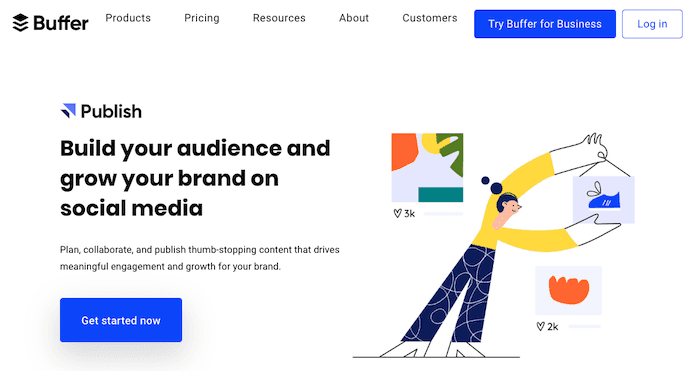
Buffer is a popular social media scheduling tool that offers a clear and simple-to-use dashboard, as well as tailored post and advanced calendar scheduling, so that you can be organized, consistent, and effective in your social media marketing.
content marketing tools buffer

How Much Does Buffer Publish Cost?

Buffer Publish is available in 3 paid tiers, billed monthly or annually, as well as in a free plan:

  • Free plan: 3 social accounts, 10 scheduled posts at a time, 1 user
  • Pro: 8 social accounts, 100 scheduled posts, 1 user for $25/mo (or $144 if billed annually)
  • Premium: 8 social accounts, 2,000 scheduled posts, 2 users for $65/mo (or $663 if billed annually)
  • Business: 25 social accounts, 2,000 scheduled posts, 6 users for $99/mo (or $1,010 if billed annually)

All plans have a 14-day free trial.

Standout Features of Buffer Publish

When you add a URL, you can immediately see how the post will look in the social media accounts you’ve connected, and it’s easy to customize post content for the different social media platforms. Available integrations make for efficient content curation.

Quick Takeaway

Buffer Publish enables efficient and effective social media marketing with additional brand-building power offered through Buffer Reply, for social listening and engagement, and Buffer Analyze, an in-depth analytics tool.

Note: Hootsuite is another leading player in the social media management space. Depending on your specific needs, it’s another solid choice.

17. MailerLite

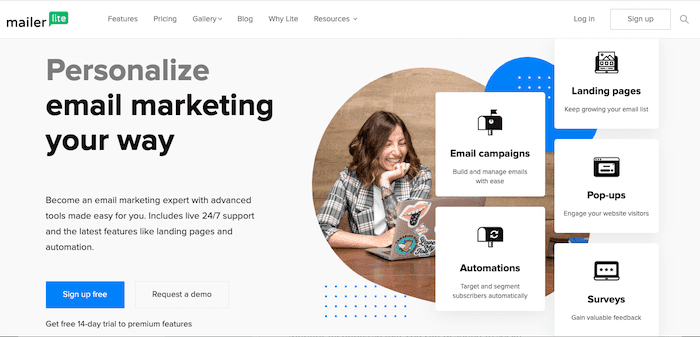
MailerLite (affiliate link) is a well-structured email marketing tool that makes it easy, even for beginners, to create beautiful landing pages, opt-in forms, and emails to build and serve their list.
content marketing tools mailerlite

How Much Does MailerLite Cost?

MailerLite is free for up to 1,000 subscribers.

The free plan enables you to build landing pages and start mailing your first 1,000 subscribers, but excludes live chat support, free newsletter templates, and certain other features.

Premium plans start at $10/mo for up to 1,000 subscribers, rising in increments per subscribers. Premium plans offer additional features and unlimited emails per month.

Standout Features of MailerLite

Easy to use drag-and-drop editor to create striking emails and landing pages with a wide selection of responsive templates for inspiration. You can also A/B test up to 5 landing pages, and auto-resend messages to non-openers, with a different subject line, new content, or an added personal message.

Quick Takeaway

MailerLite keeps it simple but offers plenty of in-app help, useful features, and digital marketing tips. Ideal for small businesses and solopreneurs, the free plan lets you get started at minimum cost.

There are, of course, many service providers in this space. Larger, more data-hungry marketing teams may want to check out solutions such as MailChimp or GetResponse, or this next tool we’ll discuss.

18. ConvertKit

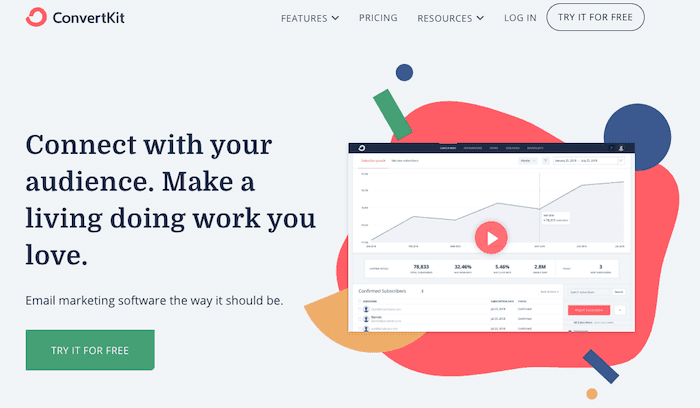
ConvertKit (affiliate link) is a streamlined email service provider that packs a punch but keeps it simple with features specifically designed to meet the needs of creators and bloggers.
content marketing tools convertkit

How Much Does ConvertKit Cost?

Free plan: Allows you to get started with Landing Pages and Forms to build your list. You can send email broadcasts to up to 1,000 subscribers.

Paid plan: Unlocks all ConvertKit features, from $29/mo for up to 1,000 subscribers, cost rising in increments to unlimited numbers of subscribers. You get 12 months for the price of 10 when you pay annually.

Standout Features of ConvertKit

Simplifies email marketing by combining powerful marketing automation with an easy-to-use interface.

When creating email sequences, it’s easy to switch between sequencing and editing in a single window — no clicking in and out of multiple pages. It’s also easy to select recipients for broadcasts by segment, tag, or other custom fields for targeted marketing.

Quick Takeaway

If you are a creator or blogger not seeking to create highly-illustrated emails, ConvertKit could be the ideal email service provider for you — it keeps things simple with just the features you need to build and market to your list.

19. Hunter

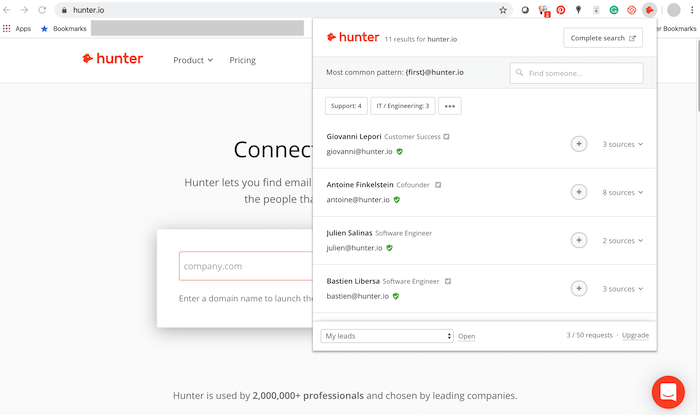
By helping you find contact info for the right person to email for pitching, link requests, and more; Hunter is an extremely powerful tool for online marketing lead generation and outreach.
content marketing tools hunter

How Much Does Hunter Cost?

  • Free plan: 50 requests/mo
  • Starter: 1,000 requests for $49/mo
  • Growth: 5,000 requests for $99/mo
  • Pro: 20,000 requests for $199/mo
  • Enterprise: 50,000 requests for $399/mo

Discounts are available on all plans if you choose annual billing.

Standout Features of Hunter

Hunter’s Chrome extension (shown in screenshot above) makes domain searches almost instantaneous. Returns not just email addresses, but the person’s role in the company, helping you identify the most appropriate recipient for your outreach.

Quick Takeaway

This user-friendly marketing platform discovers and verifies professional emails in moments, enabling you to gain valuable lead generation data quickly and easily supplementing, for example, information from LinkedIn profiles.

20. BuzzStream

With BuzzStream you can do all your outreach — research prospects, find email addresses, send outreach emails, automate follow-ups, and track performance — in one CMS (content management system).
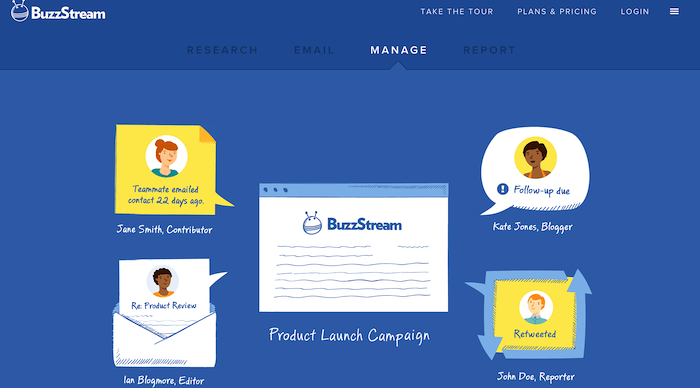
content marketing tools buzzstream

How Much Does BuzzStream Cost?

  • Starter: 1 user, 1,000 contacts, $24/mo
  • Group: 3 users, 25,000 contacts, $99/mo
  • Professional: 6 users, 100,000 contacts, $299/mo
  • Custom: 15+ users, 300,000+ contacts, $999/mo (starting)

All plans offer a free trial period. Premium plans offer additional features. You get 1 month free if you pay for 12 months in advance.

Standout Features of BuzzStream

BuzzStream’s Discovery tool makes it easy to find influencers and important bloggers in your niche. With the BuzzMarker Chrome extension, you can add websites, people, and links to your BuzzStream account with one click.

Quick Takeaway

Once you are adept on the platform, BuzzStream makes outreach much faster and easier than doing everything manually. This is particularly helpful if you are doing outreach at scale.

21. Google Analytics

See where your traffic is coming from, which keywords are your best performers, which of your pages are most popular, how much time visitors are spending on your site, and more with Google Analytics. And you can do it in real-time, and for free.
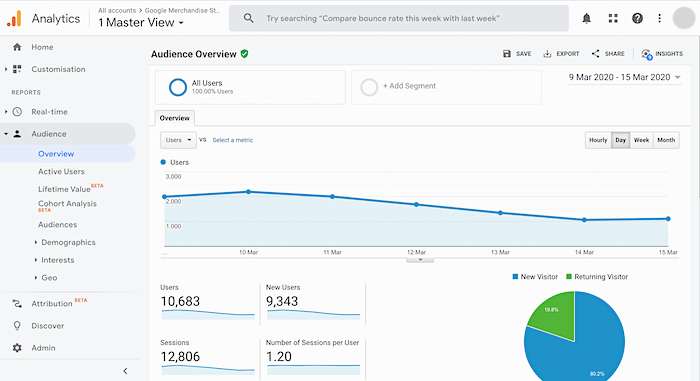
content marketing tools google analytics

How Much Does It Cost?

It’s free.

There is also an enterprise version, Google Analytics 360, with additional features.

Standout Features of Google Analytics

The extensive range of standard dashboards provides at-a-glance insight into all the key areas of website and online marketing performance. Ability to customize dashboards to analyze specific data. Provides reliable data to guide website optimization and business development.

Quick Takeaway

This cloud-based analytics platform enables businesses of all sizes to learn how visitors are finding and using their website. And then, based on real data, take action to improve site performance and your inbound strategies.

Which Content Marketing Tools are Your Favorites?

So there you have it. Our picks for the 21 best of the best content marketing tools in 2020.

Nearly all the tools we’ve listed offer either a free plan or a free trial period (or are free altogether). So you can try them out at little or no cost.

Which are your favorites?

And have we left out any tools that you love using? Let us know in the comments.

The post The 21 Best Content Marketing Tools in 2020 (Best of the Best) appeared first on Smart Blogger.


from
https://smartblogger.com/content-marketing-tools/

Tuesday, June 9, 2020

The Work Life of a Social Media Manager [Infographic]

The social media manager role revolves around managing social media channels on a daily basis, but the work has bled over into other marketing areas as well. Here's what it takes to do the job well. Read the full article at MarketingProfs

from
https://www.marketingprofs.com/chirp/2020/43036/the-work-life-of-a-social-media-manager-infographic

Thursday, June 4, 2020

COVID-19 Impact on Business, and Digital Marketing Initiatives [Infographic]

COVID-19 pandemic-related shutdowns have affected a host of industries and sectors in various ways. Part of the fallout has been the change in Web-use behavior, as well, along with digital marketing initiatives by major search and social media platforms. This infographic offers an overview. Read the full article at MarketingProfs

from
https://www.marketingprofs.com/chirp/2020/43008/covid-19-impact-on-business-and-digital-marketing-initiatives-infographic

How to Write a Case Study: Step-by-Step Guide (+ Examples)

If you want to learn how to write a case study that engages prospective clients, demonstrates you can solve real business problems, and showcases the results you deliver, this guide will help.

We’ll give you a proven template to follow, show you how to conduct an engaging interview, and give you several examples and tips for best practices.

Let’s start with the basics.

What is a Case Study?

A business case study is simply a story about how you successfully delivered a solution to your client.

Case studies start with background information about the customer, describe problems they were facing, present the solutions you developed, and explain how those solutions positively impacted the customer’s business.

Do Marketing Case Studies Really Work?

Absolutely. A well-written case study puts prospective clients into the shoes of your paying clients, encouraging them to engage with you. Plus, they:

  1. Get shared “behind the lines” with decision makers you may not know;
  2. Leverage the power of “social proof” to encourage prospective clients to take a chance with your company;
  3. Build trust and foster likeability;
  4. Lessen the perceived risk of doing business with you and offer proof that your business can deliver results;
  5. Help prospects become aware of unrecognized problems;
  6. Show prospects experiencing similar problems that possible solutions are available (and you can provide said solutions);
  7. Make it easier for your target audience to find you when using Google and other search engines.

Case studies serve your clients too. For example, they can generate positive publicity and highlight the accomplishments of line staff to the management team. Your company might even throw in a new product/service discount, or a gift as an added bonus.

But don’t just take my word for it. Let’s look at a few statistics and success stories:

In the B2B setting, events help generate the most leads, while case studies help convert and accelerate the most leads. (…) In a survey of B2B marketers, they listed case studies as their 3rd best way to nurture leads.
49% of B2B buyers said they now rely more on content to research and make purchase decisions.
2018 Content Preferences Survey Report
Case studies are one of the top five content types used to move IT purchasers through the buy cycle.

5 Winning Case Study Examples to Model

Before we get into the nuts and bolts of how to write a case study, let’s go over a few examples of what an excellent one looks like.

The five case studies listed below are well-written, well-designed, and incorporate a time-tested structure.

1. Lane Terralever and Pinnacle at Promontory

case study example Lane Terralever

This case study from Lane Terralever incorporates images to support the content and effectively uses subheadings to make the piece scannable.

2. WalkMe Mobile and Hulyo

case study example walkme mobile

This case study from WalkMe Mobile leads with an engaging headline and the three most important results the client was able to generate.

In the first paragraph, the writer expands the list of accomplishments encouraging readers to learn more.

3. CurationSuite Listening Engine

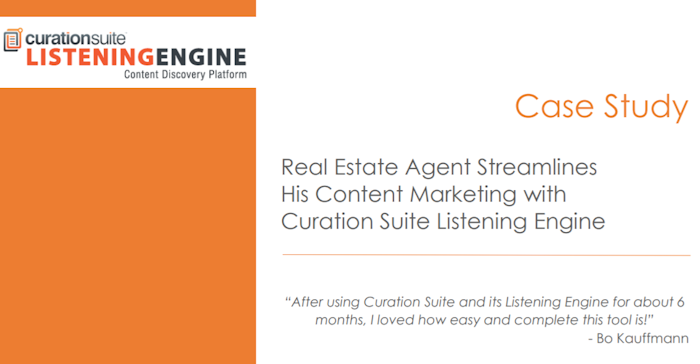
case study example curationsuite listening engine

This is an example of a well-designed printable case study. The client, key problem, and solution are called out in the left column and summarized succinctly.

4. Brain Traffic and ASAE

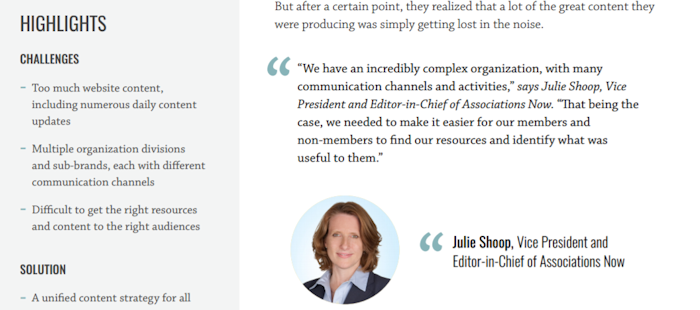
case study example brain traffic

This long format case study (6 pages) from Brain Traffic summarizes the challenges, solutions, and results prominently in the left column. It uses testimonials and headshots of the case study participants very effectively.

5. Adobe and Home Depot

case study example adobe home depot

This case study from Adobe and Home Depot is a great example of combining video, attention-getting graphics, and long form writing. It also uses testimonials and headshots well.

Now that we’ve gone over the basics and showed a few great case study examples you can use as inspiration, let’s roll up our sleeves and get to work.

A Case Study Structure That Pros Use

Let’s break down the structure of a compelling case study:

Choose Your Case Study Format

In this guide, we focus on written case studies. They’re affordable to create, and they have a proven track record. However, written case studies are just one of four case study formats to consider:

  1. Written
  2. Video
  3. Podcast
  4. Infographic

If you have the resources, video (like the Adobe and Home Depot example above) and podcast case studies can be very compelling. Hearing a client discuss in his or her own words how your company helped is an effective content marketing tool.

Infographic case studies are usually one-page images that summarize the challenge, solution, and results. They tend to work well on social media.

Follow a Tried-and-True Case Study Template

The success story structure we’re using incorporates a “narrative” or “story arc” designed to suck readers in and captivate their interest.

Note: I recommend creating a blog post or landing page on your website that includes the text from your case study, along with a downloadable PDF. Doing so helps people find your content when they perform Google and other web searches.

There are a few simple SEO strategies that you can apply to your blog post that will optimize your chances of being found. I’ll include those tips below.

Craft a Compelling Headline

The headline should capture your audience’s attention quickly. Include the most important result you achieved, the client’s name, and your company’s name. Create several examples, mull them over a bit, then pick the best one. And, yes, this means writing the headline is done at the very end.

SEO Tip: Let’s say your firm provided “video editing services” and you want to target this primary keyword. Include it, your company name, and your client’s name in the case study title.

Write the Executive Summary

This is a mini-narrative using an abbreviated version of the Challenge + Solution + Results model (3-4 short paragraphs). Write this after you complete the case study.

SEO Tip: Include your primary keyword in the first paragraph of the Executive Summary.

Provide the Client’s Background

Introduce your client to the reader and create context for the story.

List the Customer’s Challenges and Problems

Vividly describe the situation and problems the customer was dealing with, before working with you.

SEO Tip: To rank on page one of Google for our target keyword, review the questions listed in the “People also ask” section at the top of Google’s search results. If you can include some of these questions and their answers into your case study, do so. Just make sure they fit with the flow of your narrative.

Detail Your Solutions

Explain the product or service your company provided, and spell out how it alleviated the client’s problems. Recap how the solution was delivered and implemented. Describe any training needed and the customer’s work effort.

Show Your Results

Detail what you accomplished for the customer and the impact your product/service made. Objective, measurable results that resonate with your target audience are best.

List Future Plans

Share how your client might work with your company in the future.

Give a Call-to-Action

Clearly detail what you want the reader to do at the end of your case study.

Talk About You

Include a “press release-like” description of your client’s organization, with a link to their website. For your printable document, add an “About” section with your contact information.

And that’s it. That’s the basic structure of a case study.

Now, let’s go over how to get the information you’ll use in your case study.

How to Conduct an Engaging Case Study Interview

One of the best parts of creating a case study is talking with your client about the experience. This is a fun and productive way to learn what your company did well, and what it can improve on, directly from your customer’s perspective.

Here are some suggestions for conducting great case study interviews:

When Choosing a Case Study Subject, Pick a Raving Fan

Your sales and marketing team should know which clients are vocal advocates willing to talk about their experiences. Your customer service and technical support teams should be able to contribute suggestions.

Clients who are experts with your product/service make solid case study candidates. If you sponsor an online community, look for product champions who post consistently and help others.

When selecting a candidate, think about customer stories that would appeal to your target audience. For example, let’s say your sales team is consistently bumping into prospects who are excited about your solution, but are slow to pull the trigger and do business with you.

In this instance, finding a client who felt the same way, but overcame their reluctance and contracted with you anyway, would be a good story to capture and share.

Prepping for the Interview

If you’ve ever seen an Oprah interview, you’ve seen a master who can get almost anyone to open up and talk. Part of the reason is that she and her team are disciplined about planning.

Before conducting a case study interview, talk to your own team about the following:

  1. What’s unique about the client (location, size, industry, etc.) that will resonate with our prospects?
  2. Why did the customer select us?
  3. How did we help the client?
  4. What’s unique about this customer’s experience?
  5. What problems did we solve?
  6. Were any measurable, objective results generated?
  7. What do we want readers to do after reading this case study analysis?

Pro Tip: Tee up your client. Send them the questions in advance.

Providing questions to clients before the interview helps them prepare, gather input from other colleagues if needed, and feel more comfortable because they know what to expect.

In a moment, I’ll give you an exhaustive list of interview questions. But don’t send them all. Instead, pare the list down to one or two questions in each section and personalize them for your customer.

Nailing the Client Interview

Decide how you’ll conduct the interview. Will you call the client, use Skype or Facetime, or meet in person? Whatever mode you choose, plan the process in advance.

Make sure you record the conversation. It’s tough to lead an interview, listen to your contact’s responses, keep the conversation flowing, write notes, and capture all that the person is saying.

A recording will make it easier to write the client’s story later. It’s also useful for other departments in your company (management, sales, development, etc.) to hear real customer feedback.

Use open-ended questions that spur your contact to talk and share. Here are some real-life examples:

Introduction

  1. Recap the purpose of the call. Confirm how much time your contact has to talk (30-45 minutes is preferable).
  2. Confirm the company’s location, number of employees, years in business, industry, etc.
  3. What’s the contact’s background, title, time with the company, primary responsibilities, and so on?

Initial Challenges

  1. Describe the situation at your company before engaging with us?
  2. What were the initial problems you wanted to solve?
  3. What was the impact of those problems?
  4. When did you realize you had to take some action?
  5. What solutions did you try?

Solutions

  1. What solutions did you implement?
  2. What process did you go through to make a purchase?
  3. How did the implementation go?
  4. How would you describe the work effort required of your team?
  5. If training was involved, how did that go?

Results, Improvements, Progress

  1. When did you start seeing improvements?
  2. What were the most valuable results?
  3. What did your team like best about working with us?
  4. Would you recommend our solution/company? Why?

Future Plans

  1. How do you see our companies working together in the future?

Honest Feedback

  1. Our company is very focused on continual improvement. What could we have done differently to make this an even better experience?
  2. What would you like us to add or change in our product/service?

During the interview, use your contact’s responses to guide the conversation.

Once the interview is complete, it’s time to write your case study.

How to Write a Case Study… Effortlessly

Case study writing is not nearly as difficult as many people make it out to be. And you don’t have to be Stephen King to do professional work. Here are a few tips:

  • Use the case study structure that we outlined earlier, but write these sections first: company background, challenges, solutions, and results.
  • Write the headline, executive summary, future plans, and call-to-action (CTA) last.
  • In each section, include as much content from your interview as you can. Don’t worry about editing at this point
  • Tell the story by discussing their trials and tribulations.
  • Stay focused on the client and the results they achieved.
  • Make their organization and employees shine.
  • When including information about your company, frame your efforts in a supporting role.

Also, make sure to do the following:

Add Testimonials, Quotes, and Visuals

The more you can use your contact’s words to describe the engagement, the better. Weave direct quotes throughout your narrative.

Strive to be conversational when you’re writing case studies, as if you’re talking to a peer.

Include images in your case study that visually represent the content and break up the text. Photos of the company, your contact, and other employees are ideal.

If you need to incorporate stock photos, here are three resources:

  1. Depositphotos
  2. Unsplash
  3. Canva

Proofread and Tighten Your Writing

Make sure there are no grammar, spelling, or punctuation errors. If you need help, consider using Grammarly.

My high school English teacher’s mantra was “tighten your writing.” She taught that impactful writing is concise and free of weak, unnecessary words. This takes effort and discipline, but will make your writing stronger.

Also, keep in mind that we live in an attention-diverted society. Before your audience will dive in and read each paragraph, they’ll first scan your work. Use subheadings to summarize information, convey meaning quickly, and pull the reader in.

Be Sure to Use Best Practices

Consider applying the following best practices to your case study:

  1. Stay laser-focused on your client and the results they were able to achieve.
  2. Even if your audience is technical, minimize the use of industry jargon. If you use acronyms, explain them.
  3. Leave out the selling and advertising.
  4. Don’t write like a Shakespearean wannabe. Write how people speak. Write to be understood.
  5. Clear and concise writing is not only more understandable, it inspires trust. Don’t ramble.
  6. Weave your paragraphs together so that each sentence is dependent on the one before and after it.
  7. Include a specific case study call-to-action (CTA).
  8. A recommended case study length is 2-4 pages.
  9. Commit to building a library of case studies.

Get Client Approval

After you have a final draft, send it to the client for review and approval. Incorporate any edits they suggest.

Use or modify the following “Consent to Publish” form to get the client’s written sign-off:

Consent to Publish

Case Study Title:

Author:

I hereby confirm that I have reviewed the case study listed above and on behalf of the [Company Name], I provide full permission for the work to be published, in whole or in part, for the life of the work, in all languages and all formats by [Company publishing the case study].

By signing this form, I affirm that I am authorized to grant full permission.

Name:

Title:

Company Name:

Address:

E-mail Address:

Signature:

Date:

Common Case Study Questions (& Answers)

We’ll wrap things up with a quick Q&A. If you have a question I didn’t answer, be sure to leave it in a blog comment below.

Should I worry about print versions of my case studies?

Absolutely.

As we saw in the CurationSuite and Brain Traffic examples earlier, case studies get downloaded, printed, and shared. Prospects can and will judge your book by its cover.

So, make sure your printed case study is eye-catching and professionally designed. Hire a designer if necessary.

Why are good case studies so effective?

Case studies work because people trust them.

They’re not ads, they’re not press releases, and they’re not about how stellar your company is.

Plus, everyone likes spellbinding stories with a hero [your client], a conflict [challenges], and a riveting resolution [best solution and results].

How do I promote my case study?

After you’ve written your case study and received the client’s approval to use it, you’ll want to get it in front of as many eyes as possible.

Try the following:

  1. Make sure your case studies can be easily found on your company’s homepage.
  2. Tweet and share the case study on your various social media accounts.
  3. Have your sales team use the case study as a reason to call on potential customers. For example: “Hi [prospect], we just published a case study on Company A. They were facing some of the same challenges I believe your firm is dealing with. I’m going to e-mail you a copy. Let me know what you think.”
  4. Distribute printed copies at trade shows, seminars, or during sales presentations.
  5. If you’re bidding on a job and have to submit a quote or a Request for Proposal (RFP), include relevant case studies as supporting documents.

Ready to Write a Case Study That Converts?

If you want to stand out and you want to win business, case studies should be an integral part of your sales and marketing efforts.

Hopefully, this guide answered some of your questions and laid out a path that will make it faster and easier for your team to create professional, sales-generating content.

Now it’s time to take action and get started. Gather your staff, select a client, and ask a contact to participate. Plan your interview and lead an engaging conversation. Write up your client’s story, make them shine, and then share it.

Get better at the case study process by doing it more frequently. Challenge yourself to write at least one case study every two months.

As you do, you’ll be building a valuable repository of meaningful, powerful content. These success stories will serve your business in countless ways, and for years to come.

The post How to Write a Case Study: Step-by-Step Guide (+ Examples) appeared first on Smart Blogger.


from
https://smartblogger.com/how-to-write-a-case-study/

Friday, May 29, 2020

Personal Update: Lessons from a Near Death Experience [PODCAST]

Since we last spoke, I almost died.

Meningitis due to an allergic reaction has kept me from being with you for several weeks, but it’s left me with some lessons to share. We’re going to talk about disaster preparedness, the concept of fairness, and how aggressive actions create risk but may be worth it.

Let’s dive in.

Listen

Where to Subscribe

How You Can Support the Podcast

Leave us a Review

The more reviews we receive on Apple Podcasts and iTunes, the more listeners we’ll get to reach (thanks to Apple’s fancy algorithm).

If you don’t know how, click here for detailed, step-by-step instructions that’ll show you how to leave us a review on Apple Podcasts and iTunes.

Tell Your Friends & Family

Have friends or followers you believe would enjoy the podcast? Here are a couple quick and easy ways to share it with them:

Tweet This Episode:

Smart Blogger's CEO, Jon Morrow, almost died. In this very special episode of the 'Break Through the Noise' podcast, Jon shares the details, plus some valuable lessons he learned from what happened.Click To Tweet

Share the Episode on Facebook:

The post Personal Update: Lessons from a Near Death Experience [PODCAST] appeared first on Smart Blogger.


from
https://smartblogger.com/podcast-personal-update-lessons-from-a-near-death-experience/

Thursday, May 28, 2020

How to Craft the Perfect Writing Sample in 2020 (+ Examples)

Just when you thought you finally found your dream job, your hopes are deflated by two simple, intimidating words: “writing sample.”

You know the job is perfect for you. It feels like you were almost born for it.

And if you can just land this gig, your writing career will take off like you’ve always dreamed!

But you don’t have any writing samples. Even worse, you’re not exactly sure how to go about creating one.

Let’s do something about that, shall we?

This guide will show you how to craft the perfect writing sample. By the time you’re finished reading, you’ll have everything you need to land your dream job.

We’ll start with the basics…

What is a Writing Sample?

A writing sample is a document you submit when applying for jobs requiring a significant amount of writing or communication skills.

In a cover letter, applicants share their skills and experience to describe why they deserve the job. In a writing sample, candidates demonstrate those skills.

The type of writing sample you create will depend upon the job you want. If you want to be a freelance writer, you’ll have to create sample articles. If you want to enter graduate school, you’ll have to create a writing sample on a topic in your chosen field. And if you want a job in public relations, you’ll have to create a sample press release. (And so on.)

Whatever you’re applying for, to create a job-winning writing sample you’ll need a deeper understanding of the purpose of writing samples.

Note: While this guide focuses mainly on creating writing samples to win freelance writing jobs, the same process can be adapted to create samples for any job.

What’s the Purpose of a Writing Sample?

While you know you’re good enough to do the job you’re chasing, your prospective employer can’t just take your word for it. They need proof before they bring you in for a job interview (whether it’s a Zoom interview or something in-person).

That’s where writing samples come in.

Think of a writing sample as a trial run. Hiring managers will use your writing sample to evaluate your writing ability and see if you have what it takes.

Specifically, they’ll be evaluating the following:

Attention to Detail

First and foremost, your writing sample should have zero typos, syntax, or grammar mistakes. Zero!

Simple mistakes convey a lack of attention to detail. And hiring managers will assume you’ll make the same mistakes if they give you the job.

But job ads will also tell you what they expect of your writing sample with regard to topics, style, tone, format, etc.

Many writers, in the rush to end their job search, overlook some of these details. That’s why so many fail.

Be sure to read the job ad carefully, make a list of all requirements, and double check for errors.

Writing Style and Tone

All publications have a general writing style and tone. Hiring managers want to know if you understand it and can match it.

Some publications will want you to take complex subject matter and explain it in a casual, easy-to-understand way for average readers.

Publications with a more educated, professional audience — scientific publications, for example — may expect you to use complex terms and concepts relevant to their industry.

If an official style guide isn’t available, check out the content they’ve already published. By mimicking what you find, you’ll have a leg up on your competitors.

Grasp of Their Subject Matter

Many applicants will say they understand a topic. But writing samples don’t lie.

A big reason employers ask for writing samples is to see if you actually know what you’re talking about. If you don’t, your writing will expose you.

Good writing samples should demonstrate you understand the subject matter and can write about it clearly and accurately.

Grasp of Best Practices

Whether you’re writing news articles, email copy, press releases, or research papers, there are general best practices employers will want you to know.

For example, if you’re applying for a job as a blog article writer, employers will expect you to know on-page SEO.

If the job is for Facebook ad creation, you should know the ins and outs of creating optimized Facebook ads.

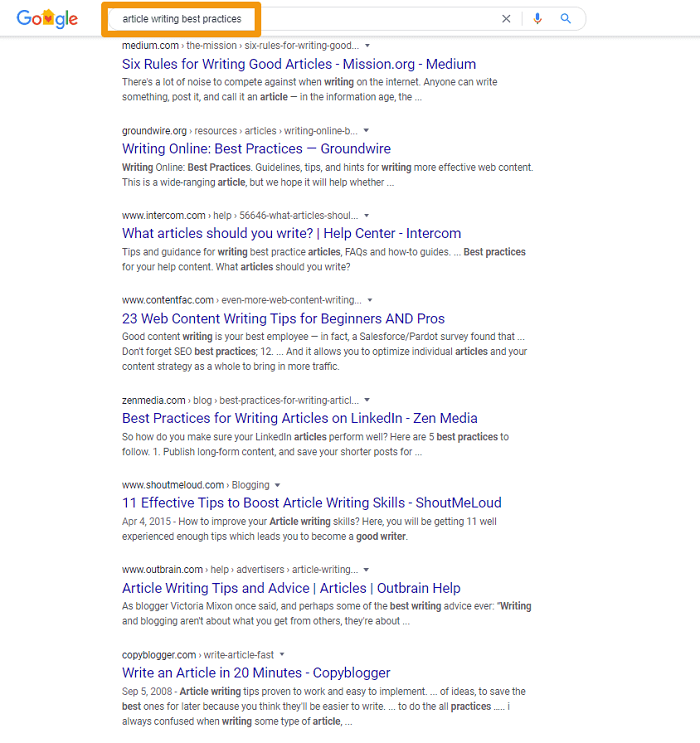
Luckily, most of this information can be found with a simple Google search ([Type Of Content] + best practices).

writing sample google best practices screenshot

Ability to Do the Job

The best thing about writing samples is they have the potential to overrule all other evaluation criteria.

Job ads often list many “requirements” that don’t actually matter. They may “require” 5+ years of work experience, a Bachelor’s Degree in a specific field of study, or creative writing experience.

While some employers are sticklers for these requirements, many know that, at the end of the day, none of it really matters. Smart employers really only care about one thing: can you do the job?

Your writing sample is your opportunity to demonstrate you can.

How to Create a Perfect Writing Sample

A good writing sample will meet all of the criteria above.

But a perfect writing sample is one that’s so good the hiring manager will want to publish it.

Creating a perfect writing sample requires a change of mindset. Don’t see yourself as an applicant creating a writing sample. Pretend you already have the job and you’re creating a piece they’ve assigned to you.

To do so, you’ll have to employ a strategic process for creating a writing sample that’s perfect for them and their audience.

Let’s get started…

Step 1: Study the Job Ad to Identify Key Criteria

Almost everything you need to know about creating a job-winning writing sample can be found in the job ad itself.

That’s why it’s important to read the job ad thoroughly and make note of the specific criteria they’re looking for in a candidate.

Criteria #1: Topic(s)

It should go without saying, but your writing sample should be on-topic. For example, if you’re applying to a health blog, your sample should be on a health-related topic.

But look out for any other indications of the type of content the prospective employer wants.

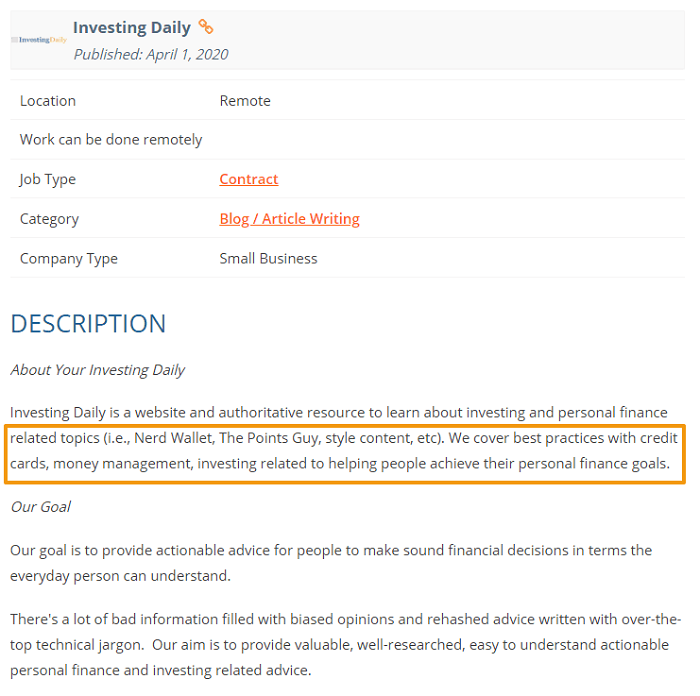
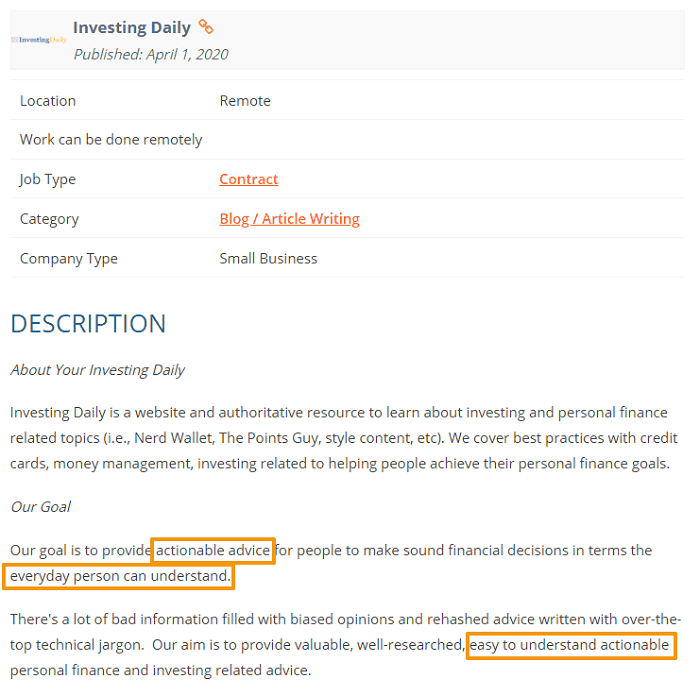
Some ads will mention specific subtopics they’re interested in. In the screenshot below, the financial blog mentions they want content that focuses on “best practices with credit cards, money management, and investing.”

writing sample job ad screenshot finance blog

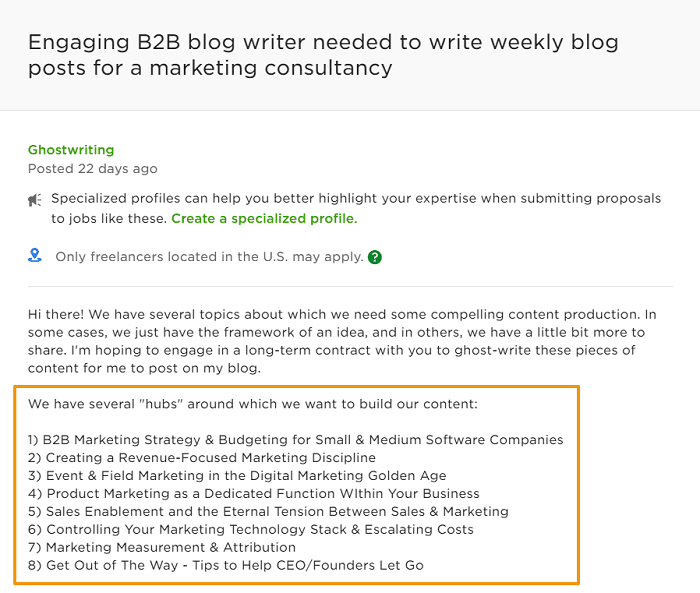
Some ads will get even more specific and describe specific headlines or article ideas that they want. The more specific, the better.

writing sample job ad screenshot marketing consultant

If the ad gives you topics or subtopics, use them to create your writing sample.

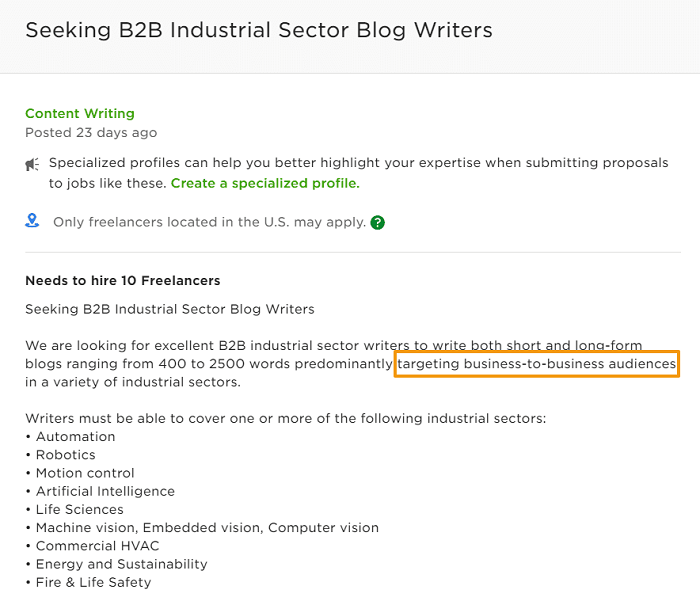
Criteria #2: The Target Audience

Most job ads will tell you who their target audience is. And as a writer, you’ll need to understand their target audience to create good content for them.

writing sample job ad screenshot b2b industrial

Make note of the audience they’re targeting and do some research to understand their problems, goals, and the type of content they love to read.

You can learn more about their audience by:

  • Studying the employer’s website and social media.
  • Studying the websites and social media of their competitors.
  • Researching industry reports about their audience.
  • Studying online communities where their audience hangs out.

I once wrote an article for a client that sold marketing software to B2B companies. To understand their audience, I read reports on B2B marketing to learn about their challenges and goals, then used that info to create my article.

Criteria #3: Writing Style

Job ads often use certain keywords to describe their writing style and tone. Words like: authoritative, actionable, casual, practical, etc.

Create a list of keywords that describe their writing style (usually no more than 2-5) and use it as a guide when creating your sample.

For example, the job ad below asks for writing that’s “actionable” and “easy to understand” twice. It also provides examples of other blogs whose writing style they want to emulate.

writing sample job ad screenshot finance blog 2

Criteria #4: Length

Almost every job ad will describe a word count for the content they want you to create.

Sometimes it’s a direct number (2,000 words), sometimes it’s a range (1,000 – 1,500 words).

Your writing sample should be no longer than what they ask for. Employers aren’t impressed by your ability to write long pieces. They want to know you can write to their exact specifications.

Criteria #5: Format

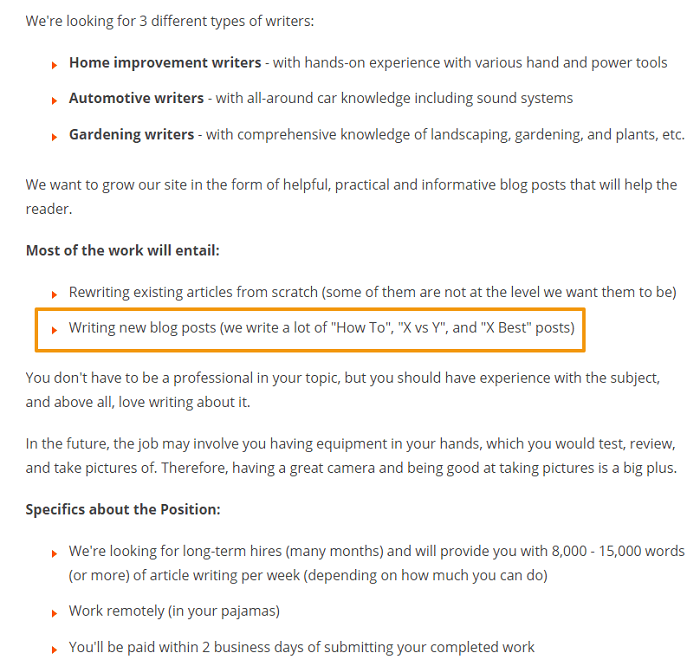
Many job ads will describe frameworks for the type of content they publish.

Some will mention they publish “list posts”, “how to’s”, and “X vs Y” articles.

writing sample job ad screenshot home improvement blog

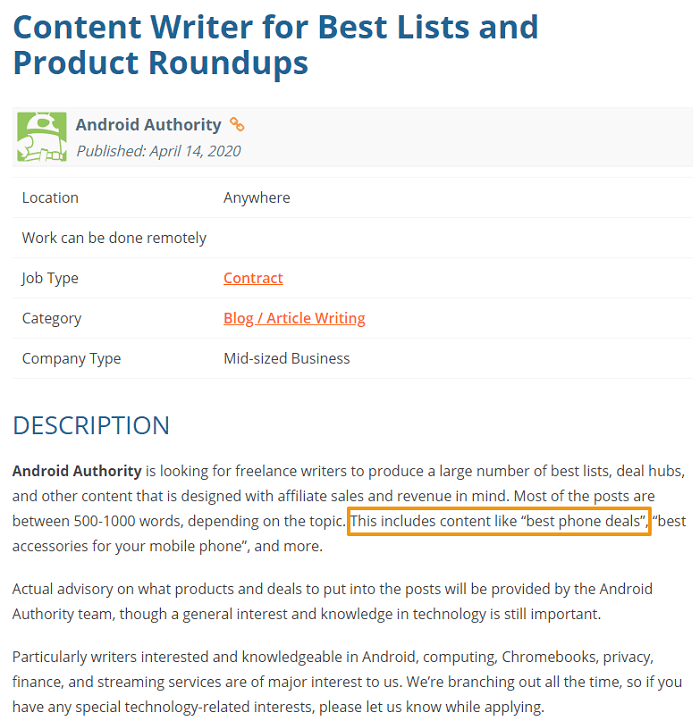
Others will give more information as to the framework of their headlines, like “best ___” or “product roundups.”

writing sample job ad screenshot android blog

Your writing sample should follow the format they request.

Criteria #6: Employer Goals

At the end of the day, every business that hires writers does so to achieve a business objective.

They’re not simply trying to publish your beautiful prose. They want results.

To increase your odds of getting the job, create a writing sample that has the potential to help them achieve their objectives.

Doing so demonstrates that you’re not just a good writer who can produce copy on demand, you’re also good for business.

So, study the job ad and identify any business goals that are explicitly stated.

Generally, employers will have one of two goals:

1st Employer Goal: Traffic

Some businesses operate on a traffic-based model. That means they generate money from ad-revenue and need to send lots of traffic to their site.

These businesses include entertainment, lifestyle, and news blogs, or businesses that sell low-cost products.

To appeal to these types of businesses, you should create a writing sample that’s aimed at generating high traffic:

  • Target high-traffic keywords.
  • Use tools like BuzzSumo to identify related topics that are popular on social media.
  • Identify the most popular content on their site and model it.
  • Use high-traffic frameworks: how to’s; list posts; round-ups.
  • Incorporate shareable images (charts, graphics, quotes, etc.).
  • Create content that influencers will want to share.
2nd Employer Goal: Leads

Some businesses operate on a lead-based model. That means their main goal is to drive traffic that converts into leads that they can nurture into sales.

Companies that sell consulting, courses, b2b, and high-cost products depend on leads to function.

To appeal to these types of businesses, you should create a sample that is aimed at generating leads.

  • Target keywords that show commercial intent.
  • Check for lead magnets on their site and reverse-engineer content ideas from them. You can link to their lead magnet in your article or include a CTA for it at the end.
  • Reverse-engineer your writing sample from their product or service. For example, create a how-to guide that describes how to achieve a desired result with their product.

Step 2: Brainstorm Ideas for Your Writing Sample

Now that you’ve outlined the key criteria, you can start to brainstorm topics for your writing sample.

The goal of brainstorming is to come up with as many ideas as possible. Empty your brain on the page and, for now, don’t worry about the quality of your ideas.

If you censor yourself or focus too much on quality, your brain will clam up and stop producing ideas.

In the next step, we’ll discuss how to eliminate bad ideas and pair your list down. You’ll also likely find many of your ideas are repetitive or can be combined with other ideas. But for now, focus on quantity, not quality.

However, don’t just try to come up with ideas out of thin air. The key to good brainstorming sessions is to use questions and topics as a springboard for your ideation.

In my experience, the best way to brainstorm writing sample ideas is to:

  • Set a time limit (say, 30 minutes or more) and don’t stop brainstorming until the time expires.
  • Use the criteria you’ve collected as a springboard to brainstorm as many ideas as possible.

Brainstorm #1: Topics

From the job ad, we identified topics the employer wants to cover on their blog. Write those topics down on the top of your paper (or document). All of your ideas should center around these topics.

Brainstorm #2: Audience

What questions might the target audience have about these topics? What pain points do they suffer from with regard to the topics? And what goals do they have with regard to those topics?

Take some time to answer those questions. They will provide great subjects and/or information to include in your writing sample.

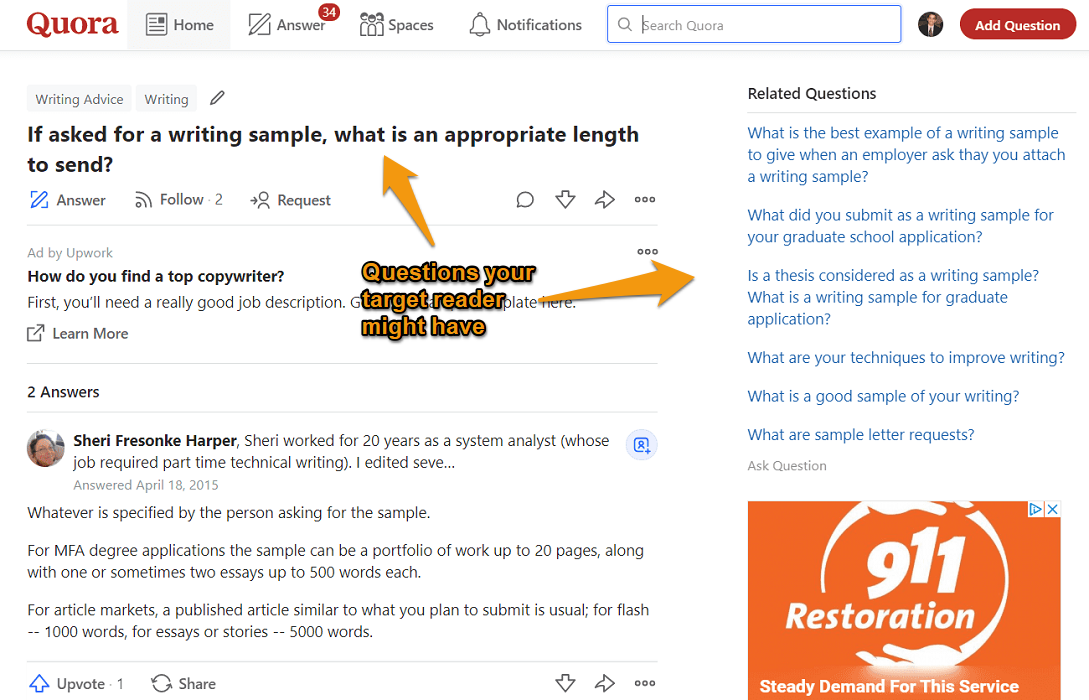
If need be, do some research on sites like Quora and Reddit to find out what the target readers are thinking.

writing sample quora screenshot

Brainstorm #3: Format

Next, try to fit the answers to those questions into one of the formats listed in the job ad.

If the job ad mentions they want “How To” articles, try to create a headline in the “How To” format that focuses on each of the answers.

If they want “product roundups”, brainstorm ideas that focus on different products related to the target audience.

For example:

  • “Top 10 Tools To Avoid [Pain Point]”
  • “The 7 Best Tools To Help You Achieve [Desired Goal]”

Brainstorm #4: Employer Goals

You can also brainstorm ideas based on the goals of your prospective employer.

Try to come up with ideas that fit the topics and formats listed in the job ad while also serving the employer’s business model.

Traffic-Based Goals:

  • Find some high volume keywords related to the topics mentioned in the job ad. Use them to brainstorm ideas for samples.
  • Brainstorm ideas based off of the most popular content on their site. What did their popular content fail to cover? How can you go into greater depth than they did? Is there a part of their content that you can expand upon?
  • Brainstorm ideas for Expert Round-Up Posts that influencers will want to share.

Lead-Based Goals:

  • Go to the employer’s website and find their lead magnets. Is there a section of their lead magnet that you can expand upon in greater detail? Is there an overarching topic you can write about that will allow you to link to their lead magnet?
  • Find some keywords related to the topics mentioned in the job ad that show commercial intent. Use them to brainstorm ideas for samples.
  • Reverse-engineer ideas from their product or service. For example, create a how-to guide that describes how to achieve a desired result with their product.

Step 3: Select One of Your Ideas

Now that you have a gigantic list of ideas, it’s time to pick one.

Start by pairing down your list to the top ideas. Eliminate any ideas you feel are repetitive, incomplete, or low-quality. Combine similar ideas that can be included in one piece.

Try to narrow your list down to the 5-10 best ideas.

Then step away from your list for a few hours so you can return to it with fresh eyes.

When you return, pick the best idea by asking:

  • Which idea makes me most excited?
  • Of my ideas, which one meets the most of the criteria outlined in the job ad?
  • Which idea do I think will best satisfy the employers expectations?

That should be enough to help you select an idea to write. If you’re still having trouble deciding, it probably means they’re all good ideas and you can just pick any one of them.

Step 4: Find Models To Emulate

Congratulations! You have your idea for your writing sample.

Now it’s time to find models you can use for inspiration.

You should try to find at least 1-3 models that are in your writing niche and match the job description in style, tone, target audience, topic, format, and length.

You can use these models as inspiration for your writing sample. Include the best parts of the models in your writing sample, and use them as a guide to match the required writing style.

How do you find models?

First, try Googling your subject. Check out each result to see if it’s a good enough model for your writing sample.

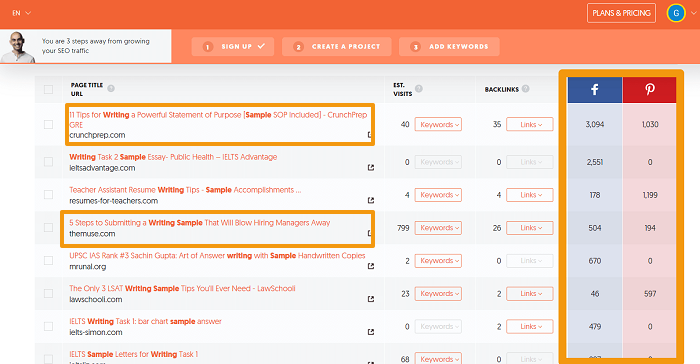
You can also enter your subject into tools like BuzzSumo and Ubersuggest. Not only will they produce articles on your topic, they’ll also give you data about how popular they are on social media.

writing sample ubersuggest screenshot

The screenshot above shows Ubersuggest results for the keyword “writing samples.” For an article about creating writing samples, the first and fourth results would likely make good models. Unlike the other results, those two articles are on topic, they have great headlines, and they were popular on social media (suggesting readers liked them).

Step 5: Outline & Write Your Idea

Now comes the fun part. It’s time to create your writing sample.

Before you begin outlining, start by answering 8 important questions that will guide you during the writing process:

  1. Who is your target reader?
  2. How does your target reader feel about this subject?
  3. How do you want them to feel about it when they’re done reading?
  4. What questions or topics must you cover?
  5. What questions or topics do similar articles cover?
  6. Are there examples and data can you use to bolster your points?
  7. What can you borrow from your models to include in your sample?
  8. What are the models missing you can include in your sample to make it better?

Answering these questions will make outlining and writing your sample much easier. More importantly, it will make the final product much better.

A full explanation of the outlining and writing process is too comprehensive to include in this guide. Luckily, Smart Blogger already published the ultimate guide to creating a blog post that includes everything you’ll need to create a stellar rough draft. Use it to walk you through the process.

If you’re creating some other type of content like email copy or Facebook ads, then try running a Google search to find a good guide (like this guide to creating marketing emails from HubSpot or this guide to creating Facebook ads from WordStream)

One more tip: the process of outlining and writing a rough draft is similar to brainstorming ideas for your sample — for now, don’t edit yourself or focus on quality.

The goal is to get all of your ideas down on the page, even if it’s sloppy. You can polish it up in the editing process.

Step 6: Edit Your Writing Sample

Of all the writing skills and activities that go into freelance writing, editing is one of top dogs.

Editing is where decent writing becomes great writing. And while you’ll develop your own process as you progress, you can use this 5-Round formula to take your writing sample to the next level.

Round 1: Edit the Content

  • Supercharge It: Identify any places where you can add more info, data, or examples to improve your points.
  • Say It Straight: Identify any sections that are unclear or confusing and refine them.
  • Go Pro: Identify any sections where you sound like a newbie and figure out how to improve them.
  • Carve It Up: Eliminate any repetitive or unnecessary info.

Round 2: Edit for Writing Quality

Round 3: Ensure it Meets the Job Ad Criteria

  • Be Topical: Is it on topic? Does it properly address the topic?
  • Trim It Down: Does it meet the required length?
  • Maintain Proper Form: Is it in one of the employer’s preferred formats? Does the article consistently satisfy the format?
  • Add Value: Will the target audience find this valuable? If not, how can you make it more valuable?

Round 4: Optimize for Best Practices

  • Help Google Out: Is it optimized for SEO?
  • Remember The Fundamentals: Does it meet all of the best practices of the format/framework?
  • Make It Pretty: What images can you incorporate to make it more visually appealing and engaging?
  • Build A Connection: Does the introduction connect with the reader?
  • Inspire Action: Does the conclusion inspire the reader to take action?

Round 5: Polish to Perfection

Step away from the article for a day (if time permits), then return to it with fresh eyes and:

  • Spot The Problems: Find any problematic areas to improve.
  • Shine It Up Real Nice: How can you make it shine? Is there any way to make your sample extra special?
  • The Critical Question: Give your sample one last read and ask: is this an example of my best writing?

How to Deliver Your Writing Sample

You did it!

Take a moment to give yourself a big ‘ole pat on the back. You created the perfect writing sample.

…well, almost perfect.

Remember, creating a perfect writing sample isn’t just about showing off your writing skills. It’s about creating a writing sample the hiring manager can envision publishing on their website.

To truly give them that vision, you’ll need to go one step further. You’ll need to deliver the sample in a format that helps the hiring manager visualize what it’ll look like when they hire you.

For article writers, it means publishing your article on free blogging platform like:

writing sample Medium screenshot

If you’re creating some other type of content, try to figure out how you can deliver it in a realistic format. For example, you could create a Facebook ad in Facebook (without launching it) and take a screenshot of the preview.

writing sample facebook ad screenshot

Taking this extra step can go a long way towards winning the job. It enables the hiring manager to better visualize your sample on their site. It shows you put in extra effort and attention to detail. And it helps you stand out among the competition.

Other Key Considerations

1. How to Complete Your Sample Quickly

Creating the perfect writing sample takes time. And you should invest as much time as you possibly can to make your writing sample shine.

But you don’t want to take too much time and risk losing the job to another writer.

So how long should you spend creating your writing sample? And how can you ensure you complete it quickly enough to still make the job application deadline?

It depends on two factors:

  1. How recently was the job ad posted? Is there a due date for job applications?
  2. How much time can you spend working on your writing sample each day?

First, you have to figure out how much time you have.

If the job ad gives a due date, then you should aim to get it done a few days before that date (give yourself some leeway).

If the job ad doesn’t provide a due date, then check when the job was posted. The more recently the job was posted, the more time you have to work on your sample.

According to a 2015 report from Indeed and the Centre for Economic and Business Research, 43% of job openings are filled within 30 days of posting a job ad. Though it’s not a bulletproof system, use Indeed’s research as a guide and aim to submit your sample at least 1 week before the 30-day deadline.

So if the job ad was posted 7 days before you begin, and you want to finish 1 week before the 30-day deadline, then you have 16 days to complete and submit your application.

Next, determine how much time you can spend on your writing sample daily. Then schedule each of the 6 steps into that allotted time.

2. What to Do if You Hate Your Writing Sample

In the beginning, you were excited to get to work.

You did all the required research. You picked a topic that would impress the hiring manager. And your excitement grew as you completed your outline.

But as you near completion, the original sheen wears off. And the excitement gets replaced with a feeling of dread…

Your writing sample sucks.

You just know the hiring manager will read it, laugh at it, and throw you into their “never hire” file.

What should you do now?

Luckily, there’s only one answer — finish your rough draft and edit the crap out of it.

First of all, your writing sample doesn’t suck. In fact, it’s probably much better than you think.

You only think it sucks because you’re nervous about getting the job and filled with insecurity. You’ve also read your sample so many times that you’ve become overexposed to it.

This is completely normal. In fact, it’s happened to me several times when writing this guide.

While you may be tempted to start over again on a new writing sample, chances are the same thing will happen: your nerves will get to you again and you’ll question the quality of your work.

Even worse, you’ll have less time to complete your sample, which will only make your nerves worse. You may end up missing the deadline or abandoning the job altogether.

The truth is, the writing sample you have is probably good enough to get the job. And all writing improves with editing.

Just finish and submit what you started.

Remember, you miss 100% of the shots you don’t take. You might not get the job with the sample you have now; but you DEFINITELY won’t get the job if you submit nothing.

This post is part of Smart Blogger's

Freelance Writing Hub

From elevating your writing skills to getting paid to write, learn everything you need to know about freelancing.

You Now Know How to Write a Perfect Writing Sample. Time to Go Get That Job!

Creating a writing sample is a nerve-wracking endeavor.

Between the hard work that’s required and the insecurity it produces, it can seem like an impossible task.

But with the approach I’ve just outlined, you can create a perfect writing sample that’ll impress any hiring manager.

Imagine how great it will feel to wake up one morning, check your inbox, and read those wonderful words: “We’d like to interview you.”

Imagine the validation and confidence you’ll feel knowing you have what it takes to do your dream job!

You don’t just have to imagine it. You can make it real. All you have to do is take the next step.

Study the job ad. Outline your key criteria. Follow the steps in this guide. And create the best damn writing sample they’ve ever read!

You can do this. Go get that job!

The post How to Craft the Perfect Writing Sample in 2020 (+ Examples) appeared first on Smart Blogger.


from
https://smartblogger.com/writing-sample/

Thursday, May 21, 2020

Five Best-Practices for B2B Social Media Influencer Marketing

B2B influencer marketing has become "a thing"; it is alive and well and available to use as a tactic in your marketing strategy. Based on research and experience, here are five best-practice recommendations. Read the full article at MarketingProfs

from
https://www.marketingprofs.com/articles/2020/42958/five-best-practices-for-b2b-social-media-influencer-marketing