Thursday, September 19, 2019

The Value in Going Viral (And Five Steps to Improve Your Odds)

from
https://www.marketingprofs.com/articles/2019/41843/the-value-in-going-viral-and-five-steps-to-improve-your-odds
How to Choose a Domain Name (+ 30 Blog Name Generators!)

This is the web’s most in-depth guide on how to choose a domain name. It’s also the web’s largest resource for blog name generators (to help you brainstorm ideas).
In this post, you’ll learn how to create a large list of domain name candidates, how to check which ones are available, and how to buy the best domain name for your target audience.
Let’s get started.

Your Domain Name’s One Job
A lot of people think your domain name should be witty. Others think it should be clever or poetic. Or something kooky and cool like… Google, Amazon, or Moz.
Wrong.
Your domain name is a tool. And like every other tool in your toolbox, it has a specific purpose.
If you buy a hammer, its job is to drive nails, and you judge its effectiveness based on its ability to drive a nail.
Your domain name has one job too. When someone visits your website, your domain name must answer the following:
“Is this site for me? Am I in the right place?”
That’s it. That’s its job.
The quicker you can help people figure out whether they’re in the right place, the quicker you will:
- Get more traffic;
- Keep and convert those visitors into subscribers;
- Receive more links and shares from your favorite social media sites;
- Rule the (blogging) world.
So how do you help them answer that fundamental question, “Is this for me?”
In a word, clarity.
Clarity is key. Because everything you need to learn about starting a blog and finding the right domain name is going to circle back to these two key elements:
- Does it answer the fundamental question, “Is this for me?”
- Is it clear?
So what’s the best way to achieve clarity with your domain name?
For starters, you should avoid these five fatal domain name mistakes. (Cue the ominous music.)
The Five (Potentially) Fatal Mistakes When Choosing Your Domain Name
These mistakes are common, and they’ll definitely erode your chances of success. Avoid them at all costs.
Mistake #1: Being Clever
We celebrate cleverness in many walks of life. Cleverness drives innovation. It solves difficult problems.
But when it comes to choosing a domain name, cleverness is really the last thing you want. It’s the enemy of clarity.
It’s not a good idea to come up with a pun or some clever play on words for your domain name.
How do you know if you’re being too clever?
Here’s a simple test:
Go around to people who don’t know you, people who may not know anything about your subject, and tell them the domain name.
Then ask them what it means.
If they have to think about it for more than two seconds, you’re dead.
Why?
Because if someone has to think to figure out what your domain name means, most people will say “forget this.” They’ll bounce. On to the next link.
And if they bounce immediately after visiting your site, it’s going to hinder your SEO (search engine optimization) efforts. Google will assume your content isn’t meeting searcher intent, and your posts will rank lower and lower in search results.
Mistake #2: Trying to Brand a New Word
We all would like to birth a brandable domain name, but creating a new word is a big mistake for the vast majority of bloggers. Not everyone, mind you, but most. Branding a new word means building an audience for a domain name you coined out of two different words, which — most likely — only means something to you.
No one knows what the word means when they come to your site. And even if they can figure it out, the extra processing time and thought severely hinders their ability to answer the fundamental question, “Is this for me?”
And how does that impact you again? Tick, tick, tick — and they’re gone.
Not only that, but the potential for misspellings is high when you’re using a brandable name.
For the average blogger, trying to brand a domain name like Google or Yahoo or one of those other big domains with a cool, unique company name is a huge mistake. Why?
Because it typically takes millions of dollars and a top-flight ad agency to pull it off. Or it takes an absolutely astonishing level of influence.
Either way, as a beginning blogger, you’re simply not equipped to succeed at branding a new word.
Mistake #3: Using a Subdomain of a Blogging Platform
This is a common mistake among many new bloggers. They’ll choose a free blogging platform and sport URLs like mydomainname.wordpress.com or mydomainname.blogspot.com.
Once upon a time, it wasn’t a big deal.
Today?
It’s a bad idea for a couple reasons:
- You’re setting up your blog on someone else’s turf. If those companies ever change their policies or decide for any reason to take down or freeze your blog (and it has happened), you can’t do a thing about it. You’re screwed.
- It signals you’re an amateur. You instantly lose credibility when you have a domain name like that.
Mistake #4: Using Abbreviations
If I were writing a blog about affiliate marketing, I might use PPC or CTR in the domain name. Those words stand for “pay per click” and “click-through rate” respectively. Now, the people who are really into advertising and web analytics all know what those mean, but guess what? A lot of beginners don’t.
This is a case where exclusivity can hurt you.
Sure, it can be attractive when you only want a target audience to have access to your offering. But when you’re talking about building an online audience, the last thing you want to do is eliminate a potentially huge pool of prospective readers simply because they don’t understand the term you’re using for your domain name.
Mistake #5: Using Hyphens
Using hyphens in your domain name is a no-no for several reasons. Let’s say, for example, you’ve got a cooking blog called Make My Cake, but makemycake.com is already taken. So you grab make-my-cake.com. Here’s what happens:
- When the person types in “make my cake,” guess what’s going to come up first? Makemycake.com. And you just lost another reader or another sale. Bummer.
- People won’t remember to put in the hyphens when typing your domain name, or they’ll use an underscore by mistake, or they’ll mistype and miss a hyphen. Either way, you lose.
- Worse still? It’s another one of those things that make you look like an amateur. It’s kind of like wearing a purple hat and feathers to a gathering of potential Nobel laureates. Yes, you can always find someone who’s into that look. But my advice? Don’t do it.
So, those are some common mistakes to avoid when picking a domain name for your new website.
Now let’s move on to the things you should do.
The Five Best Types of Domain Names for Bloggers
You might be surprised to know there are really only five major categories of good domain names for bloggers.
Once you understand the logic behind each of these categories and how much easier people can find and Google you if you use one of them, the sooner you’ll be on your way to reaping the benefits from choosing a good domain name.
And the best news? If you follow the formulas outlined here, you’ll almost certainly find a few available domain names your readers will love.
Type #1: Name the Benefit
This type of domain name cuts right to the chase when answering “Is this for me?” because it explains right in the name the benefit you’ll get when you read this site.
Examples of naming the benefit are iwillteachyoutoberich.com, makealivingwriting.com, and teachyourchildtoread.com.
If you see a domain name that explains the benefit of reading the site right in the domain name, you can immediately answer that fundamental question with very little thought.
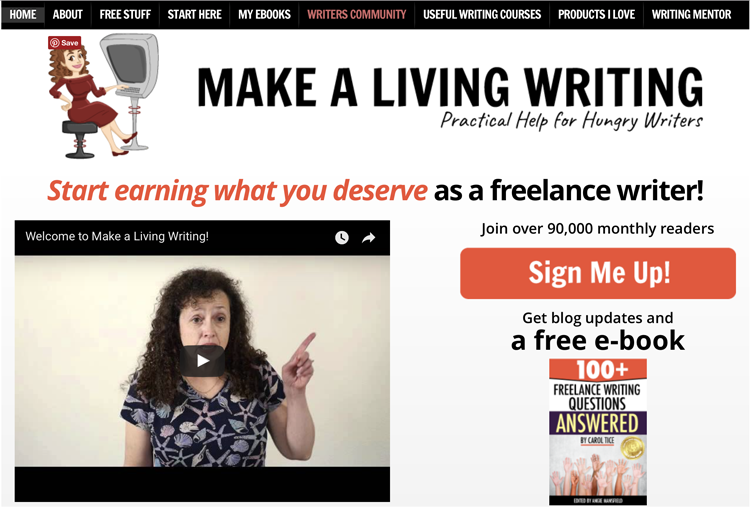
Let’s see. I’m a freelance writer, and I want to make a living by writing. Am I in the right place? No question.
Name the Benefit Template (to Find Your Own Website Name)
- I Will Teach You to [achieve result or do activity]
- How to [achieve result or do activity]
Examples:
- IWillTeachYouToBeRich.com
- IWillTeachYouALanguage.com
Type #2: Name the Audience
This type of domain name answers that question by defining the target audience the website is meant to serve.
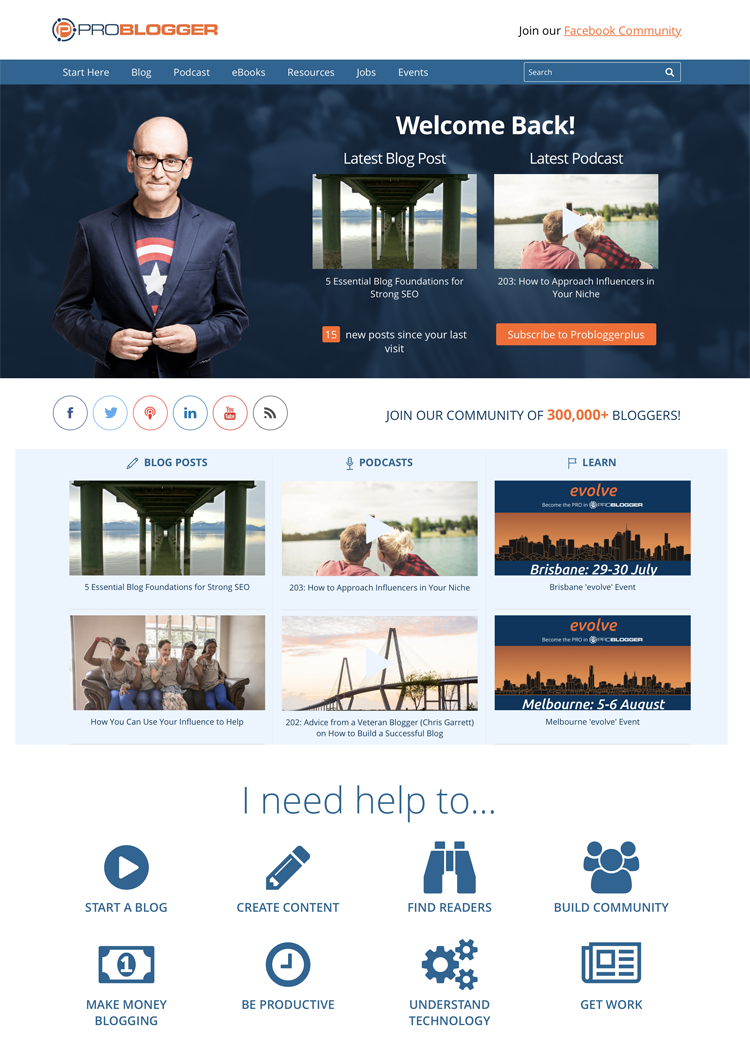
If you were to visit Problogger as an aspiring blogger, within two seconds of arriving and glancing around, you’re going to say, “Wow, I’d love to be a professional blogger. I need to read this blog.”
So you’ve immediately answered the question, “Is this for me?”
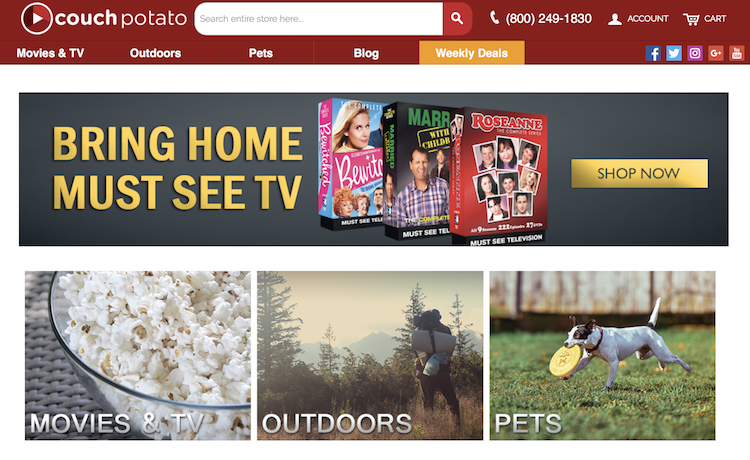
And if you’re a TV junkie looking to connect with your tribe and you land on couchpotato.com, you’ll know right away that you’re in the right place because you can read the latest gossip on TV shows and find deals on things like DVD box sets of popular TV series and so on.
The logo says it all.
Name the Audience Template (to Find Your Own Website Name)
- [Noun] + only
- [Adjective] + [Noun] + only at the end of the phrase
The word “only” creates exclusivity with your audience. It helps to make it feel like a club or private community.
Examples:
- SeriousBloggersOnly.com
- FarmersOnly.com
Here’s another template to try:
- [Adjective] + [Audience Name]
Example:
- AFineParent.com
Type #3: Name the Topic
This type of domain names your blog topic.
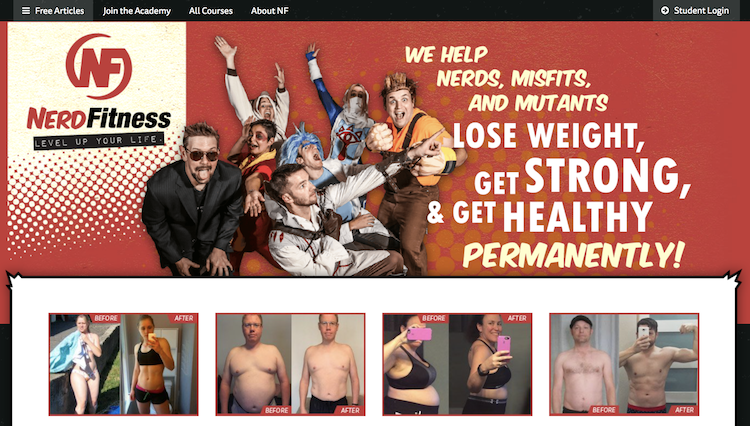
Examples are lifehacks.org, dailyblogtips.com, nerdfitness.com, and artofmanliness.com. Those domains name what the blogs are about.
Check out nerdfitness.com, for example:
Same thing with artofmanliness.com:
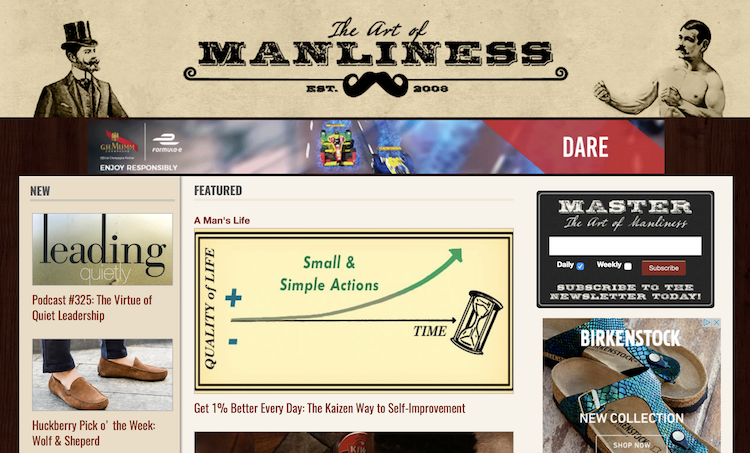
When you see that name, you get a sense right away that they’re targeting men who want to learn more about the essence of being a man. The macho stuff. The ways of a gentleman. Just the vintage look and old photos alone convey the story to the target audience.
That’s a very different feel and a different audience than men who might gravitate more to, say, Men’s Health Magazine, which is more focused on men’s fitness and wellbeing — and the cover usually shows a half-naked guy with killer six-pack abs.
Name the Topic Template (to Find Your Own Website Name)
- Daily [Topic] tips
- [Topic] tips
Examples:
- Daily Blog Tips
- Weekly Photography Tips
Type #4: Name Yourself
This one is pretty self-explanatory. You use your own name as your domain name. Examples would be StevePavlina.com, MarcAndAngel.com, and JohnChow.com.
Using your own name as your domain can still be a good thing. But — and it’s a big BUT — only if your desire is to turn your name into a brand name. So if your desire is to brand yourself like Oprah, Dr. Phil, Dr. Oz, or one of those celebrities, it can be a good idea to go this route.
But you have to understand that while a website branded with your name can be a blessing, it can also be a curse:
- You will never be able to sell the website.
- You will be tied to it until the day you die or the blog dies.
- No one else will be able to run it. Your audience will be forever bonded to you.
Many bloggers who have successfully branded themselves end up regretting it later. Their blogs feel like a prison cell, with their owners as the sole occupants. The brand is based on their personality and voice, which means it’s a challenge to bring in guest writers and editors.
So let’s break down the pros and cons:
The upside of using your own name is a closer bond with your audience, and you gain more influence as you brand yourself.
The downside is it takes a long time to establish yourself as a recognized authority and build up your personal brand to the level of celebrity status. And while you’re busting your butt trying to brand yourself, your domain name isn’t helping you build your audience any faster because it fails to show any benefit to your readers.
But you want to know the worst thing about using your own name? You can never escape.
Let me repeat that:
You can NEVER escape a blog you have branded with your own name.
It’s not a “real business.” In other words, you could never sell it to anyone. Because if you sold it and you ever left, it’s worth nothing because the entire thing is tied to you. So consider this carefully before you decide to use your own name.
Name Yourself Template (to Find Your Own Website Name)
Okay, you probably don’t need a template for this one, but here you go:
- [yourname.com]
Examples:
- StevePavlina.com
- PenelopeTrunk.com
- KevinJDuncan.com
Type #5: Name Your Pursuit
This domain reverses our philosophy because it names what you are doing as a blogger rather than what the reader is doing or seeking.
For example, Social Media Examiner examines social media. Man vs. Debt is about one man’s (the blogger’s) battle against debt. Foundr tells the stories of founders, entrepreneurs, and business owners. Each one names the topic, but they do so from the blogger’s perspective, not the reader’s perspective.
A second way to use a pursuit domain is to name the mission of your blog. For example, for a blog whose mission is to feed all the hungry children on earth, the domain could be FeedTheChildren.org. That clearly defines the pursuit of the blog.
So when you’re looking to use this topic for your domain name, the secret here is to clearly identify your pursuit or mission in a way that matches your reader’s worldview so that THEY can see themselves in YOUR pursuit.
Name Your Pursuit Template (to Find Your Own Website Name)
- [Blogger or audience] vs. [pursuit]
Examples:
- ManVsDebt.com
- LivingWellSpendingLess.com
Here’s another template option:
- [Action] the [object]
Example:
- FeedtheChildren.org
How to Brainstorm Clear, Strong Domain Names
Now that you know all the pitfalls to avoid and the five types of good domain name categories, you need a process you can use to find your own perfect domain name.
What do we mean by “perfect”?
The perfect domain name is one that instantly defines your blog’s mission statement to the exact group of people it was meant to serve.
Here are the steps for finding it:
- Name the Audience. Who are you serving with your blog? Then ask yourself, “What would they call themselves if they succeeded?”
- Name the Result or Benefit. In other words, what will they achieve if they succeed? This is where we transform the mission into a domain name.
- Name the Topic. What is the blog about? You need to be clear and concise here. Think of it as your eight-second elevator pitch because that’s all we’re working with, right?
So, for example, let’s say you wanted to start a blog in the very popular cooking space, and you are a master barbecue chef with a whole slew of techniques, recipes, and secret tips. You want to dominate in a niche that has a large and passionate audience of predominantly male enthusiasts.
In your blog, you want to brand yourself as the “King of Barbecue.” And your mission is to empower every barbecue enthusiast with a backyard and grill with all the tools and tips they need to become the “Barbecue King.”
So, choosing first from our domain name templates, you could combine topic #3 (naming the topic) with topic #1 (naming the benefit), and you would get:
I Will Teach You How to Become the Barbecue King.
Not bad, but let’s keep going.
With this target niche in mind, we’ll use tools discussed in the following sections to pull together a bunch of great domain name choices. And then we need to see what is available from the choices we create.
You want to really take some time in the brainstorming phase because you’re going to need a good-sized list.
Because let’s face it: Your best domain ideas will probably be unavailable. You need lots of prospects here.
Using our process above, here’s how we’ll go about finding our killer barbecue domain name:
- Who’s our audience? Passionate barbecue enthusiasts (male).
- What would they call themselves if they succeeded? The Barbecue King? King of the Grill? Something along those lines.
- Name the result or benefit. What would they achieve if they succeeded? They would become the master of the grill.
- Name the topic. Great tips and recipes for grilling food to perfection on the barbecue.
Now you need to come up with a bunch of descriptive words you can combine to satisfy the steps we just outlined. You’ll already have a pretty good idea about who you’re serving and what you’re serving them. But sometimes when you’re brainstorming ideas, you hit the wall trying to find synonyms for those words, and you need some fresh inspiration. That’s where a thesaurus comes in handy.
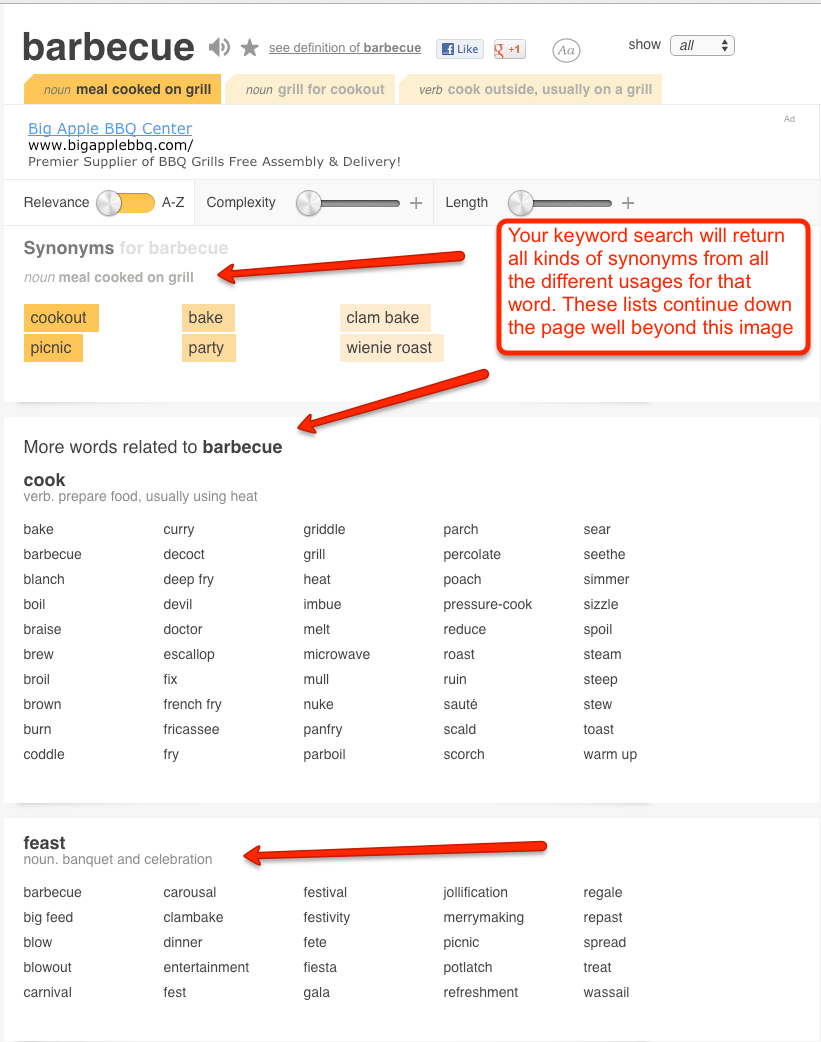
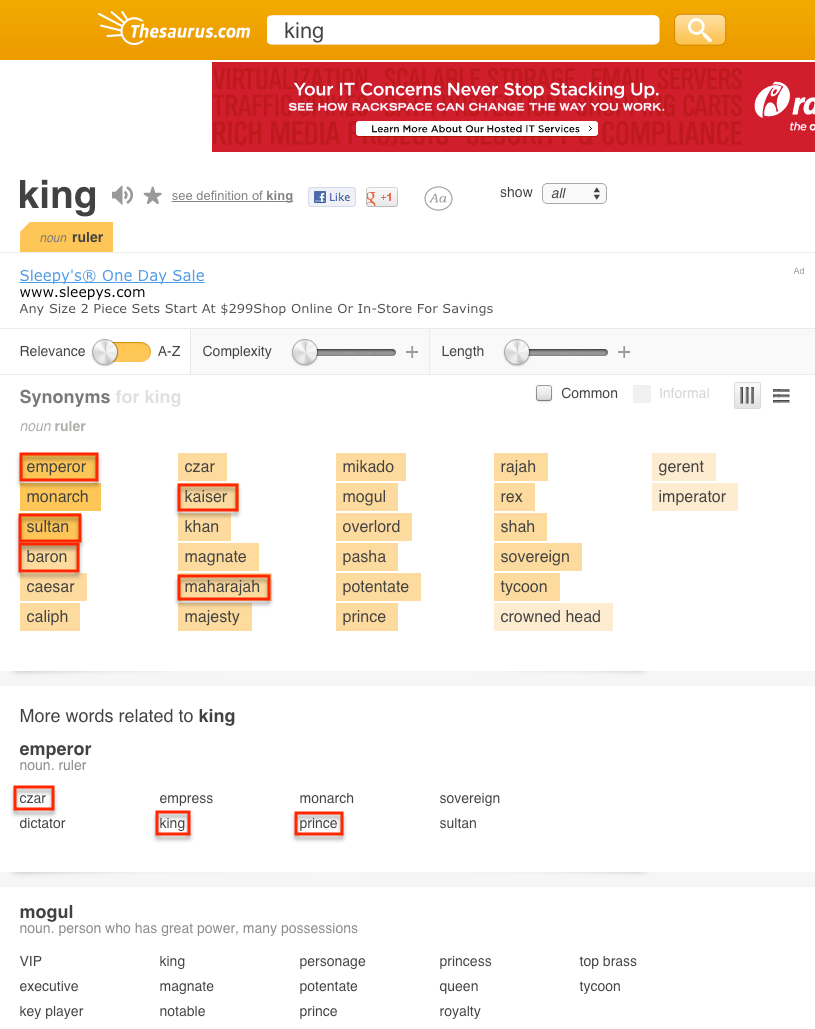
I used a thesaurus to find synonyms for both “barbecue” and “king.” You do this by typing your word into the thesaurus search window.
In the examples below, you can see how the thesaurus will return all kinds of synonyms for your keyword from every usage of the word.
Barbecue:
And king:
You can get some great ideas using a thesaurus.
When I typed in “king,” some interesting synonyms popped up, such as “emperor,” “czar,” and “kaiser.” I hadn’t considered those titles before. They got me thinking, but I still preferred “king” as the ultimate pursuit of our target barbecue enthusiast.
But then I came across the word “maharajah,” and this got me thinking about barbecue as a more transcendental experience. The barbecue king as spiritual master of the grill or “The Guru of Barbecue” has a nice ring to it, no?
You can use the thesaurus effectively by inputting some of those new synonyms back into the search window. This will yield a whole new crop of words.
Using a thesaurus can help you unearth ideas you never thought of, which can lead to some great domain name combinations.
But what do you do if a thesaurus doesn’t produce any winners (or if you think a thesaurus is too “old school” for you)?
Try these:
30 Blog Name Generators to Spur Domain Name Ideas
Thinking of good domain names can be tricky sometimes. Thankfully, there are numerous blog name generator tools that can help you brainstorm ideas.
We’ve compiled the web’s largest list of blog name generators (sorted alphabetically) so you could have a go-to resource.
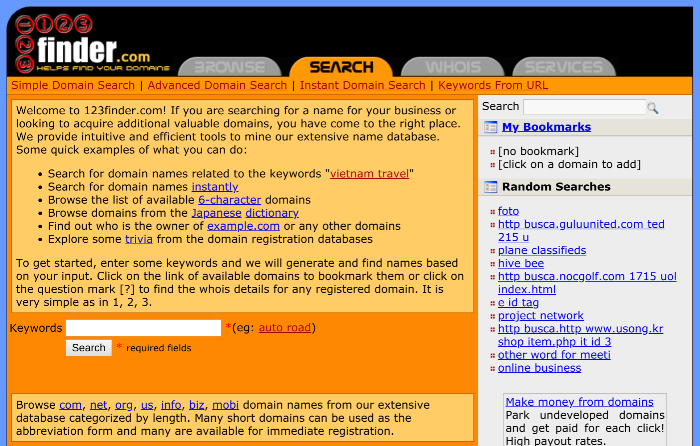
And, yes, some of these generators have designs that would’ve seemed dated in 1999. But don’t judge a book by its cover. All it takes is one really great idea for a blog name generator to be worth its weight in gold.
1. 123finder.com
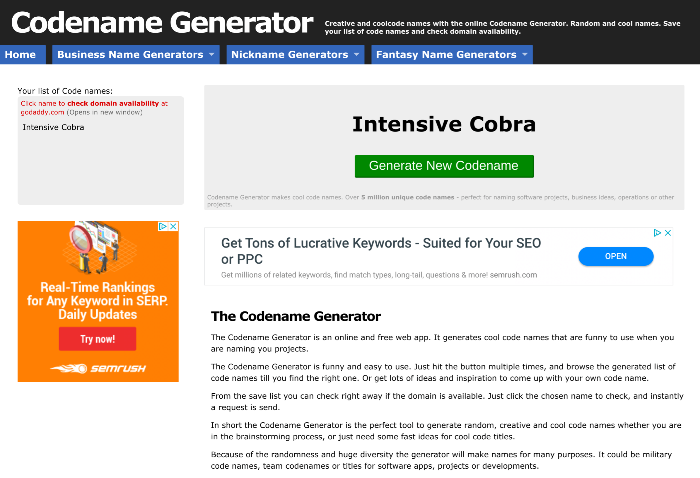
2. Codename Generator
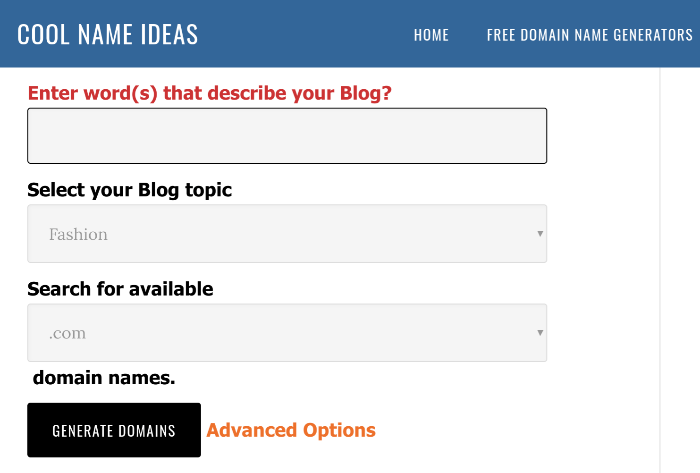
3. Cool Name Ideas
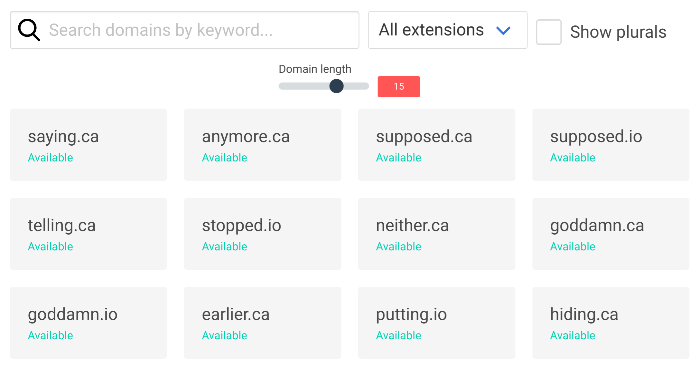
4. Dictionary Domains
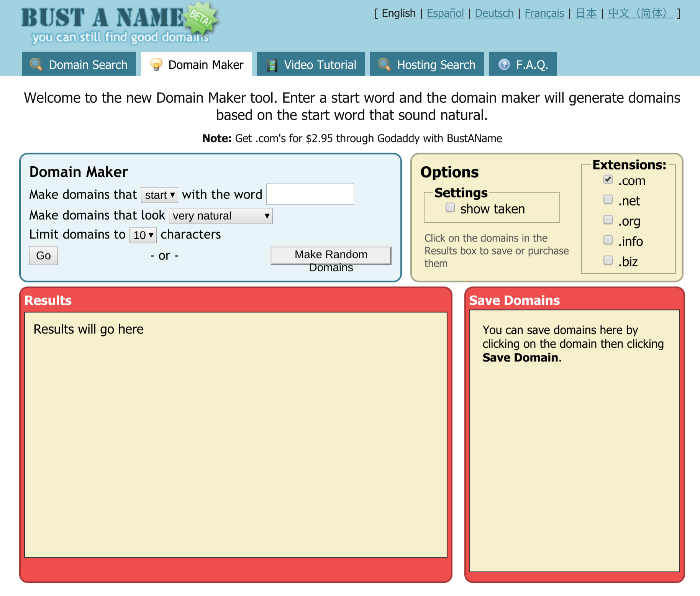
5. Domain Maker (BustAName)
6. Domainpuzzler
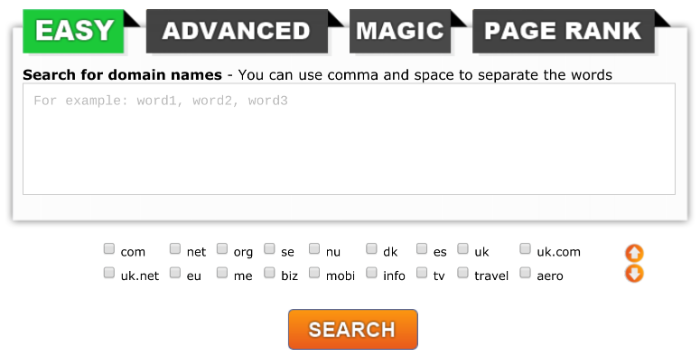
7. Domainr
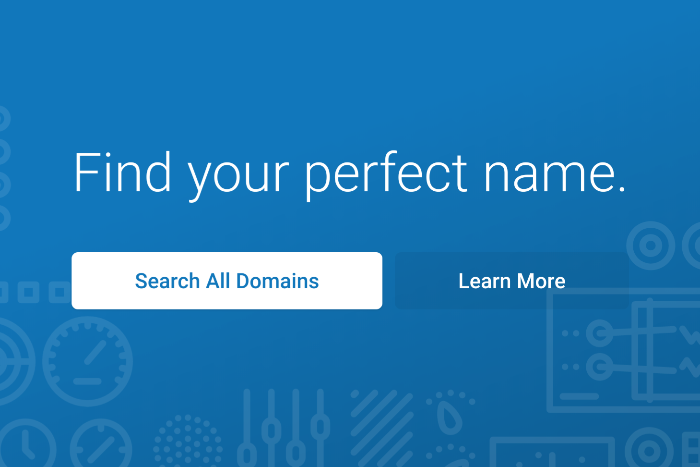
8. DomainsBot
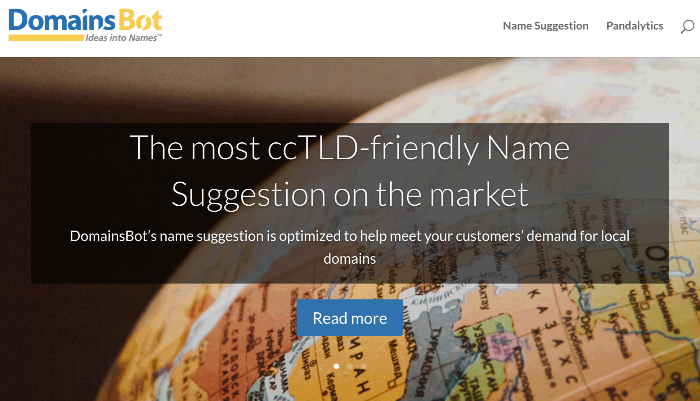
9. Domain Search (BustAName)
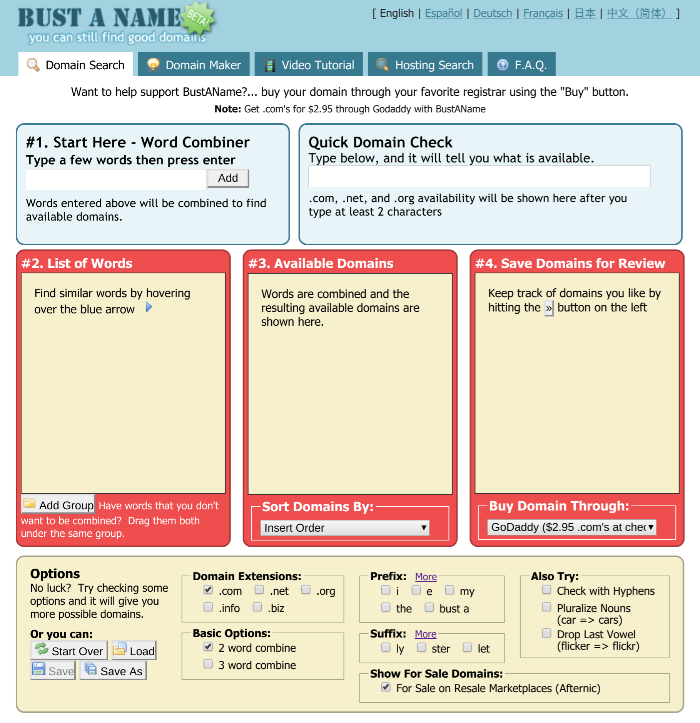
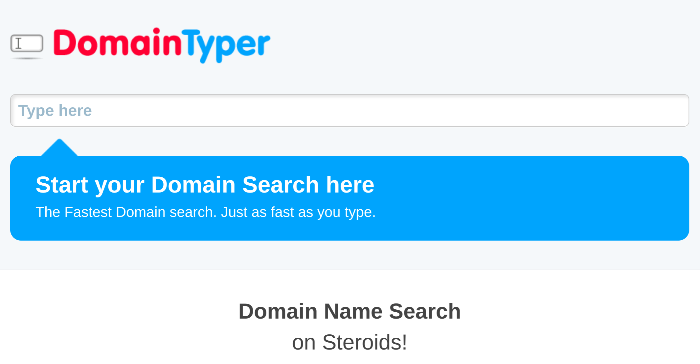
10. DomainTyper
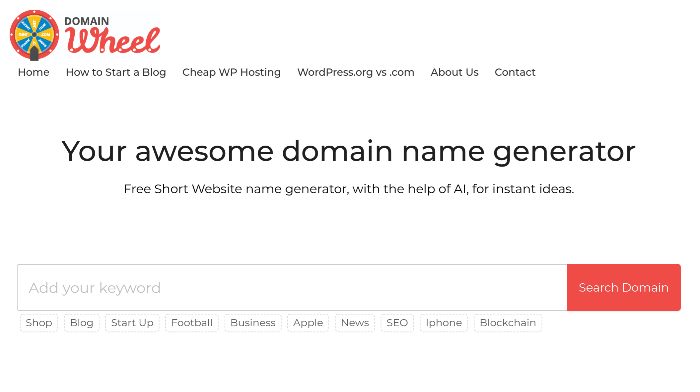
11. DomainWheel
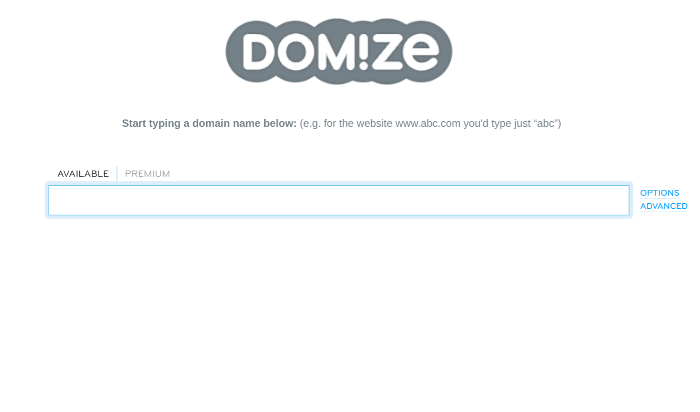
12. Domize
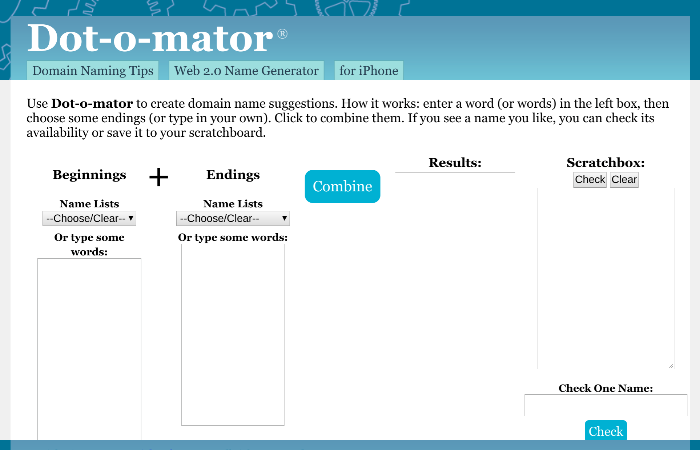
13. Dot-o-mator
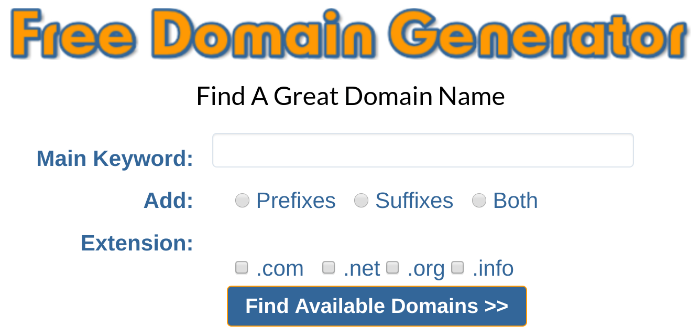
14. Free Domain Generator
15. Impossibility!

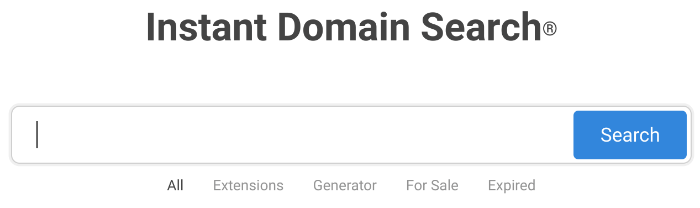
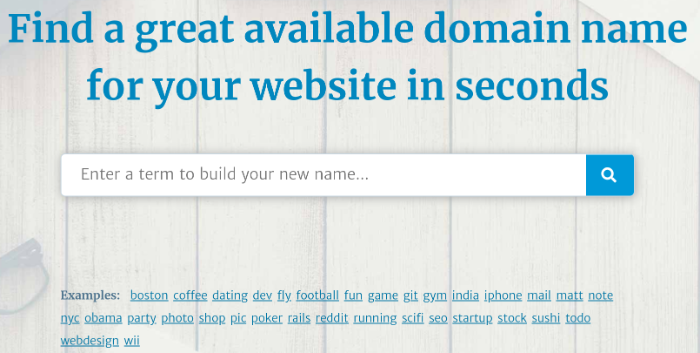
16. Instant Domain Search
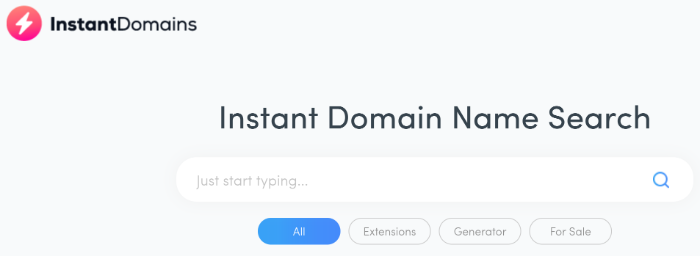
17. InstantDomains
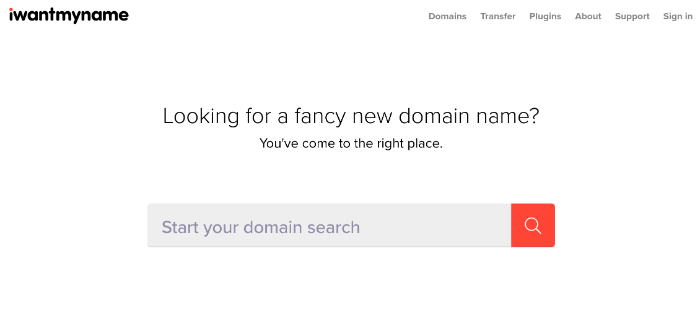
18. iwantmyname
19. Lean Domain Search
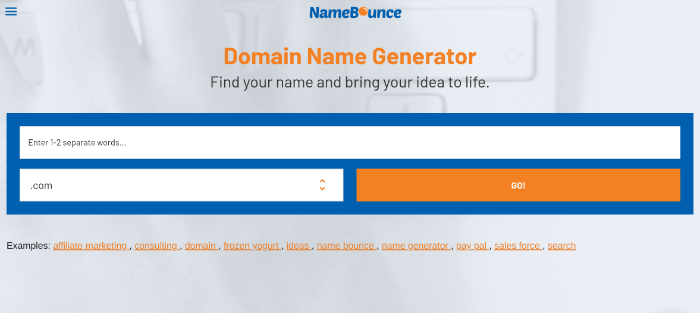
20. NameBounce
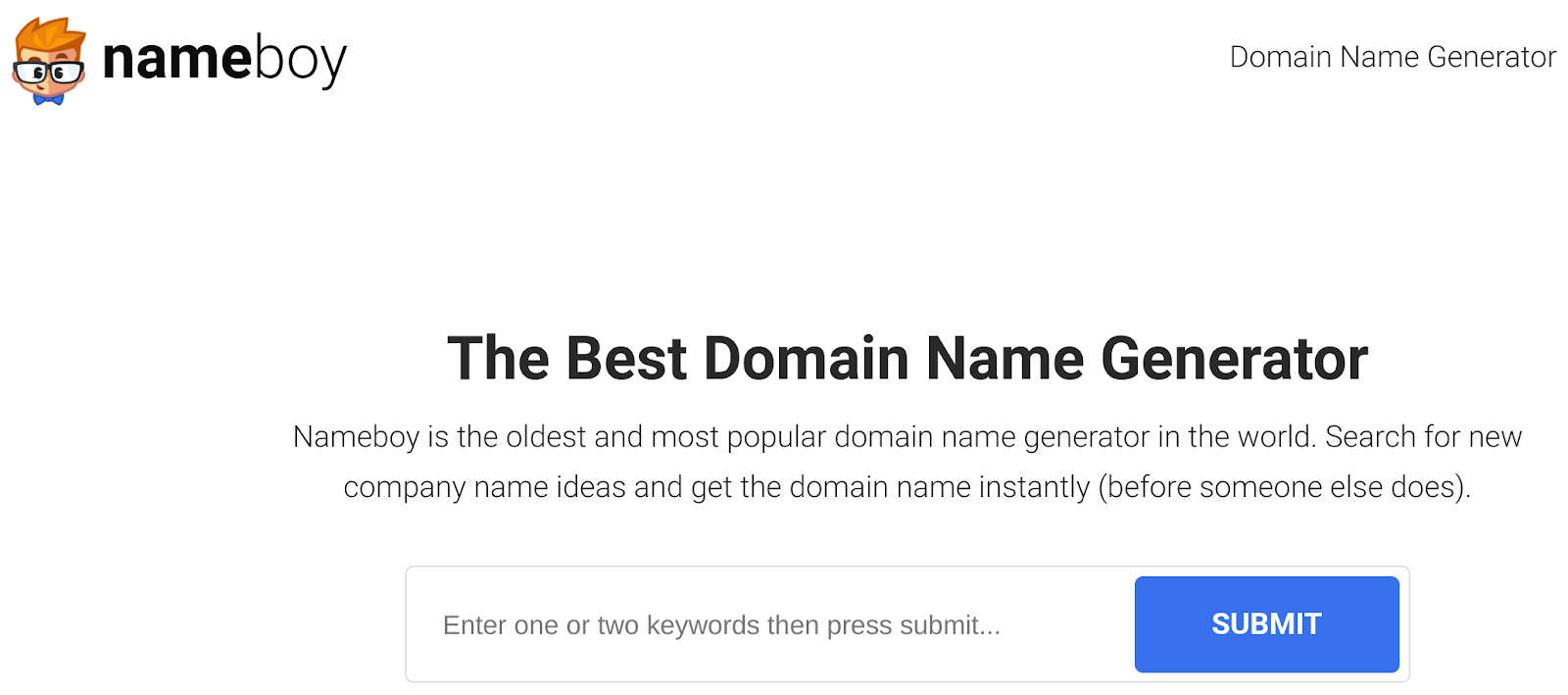
21. Nameboy
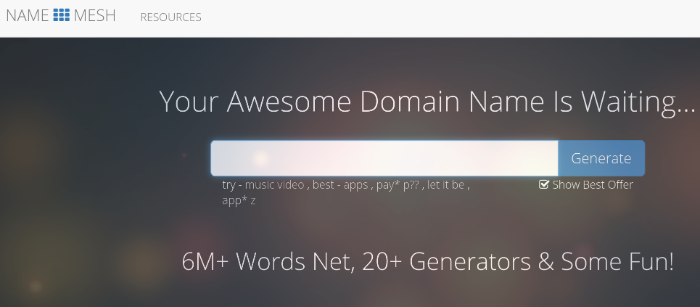
22. NameMesh
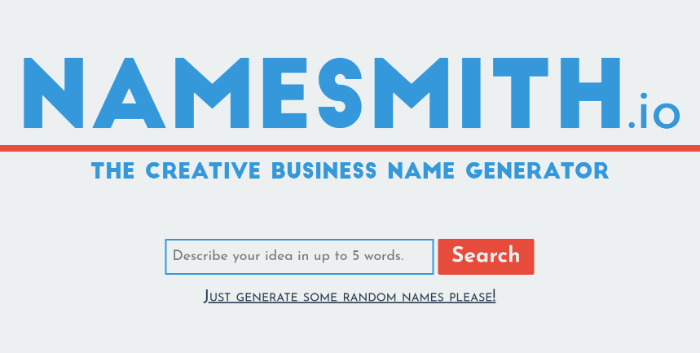
23. Namesmith
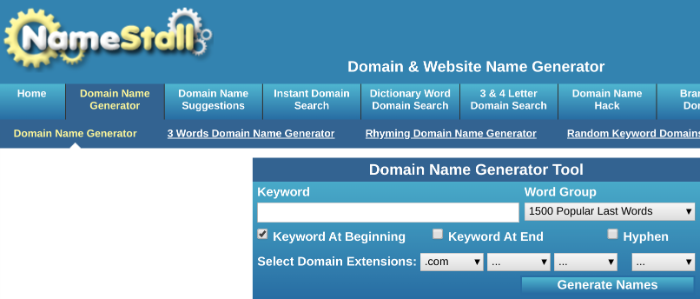
24. NameStall
25. NameStation
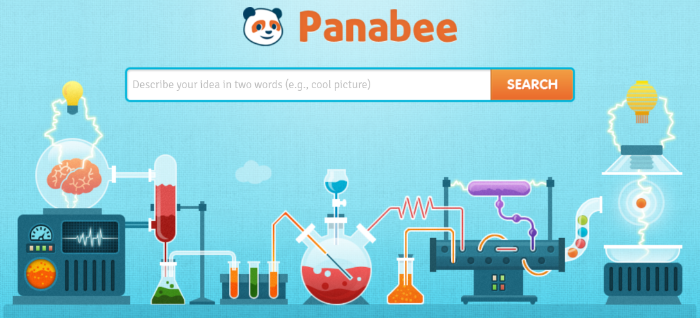
26. Panabee
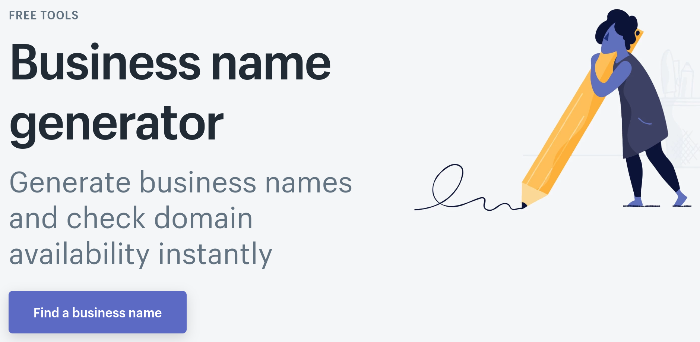
27. Shopify’s Business Name Generator
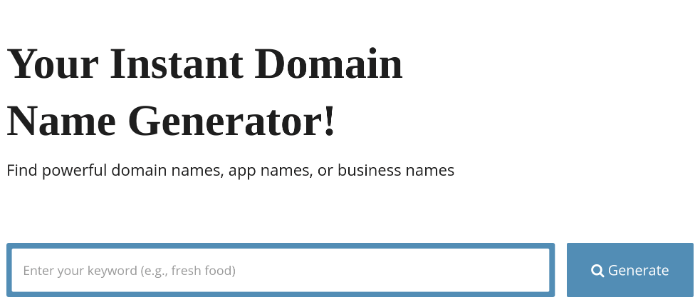
28. Softwarefindr
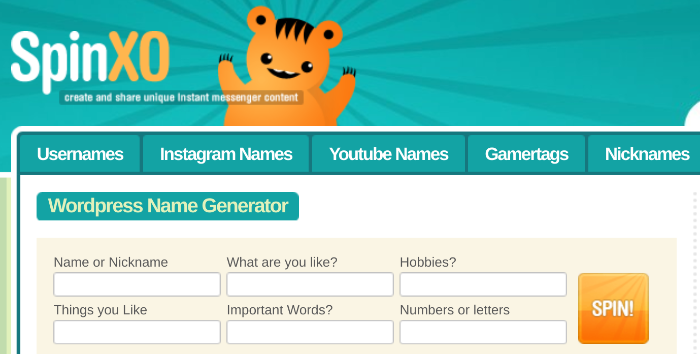
29. Spinxo’s WordPress Name Generator
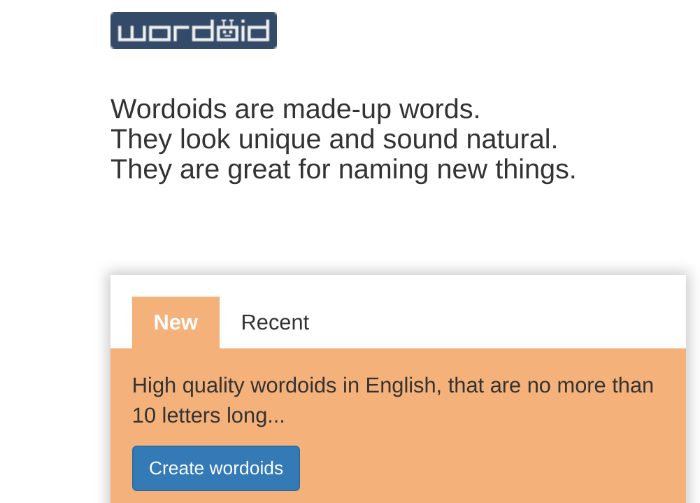
30. Wordoid
Domain Name Inspiration by Niche
Hopefully, by this point, you’ve got loads of ideas.
But just in case you’re still feeling a little stuck or unsure, here’s how each of the four approaches we’ve discussed work in real life in the Top 11 blogging niches.
Niche #1: Business & Entrepreneurship
- Audience:
- Business Insider, Entrepreneur, Frugal Entrepreneur, Women Entrepreneurs, Young Entrepreneur Council, Like a Boss Girls, The Mogul Mom
- Benefit:
- Lead Change Group, Grow Your Small Business, Productivityist
- Topic:
- Small Business Trends, Teaching Startup, Good Ideas for Starting A Business
- Pursuit:
- Location Rebel, Entrepreneurial Ambitions, Forever Jobless, Addicted 2 Success, Smart Hustle
Niche #2: Career
- Audience:
- The Chief Happiness Officer Blog, CEO Blog, Classy Career Girl, Work in Entertainment, Work At Home Mums, The Savvy Intern
- Benefit:
- Everyday Bright, Career Intelligence Blog, Career Igniter, Careertopia, Idealist Careers, Careerbright, Career Sherpa
- Topic:
- Talent Culture, On the Job, HR Daily Advisor, Campus to Career, Cube Rules, The Interview Guys, Ask the Headhunter, Resume Writing Services
- Pursuit:
- Work Awesome, Work Happy Now, Great Leadership, Careerealism, Movin On Up, I Lost My Job, The Burnout Specialist, Work Coach Café, Careers in Government, Career Pivot
Niche #3: Creative Endeavors
- Audience:
- Artists Inspire Artists, Web Designer Wall, Creative Nerds, Webdesigner Depot, Writers In The Storm, The Passionate Photographer, Design Mom, Grammar Girl, Wordgrrls, House of Hipsters, The Online Photographer
- Benefit:
- Apartment Therapy, Pinch of Yum, Simple Scrapper, Productive Writers, We Believe in Beauty
- Topic:
- Digital Photography School, Web Design Ledger, Daily Art Fix, Scrapbooking News, Conversations With Writers, Indie Author News, Art Biz Blog, All Things Vocal Blog, Photography Talk, Indie Music News, Fiction Notes, Lightroom Killer Tips, Directors Notes, Filmmaking Stuff, Daily Writing Tips, Advice To Writers, About Freelance Writing
- Pursuit:
- Light Stalking, We Make Money Not Art, Better Living Through Design, Presentation Zen, Design Applause, Making The Movie, Young House Love, The Tao Of Photography, Will Write For Food, Write For Kids, Now Novel
Niche #4: Freelancing
- Audience:
- The 6-Figure Freelancer, Freelancers Union, The Worried Writer
- Benefit:
- Fuel Your Creativity, Freelance Writing Jobs, Opportunities Planet, Helping Writers Become Authors
- Topic:
- The Write Life, The Write Practice, Freelance Switch, Animation Tips & Tricks
- Pursuit:
- Escape from Corporate America, Make a Living Writing, Leaving Work Behind, Get Paid to Write Online
Niche #5: Gadgets & Technology
- Audience:
- Geek.com, Calling All Geeks, Macworld, MacRumors
- Benefit:
- Cool Tools, Coolest Gadgets, Geeky Gadgets, U Break I Fix, Home Theater Blog, Find Smartphones
- Topic:
- Laptop Hub, Digital Trends, Tech Ranker, Specs Price Buy, Gadgety news, What Rocks and What Sucks
- Pursuit:
- Lifehacker, TechCrunch, Ubergizmo, Dude I Want That, The Gifts for Men, Wicked Gadgetry
Niche #6: Marketing
- Audience:
- Famous Bloggers, Itty Biz, Chief Marketing Technologist, Marketing Insider Group
- Benefit:
- Unbounce, Influential Marketing, Content Marketing Up, Grow Map, Enchanting Marketing
- Topic:
- Duct Tape Marketing, Neuromarketing, Search Engine Journal, Drew’s Marketing Minute, The Future Buzz, Local Marketing Ideas, Millennial Marketing, Great B2B Marketing
- Pursuit:
- The Hidden Persuader, Big Brand System, Marketing Artfully
Niche #7: News, Culture, & Entertainment
- Audience:
- Global Grasshoppers, Stylecaster, Young Naturists America, Afrocosmopolitan
- Benefit:
- Inspiring Travelers, Comfortable Shoes for Women, Cheap is the New Classy
- Topic:
- Thought Catalog, College Fashion, Essential Home And Garden, What 2 Wear Where, New Now Next, Pop Matters
- Pursuit:
- Get in the Hot Spot, World Home, Budget Fashionista, You Look Fab, Steal The Style, Take Lessons, Get Busy Living, How To Survive Life in the Suburbs, Quit Your Job and Live On a Boat, Be Healthy Now
Niche #8: Parenting
- Audience:
- Blonde Moms, The Good Men Project, Daddy Types, Diary Of An Angry Father, Imperfect Parent, The Shopping Mama, Not Your Average Mom, Dad Tired
- Benefit:
- A Fine Parent, Raise Smart Kids, News Moms Need, Uplifting Families
- Topic:
- Parenting Advice And Tips, Mommy A to Z, Message with a Bottle, Radical Parenting
- Pursuit:
- I Can Teach My Child, Raising a Healthy Family, Rage Against The Minivan, Our Empty Nest, Life with 4 Boys, Nine to Three Thirty, Whinge Whinge Wine, Mommy’s New Groove, Embrace the Chaos, Fit to be Pregnant, Giving Birth with Confidence
Niche #9: Personal Finance
- Audience:
- The Penny Hoarder, Money Saving Mom, Financial Women, Mighty Bargain Hunter, Get Out Of Debt Guy, Yes I Am Cheap, One Frugal Girl
- Benefit:
- Bigger Pockets, The Simple Dollar, I Will Teach You To Be Rich, No Credit Needed, Early Retirement Extreme
- Topic:
- Frugal Rules, Budgets Are Sexy, Personal Finance Advice, Side Hustle HQ
- Pursuit:
- Get Rich Slowly, Live Well Spending Less, Don’t Mess with Taxes, How I Save Money, Planting Dollars, Beating Broke, Help Me to Save, I Need Money
Niche #10: Self-Improvement
- Audience:
- Dumb Little Man, Uncommon Chick, Introvert, Nerd Fitness, Wellness Mama
- Benefit:
- Change Your Thoughts Change Your Life, Aha Now!, Purpose Fairy, Four Hour Work Week, Keep Inspiring Me
- Topic:
- Time Management Ninja, The Change Blog, The Positivity Blog, Becoming Minimalist, Science of People, The Happiness Project
- Pursuit:
- A Daring Adventure, Cranky Fitness, Finer Minds, Goodlife Zen, Lifehacker, Positively Positive, The Mind Unleashed, Create Yourself Today, Zen Habits, Bold & Determined, Run to the Finish
Niche #11: Social Media & Blogging
- Audience:
- Smart Blogger, ProBlogger, Branding Strategy Insider, B2B Bloggers, The Conversion Scientist, The Content Strategist
- Benefit:
- Successful Blogging, Convince and Convert
- Topic:
- Basic Blog Tips, Daily Blog Tips, Social Media Examiner
- Pursuit:
- Be a Better Blogger, Blogging Wizard, Standout Blogger, Idea Launch
So, got a good list of ideas? Excellent…
Use a Domain Registrar Like Namecheap to See What Domains Are Available
Once you’ve gathered your list of candidates, you’re ready to head on over to a domain name registrar to see if any of them are available.
We like to use Namecheap (affiliate link).
Once you go to Namecheap, here’s what you’ll find:
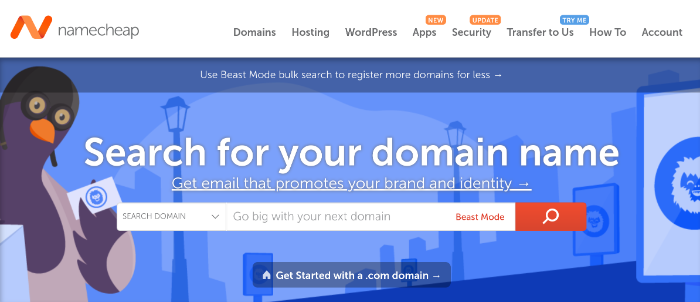
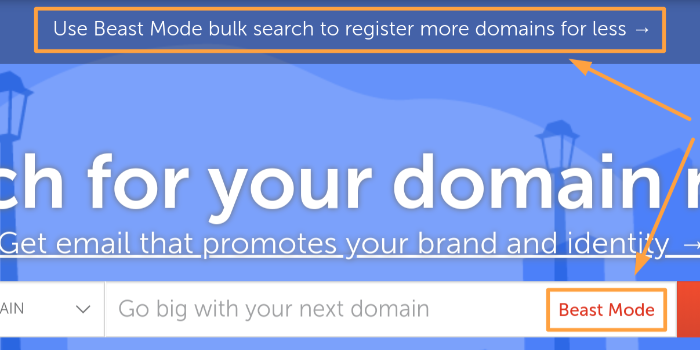
You can search for domains one at a time, but most people don’t realize you can also search for a bunch of domains in one fell swoop. Namecheap calls it “Beast Mode.”
You can access it by clicking the “Use Beast Mode…” link at the top of the page, or can use keywords and click “Beast Mode” next to the search button:
Choosing a bulk option like Namecheap’s Beast Mode is a huge time-saver. You’re able to select what TLDs (top-level domains) you desire (Examples: a .com domain name extension, a .net domain extension, a .co.uk extension, etc.), whether you’d like to see “premium” domain names in the search results, how much you’re willing to pay, and more.
Here’s what it looks like:
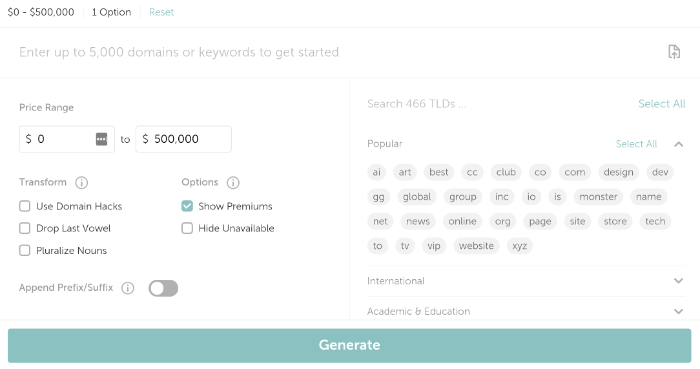
Upload (or enter manually) your list of candidates, click the “Generate” button, and Namecheap will show you which ones are available.
Once you have this list, you need to choose the best one. And the way you do this is by identifying the characteristics of a great domain name. Here’s a checklist:
- Clarity. As we discussed earlier, this is the key element that will get your readers hooked within those eight seconds.
- Message to Market Match. This is a marketing term that means whatever you’re preaching is what they’re buying. You want to give your audience what they want. The more you can do that, the more your message is aligned with the market.
- Memorable Sound. You want your domain name to have a memorable sound people will remember the minute they hear it. Two tools to help you achieve that goal would be the use of alliteration and rhyming. The more that name rolls off your readers’ tongues, the more memorable it is. Using power words or sensory words can potentially help too.
- On Topic. You want your name to be on topic. Some of the synonyms you generate from your thesaurus will end up with names that are ultimately off topic, and you don’t want to use those.
Did one domain name jump out?
Awesome.
Buy that bad boy before someone else snags it!
Ready to Find the Perfect Domain Name?
If you’ve read this entire post, you’ve probably realized it’s a lot of work to come up with a good domain name.
Yup, it is. I wish I could just hand you an “Advance to Go and Collect $200” card for your quick pass to blogging success. But the truth is, there’s no silver bullet here.
So you might be wondering, “Is it really worth all the extra effort to find a great domain name?” Good question.
Truthfully? It depends.
A great domain name alone won’t make you a successful blogger. A lot of other elements have to come together first.
And the kicker?
It’s not even going to be a deal-breaker if you have a bad domain name right now. In fact, if I had to put a number on just what percentage your domain name actually influences the success or failure of your blog, I would say it’s something like 10%.
But here’s the thing…
That 10% could be the difference between blogging success and blogging obscurity. Or, to put it another way:
Can you really afford NOT to take every possible advantage available to you?
A horse race is sometimes decided by a nose. A close election can be decided by only a few votes. The difference between victory and defeat can come down to that little extra something one of them has that the other one doesn’t.
For you, that difference may come down to your domain name.
So the next time you find yourself asking, “What’s in a name?”…
Perhaps it’s everything your customer is looking for right now.
If you take the time and put in the extra effort, you will ultimately find the perfect domain name. One that shines so bright it will become a beacon in the night that calls to your ideal readers.
Choose wisely, and we’ll be pointing to your blog as an example of doing it right.
The post How to Choose a Domain Name (+ 30 Blog Name Generators!) appeared first on Smart Blogger.
from
https://smartblogger.com/how-to-choose-a-domain-name/
Wednesday, September 18, 2019
The Most (And Least) Effective PPC Channels

from
https://www.marketingprofs.com/charts/2019/41813/the-most-and-least-effective-ppc-channels
Tuesday, September 17, 2019
Tuesday, September 10, 2019
Four Types of Influencers for Your Influencer Marketing Campaigns

from
https://www.marketingprofs.com/articles/2019/41772/four-types-of-influencers-for-your-influencer-marketing-campaigns
Thursday, September 5, 2019
Amazon Associates: The Ultimate Money Making Guide for 2019

You want in.
The idea of making money with the Amazon Associates program sounds enticing.
And when you buy products on Amazon, you’re always amazed at the pure volume of stuff they sell.
But your understanding of how it all works is, well, fuzzy.
Let’s bring it into sharp focus. I’ll walk you through the details you need to decide if Amazon Associates is right for you.
And if it is, I’ll show you how to make money by tapping into Amazon’s vast river of eCommerce. Instead of letting this monetization method flow by you, you can be a part of it.
Sound good? Let’s get started.
What is Amazon Associates?
Amazon Associates is the name Amazon uses for their affiliate marketing program.
And what is affiliate marketing? It’s a marketing arrangement where you earn commissions based on the sales of the products you recommend.
For the Amazon Associates program, you give recommendations for Amazon products and provide links to purchase them within your content. If a reader clicks your link and buys the item, Amazon pays you a commission — not only for that linked product, but on all eligible products your reader purchases from Amazon within the next 24 hours.
Note you only get paid when your reader buys something. If they only visit Amazon, you won’t earn anything.
The Amazon Associate program is available for websites, blogs, social network channels, YouTube, or even mobile apps. In this post, we’ll focus on websites and blogging.
How Does Amazon Associates Work?
It all starts by signing up for an Amazon Associates account. But first, let’s cover a few things to make sure you are ready.
To promote products, you need a website or blog with high-quality content and an audience. As I’m sure you know, high-quality means providing value to your readers.
If you don’t yet have one, click here to learn how to start a blog.
Once your website or blog is established, and you have decent traffic, then you can create content which contains recommendations for Amazon products.
You can sign up for the program at any time. Then, once you’ve had three qualified sales, Amazon will review the sites you provided during the application process.
Amazon will reject an application if they deem the site(s) provided to be low-quality. Think of the poorly written, micro-length reviews that you’ve seen while shopping. The sites you leave in about a minute, right? In the eyes of Amazon, only high-quality sites provide their customers with a good experience.
Before you sign up, make sure your website or blog is ready and meets Amazon’s criteria. Why? Because if your application is rejected, you’ll lose everything you’ve earned up to that point.
Can You be an Amazon Affiliate Without a Website?
No, a website is required if you want to become an Amazon Associates affiliate.
And that’s not all — there are other conditions Amazon currently mentions during the application process:
- Your site cannot be on the list of Unsuitable Sites. If it is, you cannot participate in the program at all.
- Your site must have “Robust original content” — as mentioned above, this means high-quality content that serves your customers.
- You need at least 10 blog posts or articles. And some of that content should have been updated within the last month.
- Your site needs to be accessible to the general public (i.e., no membership sites or private social media groups).
- You must own your website.
There are no traffic requirements upfront to apply, but you will need some kind of tangible traffic to stay in the program. That’s because you need at least three qualified sales within the first 180 days.
And no, you can’t just buy stuff for yourself. Amazon deducts anything you buy for personal use through your links. And if they determine you have a pre-existing relationship with someone, those sales would get deducted as well.
Why is Amazon Associates so Popular?
Amazon Associates is popular because their enormous product catalog provides a wide degree of opportunity to earn money online.
They sell physical goods in almost every market. There are hundreds of categories with millions of products you can promote to your audience. They are approaching 200 million products in 2019 (of which 44 million are books).
And Amazon knows how to sell. They capture 49% of all eCommerce traffic. They’ve been selling online for more than 21 years, a long time on the internet. They have plenty of experience in promoting products and converting customers.
It’s also popular because of the success people have enjoyed by using the Amazon affiliate program. Here are a few examples:
- Amazon Affiliate Websites: My 1 Year Old Site Making $3,000 Per Month
- $70k in Amazon Affiliate Earnings from ONE Site
- Project Go White Hat: A Niche Site Case Study
How Does the Amazon Associates Program Compare to Other Affiliate Networks?
No other affiliate network can compete with the sheer volume of products offered by Amazon Associates. Amazon provides more opportunities given its range of products.
And since it’s a website people are already familiar with, conversions can be easier with Amazon than with other affiliate options. Amazon is a trusted brand.
However, Amazon doesn’t have the higher commission opportunities that the other affiliate networks may offer. To give you an idea of potential earnings, here’s a chart of the Amazon affiliate commission rates:
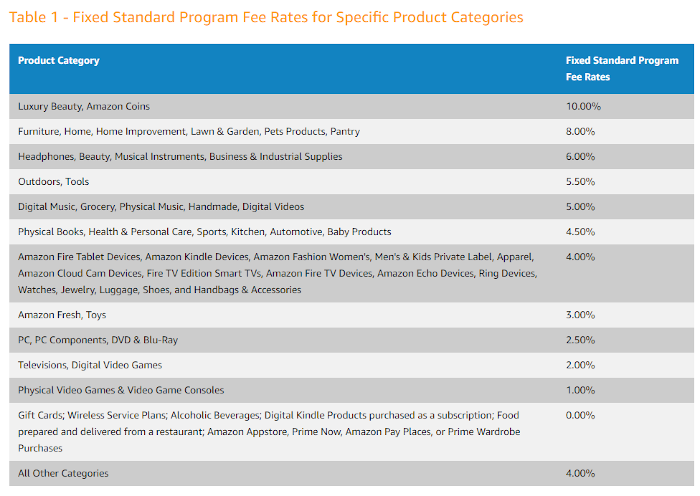
Amazon’s highest commission rate is only 10%. Other affiliate programs may have higher payouts due to offering commissions on cloud-based software, professional services, or online courses.
Pros of the Amazon Associates Program
1. Amazon’s Size (It’s Ginormous)
This is a high-traffic, trusted website. To put this in perspective, Amazon had 2.5 billion visits in May 2019.
Amazon has over 90 million Prime members. Prime members are more likely to purchase from Amazon vs. other eCommerce stores for the free two-day (or even one day) shipping alone.
And they spend a healthy amount as well. In a recent survey, Prime members spent an average of $1,400, and non-Prime members spent $600 per year.
So Amazon’s size can benefit you. Due to its massive internet presence, people know and trust it. This, in addition to the large variety of products, gives you more opportunities.
2. Amazon’s Selling Knowledge and Experience
Amazon knows how to convert customers, how to get them to buy. They haven’t just survived on the internet for more than 20 years — they’ve dominated it and they know what they are doing.
Amazon uses the latest in artificial intelligence to drive their website and create “Recommended Products” categories. How many additional purchases have you made based on “Frequently bought together” and “Customers who bought this item also bought” type recommendations?
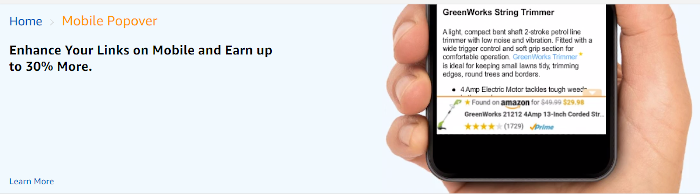
Another example is mobile commerce. Amazon isn’t missing the fact that mobile commerce is growing in popularity. As an Amazon affiliate, you’ll have the tools to help sell on mobile. They even have a Mobile Popover feature to help you convert.
3. Unexpected Opportunities (aka Amazon’s Affiliate Cookie)
You earn commission on everything your visitors purchase in the 24 hours after they click your affiliate link. This includes items that you didn’t provide a product link to.
So, if you have an Amazon affiliate link pointing to a book on fitness, and the person who clicks it ends up buying a freakin’ treadmill, you receive a commission for the treadmill even though it isn’t the product you’re promoting.
This is huge.
The Amazon conversion and upselling machine never stops working. Even if your reader clicks on your link intending to purchase just one item, Amazon will work hard to get them to buy additional goods.
4. The Amazon Associates Program is Free to Join
There is no cost to join Amazon Associates.
5. Accessible to Anyone with a Website or Blog
There are no traffic metrics you need to achieve first before you can join Amazon Associates. And you only need to make three sales within 180 days of signing up to stay in the program.
6. Amazon’s Customer Service is Handled by Experts
Amazon handles all the customer service, so you don’t have to. Plus, they are known for their high level of customer service. As long as the products you recommend are solid, you don’t need to be concerned about customer dissatisfaction.
This is where the income is passive; you provide the recommendation, and everything else is handled by Amazon.
7. Amazon’s Reporting Tools Help You Sell More
Amazon provides a reporting dashboard with analytics, giving you the feedback you need to optimize your promotions. Each affiliate link has a Tracking ID.
You can use reports to understand your market better — what they want and what they are buying. You can even see what additional items (the ones you didn’t provide a link for) your referrals are buying. If you see a trend, and it makes sense given your content, you can add these new items to your promotions.
8. Direct Payment is an Option
Amazon will pay you directly — either through direct deposit into your bank account or Amazon gift cards. Checks are an option, but there is a $15 processing fee (unless you are outside the U.S. in which case the fee is waived).
Cons of the Amazon Associates Program
1. Email Marketing is not Allowed
You cannot include Amazon affiliate links inside an email. So, if email is your primary method for affiliate promotion, you should look elsewhere.
Also, you cannot send a full RSS email feed of your entire blog posts if they contain Amazon affiliate links; however, a partial (not full) RSS feed emailed to your subscribers is okay. Why? Because it’s a partial feed, the affiliate links will not show up in the email.
Emailing links to your blog posts, even if they contain Amazon affiliate links inside them, is perfectly okay.
2. Follow Amazon’s Rules or Face Banishment
It is essential to read Amazon’s Operating Agreement and check it regularly for changes. Amazon affiliates are required to follow the rules. It isn’t fun reading, but it is important.
If you don’t follow their rules, they can ban you from the program. If they do, you’ll lose any earnings that haven’t been paid out up to that point.
3. Lower Payouts Than Other Affiliate Networks
Compared to other affiliate networks, such as those promoting cloud software, professional services, or online courses, Amazon commission rates tend to be much lower.
The Amazon affiliate commission rate ranges from 1% to a max of 10%. So whether or not this program is worth your time will depend on the categories you can target, the price range of the items your readers purchase, and on your traffic levels.
4. Commission Rates or Programs can Change (Most Likely not in Your Favor)
Amazon decreased commission rates in 2017 and may do it again in the future. There are no guarantees that the 5% you are depending on won’t be cut in half.
Of course, the risk of change is the same for any affiliate marketing network.
5. The Window of Opportunity is only 24 Hours Long
After your reader clicks your Amazon affiliate site link, the clock starts ticking. You only earn commissions on what they purchase in the next 24 hours. So, if they wait a couple days to purchase, you won’t receive any commissions at all.
One exception to this is if your reader puts an item in their cart on Amazon. Then your cookie will last for 90 days on that item.
6. Slow Payments and Minimum Payment Thresholds
Commissions are paid monthly. And a customer’s order needs to be shipped first before your fees are earned.
Then you need to wait approximately 60 days from that point until you are paid for that sale. So if you earn commission in January, you’ll need to wait until late March to be paid.
There is a minimum payment threshold of $100 for checks. The threshold is only $10 for gift cards and direct deposit. (With the $15 fee for issuing checks, direct deposit is a better choice anyway.)
7. Limited Digital Products
Amazon sells digital products such as Kindle books and digital music and videos. But as mentioned before, the higher-commission products such as cloud-based software and online courses aren’t currently available through Amazon Associates.
8. Extra Steps to Sell Internationally
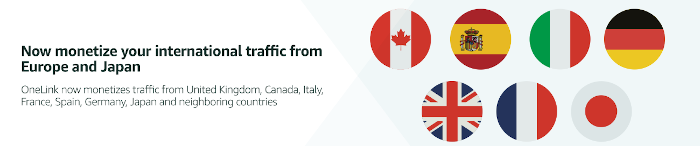
If you have a U.S. site, you won’t automatically get credit for purchases outside the country (such as Canada). Instead, you have to sign up for each country’s Associate program one-by-one. Then you need to use Amazon’s “OneLink” tool to localize the links on your site so you get the commission.
How to Become an Amazon Affiliate
So you’ve considered the pros and cons of the Amazon Associates program, and you want to sign up?
Here’s the step-by-step guide:
1. Go to Amazon Associates and select “Join now for free” at the top-right corner.
2. A sign-in page will prompt you to either log into your existing Amazon account or create a new account.
3. You’ll see the Account Information screen. This will auto-populate with the name, address, and phone number from your Amazon account. Confirm the information.
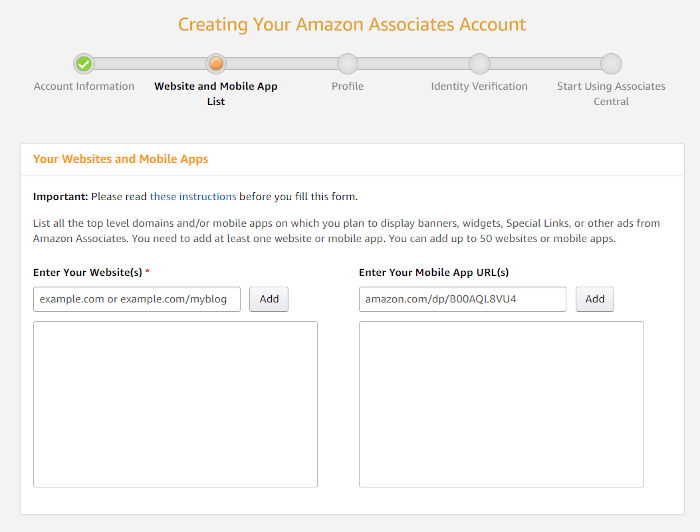
4. Next, you’ll see the Website and Mobile App List screen. Add your website address here:
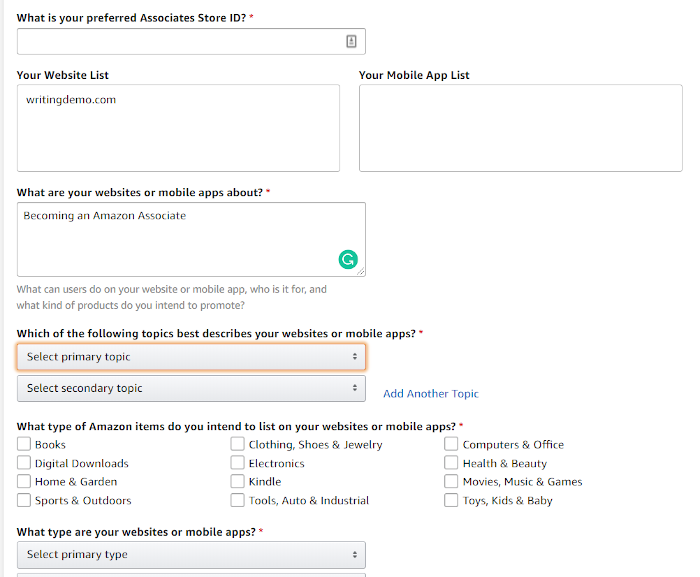
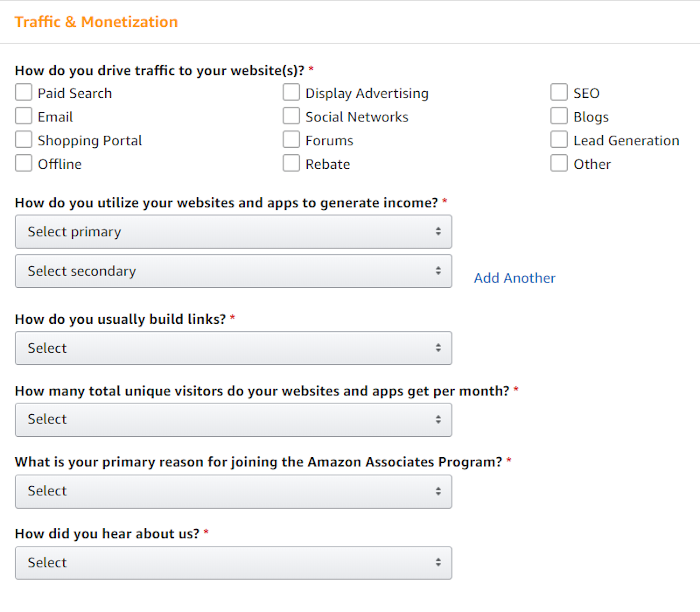
5. You’ll then complete your profile, traffic, and monetization methods. In the profile section, Amazon is looking for basic information as to what your website is all about, what topics you cover, and what types of products you intend to promote.
The preferred Associates Store ID is your username (usually your website address).
The traffic and monetization section looks for how you drive traffic to your website.
It also asks what other types of affiliate links or monetization methods you may have, and ranges for the amount of traffic you receive.
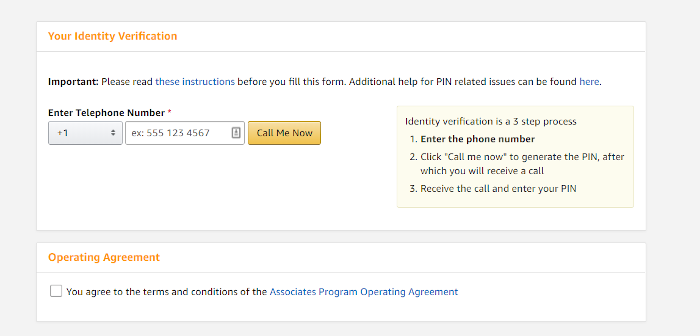
6. After that, you get to the Identity Verification screen:
- Enter your phone number and click “Call Me Now.”
- A PIN will display on your screen, and your phone will ring almost instantly.
- Provide that PIN to the automated caller.
- Check the box if you agree with the terms and conditions of the Operating Agreement.
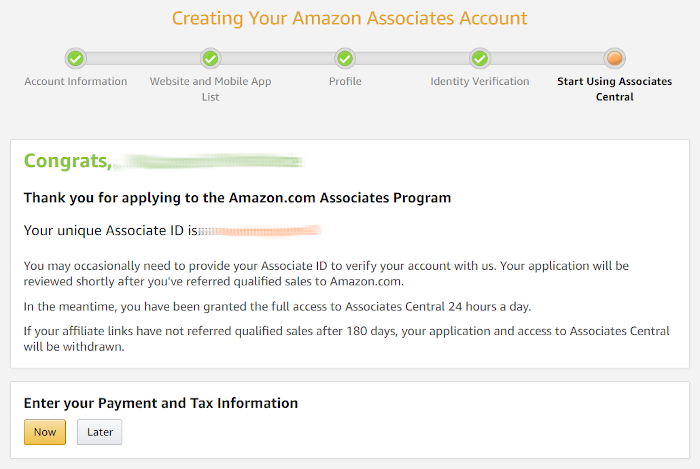
7. Congratulations! Your account is set up, and you have your Amazon Associate ID number. Now just enter how you want to be paid (direct deposit, check, or gift card), and provide the necessary tax information.
Phew! Not too difficult, right?
Now let’s look at ways to pull in those sweet Amazon affiliate earnings.
Ways to Promote Amazon Affiliate Products (and What NOT to do)
Now that you’re an Amazon Associate, you can harness the power of Amazon’s selling machine to earn money for yourself.
You start by finding products which are available on Amazon and related to your blog’s topic.
How to Find Affiliate Products to Promote
First, brainstorm a list of products related to your blog topic that readers may be interested in. Go through the obvious first, then start to think in terms of cross-promotions.
Use Amazon’s commission rate chart to spark creative ideas by category. For example, for a parenting blog, toys only pay 3% commissions. But furniture pays 8% commissions. Is there anything you could ethically recommend?
Once you have an idea of products to promote, Amazon provides two easy ways to get links:
1. Log into Amazon. The SiteStripe tool automatically shows up at the top left of your screen once you are an Amazon affiliate.

This allows you to search for products on Amazon just like you would if you were shopping for yourself. Use the recommendations, and the “people also buy” tools to help you find products with excellent reviews.
When you find a product you’d like to link to, click on the desired link style (Text, Image or Text+Image), and Amazon gives you the link to add to your site. Easy, right?
2. Or, log into Amazon, then click on the SiteStripe bar to get to your Amazon Associates home page. Then select Product Linking, then Product Links from the toolbar. This search engine will display:
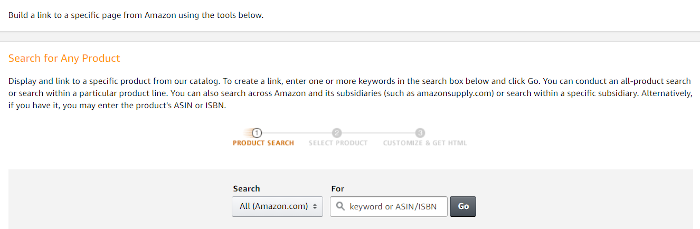
Here you can search by Amazon category and then refine it further. For example, If you select “Clothing & Accessories,” you can then refine by “Women,” “Men,” etc.
Or, you can search by specific product keywords, by ISBN (for books), or by brand and model number.
Once you find an item, you can select a link consisting of Text only, Image only (with an embedded hyperlink), or Text + Image.
Content Ideas to Get Your Readers Clicking
Here are a few content ideas to get you started:
- Buying guides – Create a guide packed with points to consider when purchasing a product. For example, for a health and fitness blog, “The Ultimate Guide to Purchasing a Rowing Machine.” Then you’d list out what features to look for and how they benefit you. Add your product recommendation(s) where appropriate.
- Beginners guides – These work especially well if your blog is related to a hobby. Write out everything a beginner would need to get started and why. Divide product recommendations into essential and optional categories, so you don’t overwhelm the reader with potential purchases! Then provide links to a few items in each category.
- Roundups – Create collections or lists of recommended products that you’ve used. Example: “Best Productivity Books of 2019.” Then provide an overview of each book and why you liked it, along with a link to Amazon.
- Tutorials or “how-to” articles – Explain how to do something or solve a problem step-by-step. Then sprinkle in some product recommendations.
- Gifts for X posts. Capture some of the gift-buying holiday traffic with your website. Create a list of items with varied price points and reasons why the recipient would enjoy this gift. For example, “Best Gifts for Weightlifters” for a health and fitness blog.
Keep your pages updated with new products. Also, periodically double-check your links, as you don’t want readers to click on discontinued products.
You want to focus on products which are best-sellers on Amazon. Best-sellers typically indicate a high degree of customer satisfaction with the product. Also, selecting best-sellers to promote can equal a higher probability of purchase.
Only recommend products you are confident in — either ones you have purchased yourself or, at a bare minimum, products you’ve thoroughly researched. It pays to be transparent and let your readers know the difference.
Remember you earn commissions on any product your reader buys in the 24 hours after clicking your link. So you could provide only one recommendation for a product that you feel confident about. Then, if your reader clicks on that one item but decides to purchase a different one, you will still receive a commission. And your credibility is intact.
Other Ideas to Try
Look into “Native Shopping Ads” provided by Amazon. These are product carousels of related products. Use your judgment and make sure this is a fit for the tone of your blog and doesn’t cross lines into too “salesy.”
Add YouTube videos to your page for product reviews. Buyers love unboxing videos and other visual content that helps them make a decision.
Use social media to share content containing affiliate links. To qualify, you need around 500 followers/links. Also, don’t forget to check the terms of service for each of these networks to confirm what type of affiliate links they allow. Facebook (including open group pages and fan pages), Instagram and YouTube are some of Amazon’s currently accepted social networks.
What NOT to do With Amazon Associates
The ways to promote your Amazon affiliate links are limited only by your imagination, creativity, and, of course, Amazon’s operating agreement.
Stay out of trouble by avoiding these “don’ts”:
- Don’t use email to promote your Amazon affiliate links.
- Don’t download and use images from Amazon’s website. Instead, use the SiteStripe tool or the product linking Amazon provides. This way, you will be in compliance, and your image will link directly to Amazon.
- Don’t copy and paste prices from Amazon’s website. Prices change, and Amazon does not want you potentially misleading customers. Also, avoid language like “click here for the best price” as this could be a false statement if another website has the product cheaper than Amazon. Again, use the linking tools Amazon provides. Something to consider: provide a link stating “check on Amazon” instead of actual prices. People may click out of curiosity, versus if you provided the price they would have moved on. Remember, the cookie lasts 24 hours.
- Don’t use pop-up ads to promote affiliate links.
- Avoid using Amazon’s star ratings (or any rating system that looks similar).
- Don’t copy and/or use Amazon’s customer reviews.
- Failing to disclose your affiliation is a no-no.
That last one is big.
It’s essential to be honest and transparent with your readers. You need to disclose as clearly as possible that you earn commissions from your product links.
In fact, the Federal Trade Commission (FTC) requires that you include a disclosure on your website that you earn commissions. Here is more information on this from the FTC.
Amazon affiliate marketing also requires that you have the phrase “As an Amazon Associate I earn from qualifying purchases” or something similar to it on your website.

Part of Amazon’s affiliate account review process will be to ensure that your website complies with all relevant regulations. And, of course, the terms of their Operating Agreement.
The Amazon Associates Program: Is it Your Path to Passive Income?
Amazon Associates isn’t right for everyone. But you now have a clear idea of exactly what Amazon Associates is and if it is a fit for you.
Don’t get bogged down in creating a perfect strategy. The most important part is to get started.
Start with one piece of content, some product recommendations, and build from there. And once the upfront work is done, you can sit back and enjoy watching the passive income flow into your bank account.
What can you do today to get those Amazon affiliate earnings flowing into your bank account?
The post Amazon Associates: The Ultimate Money Making Guide for 2019 appeared first on Smart Blogger.
from
https://smartblogger.com/amazon-associates-program/